



Pilgrimage and Commemoration of Sheikh Jumadil Kubro: Religious Practices, Cultural Resilience, and Social Solidarity

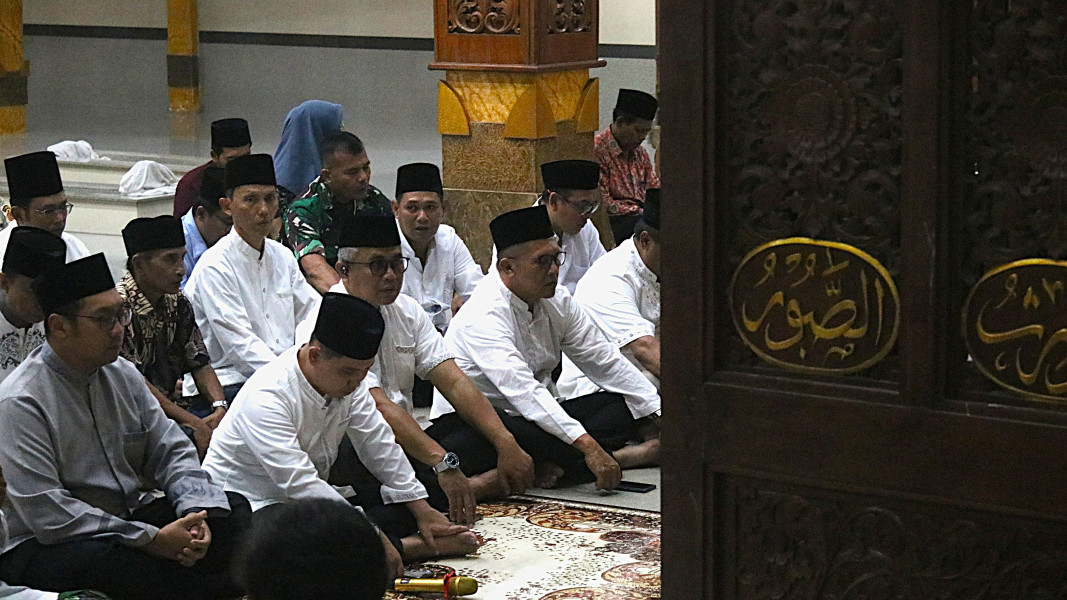
The tradition of Pilgrimage and Commemoration of Sheikh Jumadil Kubro has become an important part of the cultural landscape of East Java society, particularly in the Mojokerto area and its surroundings. The community along with the local government of Mojokerto Regency commemorates the 650th Commemoration of Sheikh Jumadil Kubro and Santri Day in the form of activities titled "Historical Footprints of Cultural Soul -- Emulating the Heritage of the Scholars." This event is organized by the Mojokerto Regency Government through the Office of Culture, Youth and Sports, and Tourism (Disbudporapar), on October 23, 2025, at the Troloyo Cemetery Complex, Sentonorejo Village, Trowulan District, Mojokerto Regency.
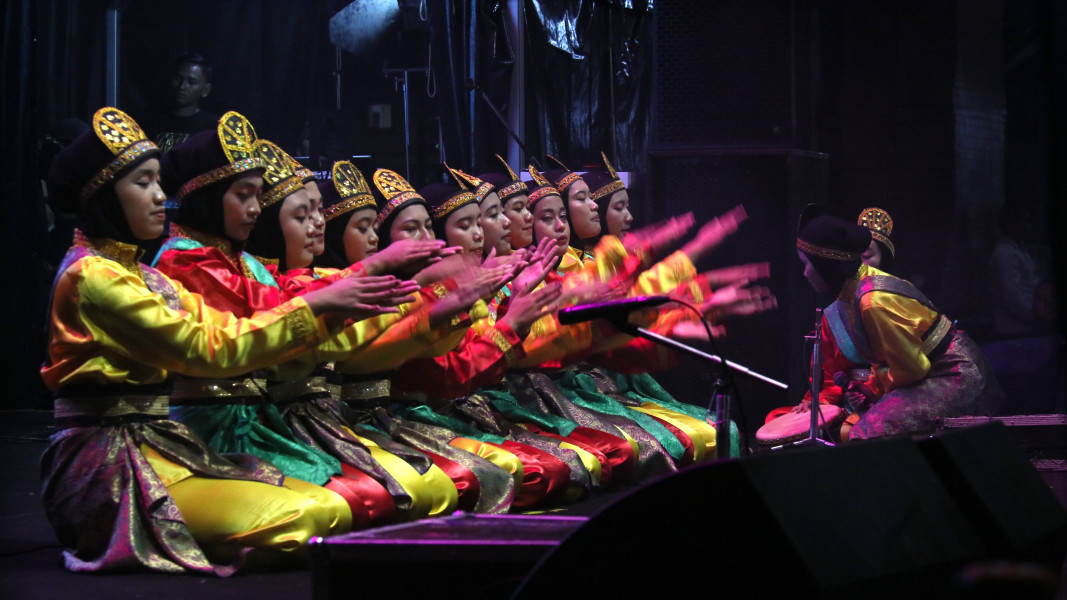
This annual event is routinely held for two days, starting with pilgrimage and reading tahlil and prayers together, religious lectures, art performances, and a UMKM bazaar.
Thus, this event can be examined as part of a cultural field rich in spiritual and religious values, as well as a momentum to strengthen cultural identity and resilience. It implicitly conveys values of respect for history, the heritage of knowledge (the tradition of connecting the scholarly lineage of the scholars), and social solidarity that has taken root in community life.
Several perspectives can be offered in observing how the transmission of values remains preserved and develops through the Pilgrimage and Commemoration of Sheikh Jumadil Kubro as a socio-cultural practice within the community.
Pilgrimage Culture as a Cultural System
Culture is a system of meaning expressed through symbols and social practices. In the context of Troloyo, the practices of Pilgrimage and Commemoration can be reinterpreted; functioning as a symbolic system that connects the community with the past -- encompassing history, spirituality, religion, and social bonds.
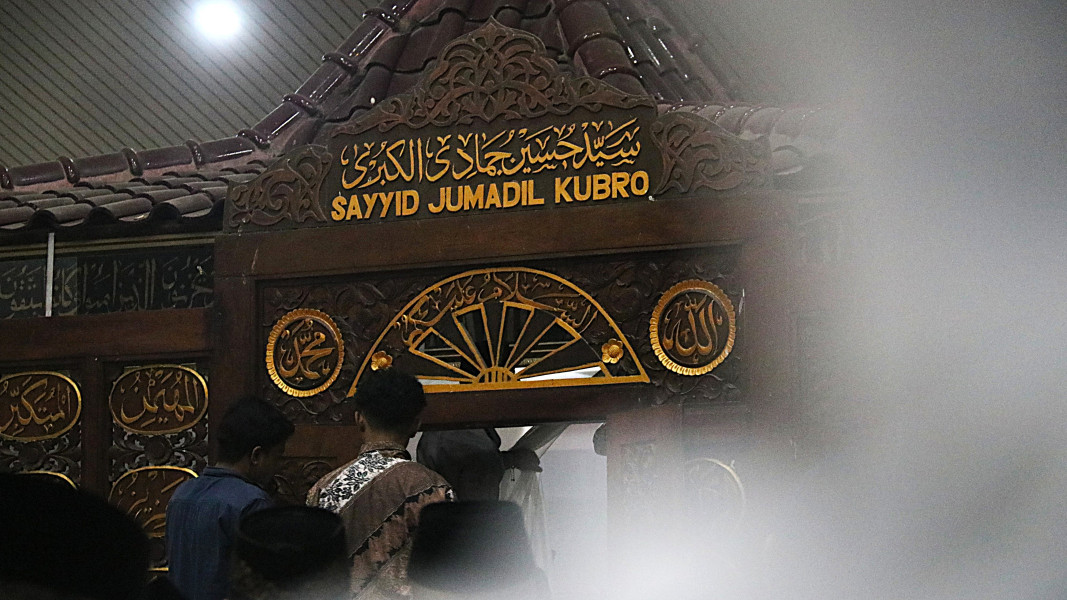
The pilgrimage culture reflects how the community interprets the relationship between worldly life and transcendental values. It serves as a means to affirm a sense of togetherness, strengthen intergenerational relationships, and maintain the continuity of cultural identity.
In addition to its spiritual and religious functions, pilgrimage also has a socio-ecological dimension. It brings together citizens from various social backgrounds in a religious and mutual cooperation atmosphere. Thus, pilgrimage is not only an individual ritual but also a cultural performance that preserves the collective memory of the community.
Scholarly Lineage as a Mechanism for Value Transmission
In the tradition of classical Islamic scholarship, the transmission of knowledge and values is carried out through a chain of teacher-student relationships known as sanad. Although this term has roots in religious tradition, in a socio-cultural context, it can be understood as a form of knowledge inheritance and moral exemplification from generation to generation.
The Pilgrimage and Commemoration in Troloyo serve as a means of actualizing these values. Respect for figures and scholars who have contributed to the history of religious dissemination is not only a form of devotion but also an acknowledgment of the continuity of knowledge, ethics, and civilization.
Through the commemoration of the 650th Commemoration of Sheikh Jumadil Kubro and Santri Day with the theme "Historical Footprints of Cultural Soul -- Emulating the Heritage of the Scholars," the community is invited to reflect on the values of exemplarity and local wisdom inherited from their ancestors. This tradition teaches the importance of learning from history and maintaining the continuity (sanad) of knowledge along with ethical values in social life.
Pilgrimage and Commemoration as Social Education
The pilgrimage tradition has a strong educational function. Through participation in pilgrimage and commemoration activities, the community learns values of simplicity, togetherness, and respect for the contributions of predecessors. This process is a form of social education that instills moral values through cultural practices.
Culture plays a role as a space for learning values and identity. In the context of Troloyo, pilgrimage and commemoration become a means of character formation for the community through collective experiences -- not through formal teaching, but through social and symbolic participation.
The values embodied in pilgrimage -- such as mutual cooperation, solidarity, and collective prayer -- support the creation of social cohesion. Pilgrimage and Commemoration not only commemorate the past but also strengthen social relationships in the present.
Cultural Resilience and Social Cohesion Functions
Cultural resilience refers to the community's ability to maintain its values and traditions amid social changes. The tradition of Pilgrimage and Commemoration of Sheikh Jumadil Kubro in Troloyo reflects this resilience.
Activities involving various elements of society and government institutions demonstrate how spiritual heritage can become social capital that strengthens cohesion and cultural resilience. Pilgrimage & Commemoration enliven the local economy, build networks among citizens, and create spaces for intergenerational encounters.
Thus, Troloyo becomes a symbol of living heritage -- a cultural legacy that continues to be nurtured and reinterpreted. The values inherited from generation to generation do not cease to be religious symbols but live as social practices that reinforce the moral structure of society.
The tradition of Pilgrimage and Commemoration in Troloyo illustrates how culture can serve as a social glue and a source of community resilience. It is not merely a religious ritual but also a value system that contains dimensions of education, ethics, and solidarity.
Through respect for ancestors, the community maintains the continuity of knowledge and morality. This practice also serves as a form of cultural resistance against the currents of global homogenization, reaffirming local identity and collective memory.
With the support of the local government through the commemoration of the 650th Commemoration of Sheikh Jumadil Kubro and Santri Day with the theme "Historical Footprints of Cultural Soul -- Emulating the Heritage of the Scholars," the tradition of Pilgrimage & Commemoration can continue to be developed as a means of historical reflection, social education, and strengthening identity.
The tradition of Pilgrimage and Commemoration of Sheikh Jumadil Kubro is capable of becoming a space for encounters between the past and the present, between spirituality, religion, and culture. Within it live values of respect for ancestors, gratitude for the scholarly heritage of the scholars, and a spirit of togetherness that unites people across backgrounds and generations.
Through these activities, the community not only strengthens ties related to religiosity but also reinforces social solidarity and cultural resilience -- able to respond to and contextualize it amid changing times.
Pilgrimage and Commemoration become a mirror of how traditions can evolve without losing meaning, while also serving as a bridge connecting humans with their historical roots and cultural identity. (*)
References:
Adger, W. N. (2000). Social and Ecological Resilience: Are They Related? Progress in Human Geography, 24(3), 347–364.
Bourdieu, P. (1986). The Forms of Capital. In Richardson, J. (Ed.), Handbook of Theory and Research for the Sociology of Education. New York: Greenwood Press.
Geertz, C. (1973). The Interpretation of Cultures. New York: Basic Books.
Rahmawati, N., & Setyawan, A. (2023). Tradisi Haul dan Ekonomi Sosial di Kawasan Troloyo, Mojokerto. Jurnal Antropologi Indonesia, 44(1), 77–98.
Tilaar, H. A. R. (2000). Pendidikan, Kebudayaan, dan Masyarakat Madani Indonesia. Bandung: Remaja Rosdakarya.
Law Number 5 of 2017 on Cultural Advancement. State Gazette of the Republic of Indonesia Year 2017 Number 104.