



Wiwara Indonesiana.TV: A Bridge of Culture and Education in the Digital Era

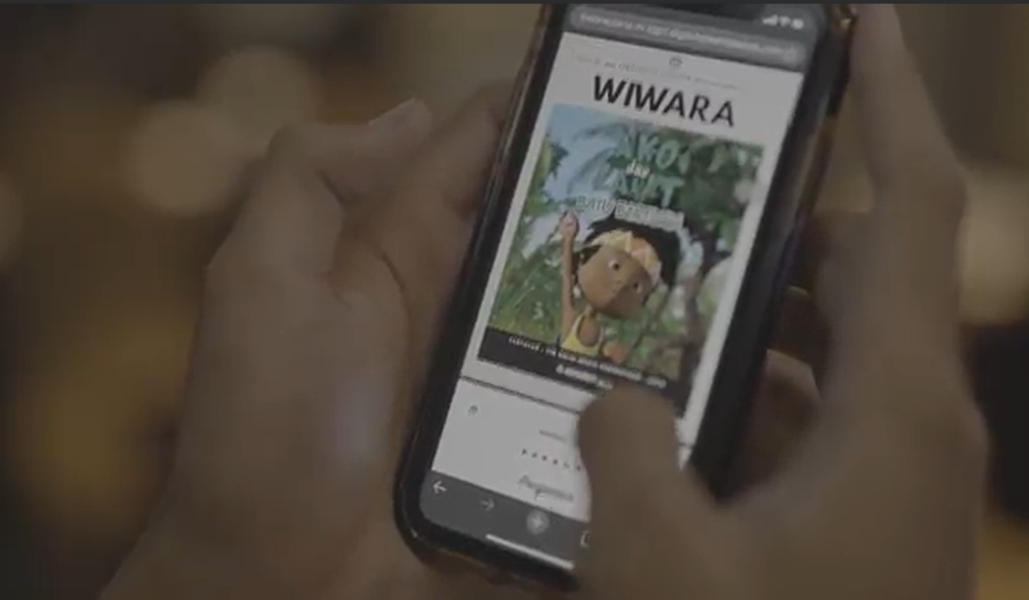
Amid the digital transformation that changes the way society interacts, learns, and consumes information, efforts to preserve local culture and strengthen character education become both a challenge and a significant opportunity. In this context, Indonesiana.TV, the only digital cultural channel initiated by the Cultural Media Center under the Directorate General of Culture, Ministry of Education, Culture, Research, and Technology, which has now transformed into the Ministry of Culture, presents an interesting innovation through "Wiwara." Wiwara is a companion module for watching the programs aired on Indonesiana.TV as a medium that bridges culture and education by presenting reflective, educational, easily understandable, and inspiring cultural narratives to the wider community, especially the younger generation towards a Golden Indonesia in 2045.
Wiwara: From Oral Tradition to Digital Media
In Sanskrit, "Wiwara" means "gate," interpreted as a door to broader insights. It is hoped that Wiwara can be utilized by teachers, educational staff, or parents to initiate discussions with students or children. Wiwara can be used as an additional supplement in school learning. In the context of Indonesiana TV, the meaning of Wiwara has been modernized and expanded, not just as an introduction, but as a digital storytelling space that brings cultural messages into a reflective realm that is easy to understand and educational. The sparks of information and discussion triggers within Wiwara build cultural awareness and create broader discussion opportunities. The presence of Wiwara for the audience of Indonesiana.TV is not just about gaining entertainment but also guidance.
Caring for Culture: Preserving Cultural Heritage through Creative Ideas.
One of the main functions of Wiwara is to safeguard and convey cultural values to the current generation. In many of its episodes, the programs aired on Indonesiana.TV accompanied by Wiwara raise themes that are close to people's lives: the meaning of patience, mutual cooperation, struggle, history, customs, to the life philosophies of various figures. Wiwara successfully revives traditions by inviting its viewers to engage in creative activities called activity ideas, of course, tailored to the context of the broadcast.
Thus, Wiwara becomes a bridge connecting the digital generation with cultural heritage that may be starting to be forgotten. It carries the message that culture is not just a past displayed in museums, but also lives in daily life, in speech, in ways of thinking, and in values that continue to be passed down.
Educational Medium: Educating Through Stories and Reflection
More than just conveying cultural insights, Wiwara also serves as a contextual and inspirational educational tool. Many programs aired alongside Wiwara are designed to support learning in schools. The narrative approach structured in Wiwara, such as program achievements, opening activities, discussion triggers, activity ideas, and even presented references, makes it easier for educators, educational staff, or parents to present cultural literacy in an engaging, effective, and enjoyable manner.
With a narrative approach, Wiwara brings education closer to real life. It helps students and the community learn about culture through experiences, stories, and reflections. In an education world that often focuses too much on memorization, Wiwara presents a humanistic approach that values the thinking process and deep understanding. The integration of Wiwara into the education curriculum can also be used as part of local language and culture learning.
Wiwara as an Alternative Educational Media
In the modern education world, approaches that are too focused on cognition and formality often distance students from their own social and cultural contexts. Here, Wiwara can take on the role of an alternative bridge connecting academic knowledge with local values. By utilizing Wiwara in the learning process, teachers or educators can deliver lessons through narratives, humor, and dialogues that contain elements of local culture, making learning more meaningful. Thus, Wiwara functions not only as a supplement but as a living and easily understood pedagogical method.
The Wiwara program on Indonesiana TV is a concrete example of how digital media can be used to unite culture with education. With a reflective delivery style and in-depth content, Wiwara becomes a bridge that brings the noble values of Indonesian culture to modern society. It connects the past with the present, conveys education through culture, and builds awareness of who we are as a nation.
Amid the identity crisis and educational challenges, Wiwara emerges as an oasis, calm yet full of meaning, simple yet thought-provoking, traditional yet highly relevant. Wiwara deserves to be highlighted as an essential element in the transformation of culture and education.
Happy National Education Day.