



Download the Unduh-unduh Patirtaan Jolotundo: An Important Chapter in Managing Cultural Heritage

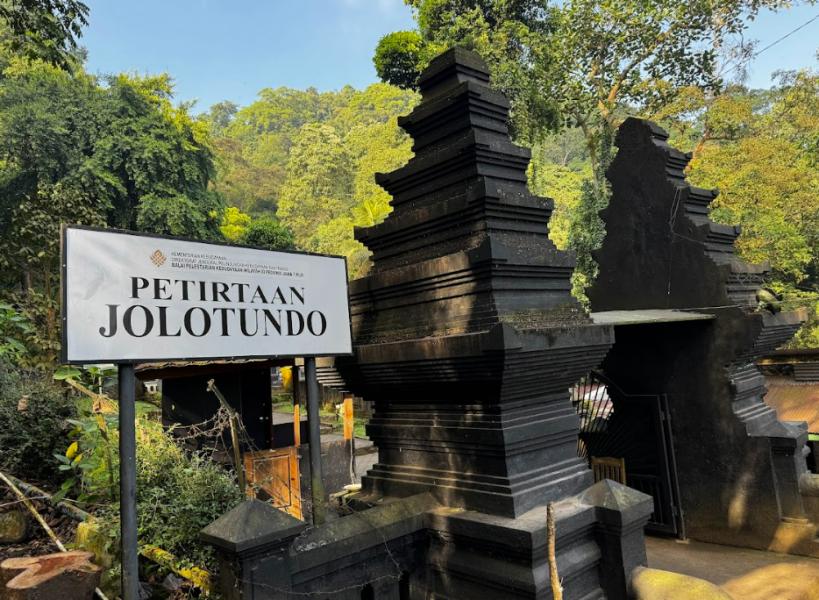
In time, a chapter marks a series of events of civilization in each era. It rolls on, experienced in every layer, leaving traces with various dimensions of values that are inherited. So where are we? How to interpret "Unduh-unduh Patirtaan Jolotundo"? Awareness of the importance of managing cultural heritage as a force to flow sustainability.
Understanding "Unduh-unduh Patirtaan Jolotundo"
The Patirtaan Jolotundo site has become an important part of the local community, especially in Seloliman Village. Patirtaan Jolotundo is located in Seloliman Village, Trawas District, Mojokerto Regency. Traditionally, the people of Seloliman Village and its surroundings hold a thanksgiving for the abundance of water sources, originally called Bancaan Sumber, every year on the 1st of Suro or 1st of Muharram. This tradition has been practiced for hundreds of years. Over time, Bancaan Sumber evolved into “Unduh-unduh Patirtaan Jolotundo” or some also refer to it as Ruwat Agung Patirtaan Jolotundo. Before entering the peak event, a ritual called unduh-unduh tirta (harvesting water from 33 spring sources located in the east, south, west, and north slopes of Mount Penanggungan) is performed. The climax is to unite these 33 water sources, which have now undergone transformation, codification, and are packaged into a series of cultural parade events.
Historical Period of the Patirtaan Jolotundo Site
After the fall of the Medang Kingdom in the 11th century, Patirtaan Jolotundo is believed to have continued to be used until the Majapahit Kingdom period (1293-1527). The remnants of the Medang Kingdom or the Ancient Mataram Kingdom period in East Java. Patirtaan Jolotundo comes from the combination of two words, namely Patirtaan and Jolotundo. Patirtaan has the root word "tirta" which means water, in a religious context meaning water that purifies a person. It can be said that patirtaan is a place for self-purification. Meanwhile, Jolotundo is formed from the words "jala" which means water, and "tunda" which means level. It can be concluded that Patirtaan Jolotundo means a place for self-purification where the water flows from tiered fountains. After the end of the Majapahit era, the elders or village leaders along with the surrounding community have conducted "Bancaan Sumber", a thanksgiving ritual and earth donation as activities rooted in the local socio-culture.
Then after some time, various findings and research slowly emerged that confirmed and strengthened the archaeological data of the Patirtaan Jolotundo site. It contains information related to several records and descriptions of how civilization, especially the sacred area on Mount Penanggungan, also known as Pawitra. Thus, as data and information broadcasted to various religious and cultural backgrounds, many have made pilgrimages to the area including the Patirtaan Jolotundo site.
Furthermore, this was then viewed as a potential to be developed into religious and cultural-based tourism by the regional authorities including KPH Pasuruan, BPK Region XI of the Ministry of Culture of the Republic of Indonesia, and the Mojokerto Regency Disbudporapar. It is packaged and adapted into an annual event in the Mojokerto Regency tourism calendar. People from various religious and cultural backgrounds, especially from Java and Bali, both as ritual participants and visitors, reflect symbols of unity in diversity.
State and Regulations, Cultural Legitimacy
Authorization, power relations over culture have important implications for cultural identity, social integration, and development. Who has the authority to shape culture can influence how individuals and groups feel connected to their cultural heritage, how they interact with other cultures, and how they participate in development. In the context of power relations over culture, particularly in cultural transformation, it refers to the process of legitimization and determination of who has the right or authority to shape, change, or control cultural elements. This involves questions about who has the power to define, promote, or even reject a culture, as well as how these power relations affect the direction of cultural transformation. In this case, it also influences how we all play an important role in interpreting cultural heritage.
The government plays an important role in cultural transformation, with duties and functions regulated by law, especially Law Number 5 of 2017 concerning Cultural Advancement. This law mandates the central and regional governments to guarantee freedom of expression, protect cultural expressions, maintain diversity, and manage and provide cultural infrastructure. The government also plays a role in encouraging community participation in the preservation and development of culture.
How do humans interpret history, culture, and their identity? In the context of Patirtaan Jolotundo? At least there are several foundations that we need to review for our collective attention.
What is our role in filling the important chapter of cultural heritage?
With this, it is hoped that there will be several perspectives, critical approaches/interpretations, and attitudes towards the discourse of managing cultural heritage contextually and strategically -- so that we can question again what we need to pay attention to together in starting that important chapter as part of cultural advancement.
The Patirtan Jolotundo site is a courtyard and monument of unity in cultural diversity, heritage, local wisdom, spirituality, and identity that continues to be developed and negotiated. Through this approach, we not only preserve it as a local site and ritual but also keep alive the meaning, voice of the community, sustainability of spiritual values, and local wisdom there.
References
Bender, Barbara. (1999). Subverting the Western Gaze: Mapping Alternative Landscapes. In: Archaeologies of Landscape: Contemporary Perspectives. Blackwell.
Ardika, I Wayan. (2015). Archaeology and Ancient Balinese Culture. Denpasar: Udayana University Press.
Sedyawati, Edi. (2006). Indonesian Temples: Periodization and Style. Jakarta: Gramedia.
Degung Santikarma. (2014). "Experiencing Ritual in the Landscape". Indonesian Anthropology Journal, Vol. 35 No.1.
Habsari, Sri Kusumo. (2020). Jolotundo Site: Memory of Water and Cultural Practices. Yogyakarta: Archaeological Center.
Wiyanto, Y. (2019). "Local Spirituality and Rituals at the Patirtan Site in East Java". Humaniora, Vol. 31(2), 199–211.
Articles