



Silent Whisper of Sound

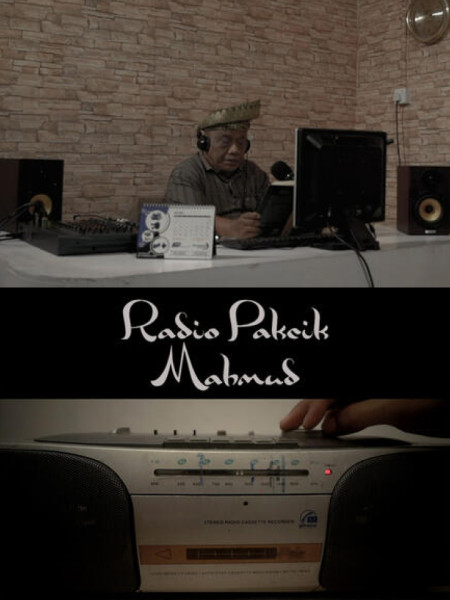
Radio is one of the oldest mass media. The process of radio uses electromagnetic waves, allowing messages conveyed by the broadcaster to travel until they reach the listener. Radio is auditory in nature, meaning the audio transmitted cannot be repeated as it reaches the listener's ears directly. Initially, radio was used as a one-way communication tool, primarily for military and government purposes, even to this day. Radio was a very advanced technology in its time, and even now, the communication technology used fundamentally relies on the concepts present in radio. Radio is a technology that sends signals through specific waves, commonly known as electromagnetic waves, which are the result of modulation and radiation from electromagnetic waves (Kustiawan, 2022).
Digital technology has changed people's consumption patterns of audio media, both in radio broadcasting and music streaming. Radio is currently undergoing transformation to adapt to the needs of its listeners, one of which is by providing digital service offerings to remain relevant. The definition of radio continues to evolve; one interesting definition related to the current condition is where radio refers to journalistic radio with a mix of spoken word content and music, with journalistic word content responsible for most of the content elements (Hirschmeier & Beule, 2021 in Sinabariba 2023).
The dynamics surrounding the existence of radio, which may be gradually losing its listeners, is not without reason. A lack of innovation has caused many radio stations to be insensitive to changes and neglectful of the digitalization of devices and creative processes. In a rapidly evolving world, there is ample room for competition to present the best concepts in the presentation and management of radio as an information medium. The digital era should be a revolution in the understanding of radio personnel that there should be no doubt about being abandoned by their listeners. If the understanding that radio personnel only convey information in one direction to their listeners needs to change, it is essential to occasionally listen to their audience. Listening to the needs of their listeners as a service is a necessity, as it is inevitable that the development and changes of the times cannot be prevented; rather, we must adapt to the times.
The development of radio over time is part of the dynamics of culture itself. The cultural shift of radio listeners from merely being objects and targets of information delivery to subjects determining the existence of radio stations is significant. Nowadays, information services are increasingly diverse, tailored to the characteristics of society in adjusting their interests in the information-seeking process. The character of today's society is certainly different from previous generations, which had limited access due to the still minimal and uneven development of infrastructure in the field of information technology. Now, the world has changed... the world can be reached easily within our grasp.
The IndonesianaTV Cultural Channel aims to preserve and promote Indonesia's diverse culture to a broad audience, both domestically and internationally, through the airing of programs that highlight various aspects of Indonesian culture, such as arts, customs, traditions, and history. The IndonesianaTV Cultural Channel seeks to enhance public knowledge and awareness of Indonesian culture through the airing of educational and informative programs that are packaged attractively and are easy to understand by all audiences.
Cultural content related to the development and management of radio as a spearhead of cultural preservation currently available on the IndonesianaTV platform is "Radio Pakcik Mahmud." The "Radio Pakcik Mahmud" program tells the story of Pakcik Mahmud, the owner of Malay Radio "Bertuah FM," recounting his struggle to maintain a radio broadcast that prioritizes Malay culture amid a financial crisis. With unwavering spirit, Pakcik Mahmud fights against financial challenges while remaining committed to presenting educational and entertaining programs for listeners. Through traditional stories, music, and inspiring interviews, he strives to keep the Malay cultural heritage alive. This drama touches on the importance of cultural identity and how one voice can mobilize a community, even when faced with various difficulties.
The airing of cultural content on the IndonesianaTV Cultural Channel is a good practice that is expected to provide educational information, ultimately leading to the preservation of Indonesian culture and serving as a guide for future generations. From "Radio Pakcik Mahmud," we can learn and be inspired that good intentions in cultural preservation alone are not enough if not accompanied by innovation in developing and utilizing the remaining cultural assets. Do not let our culture slowly fade away with time; rather, let our culture dynamically follow the times.
Happy National Radio Day
voice, listen to me
how is my beloved
I am here waiting for him
still hoping in his heart
voice, listen to me
am I always in his heart
I am here waiting for him
still hoping in his heart
(Hijau Daun – Voice (I Hope): 2008)
References
Kustiawan, Winda et al. 2022. Advantages and Disadvantages of Radio in the Scientific Journal of Information Technology and Communication Vol 2 No. 3 November 2022. Universitas Islam Negeri Sumatera Utara
Sinabariba, Santa Cicilia. 2023. The Existence of Radio: Challenges and Opportunities in the Digital Era and Post-Pandemic COVID-19 (An Approach with Systematic Literature Review Method) in Jurnal Lensa Mutiara Komunikasi 7, 2 (2023)