



Chinese Peranakan Literature: Stories That Were Once Overlooked

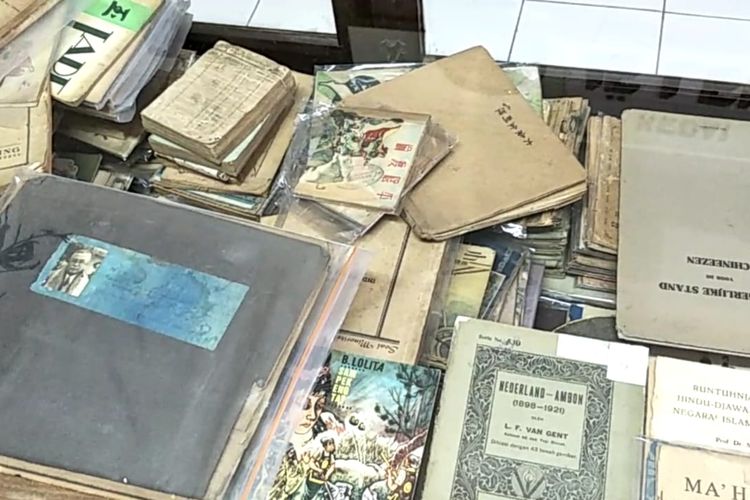
The development of literature in the archipelago cannot be separated from the roles of various ethnic groups living and evolving in Indonesia—ranging from Sundanese, Javanese, Balinese, Dayak, including the Chinese. Unfortunately, the contributions of Chinese writers often go unnoticed. The traces of their works and influence seem hidden underground, rarely discussed and not fully recognized in the discourse of "mainstream literature."
In fact, the precursor to modern Indonesian novels is not Azab dan Sengsara by Merari Siregar—as many believe, published in 1920 by Balai Pustaka. Instead, it is Tjhit Liap Seng by Lie Kim Hok, published by Bintang Tujuh in 1886. Not only was it the first, but Chinese writers were also quite productive!
Chinese Peranakan Literature
Although still a subject of debate, Indonesian literature has been developing since the 1920s, marked by numerous literary works published by Balai Pustaka, such as Siti Nurbaya (1922) by Marah Rusli and Salah Asuhan (1928) by Abdul Muis.
However, if we look further back, long before the novels of Balai Pustaka were published, Malay-Chinese literary works had already grown and developed in Indonesia. Chinese peranakan literature itself consists of original literary works created by the Chinese peranakan community, which flourished from the late 19th century to the mid-20th century. The themes and issues raised include current events and social issues that depict the cultural mixing between Chinese and Indonesian.
It is recorded that Malay-Chinese literature has existed since 1870, while modern Indonesian literature only emerged later. Some notable peranakan literary works include Tjerita Oey See (1903) by Thio Tjin Boen and Lo Fen Koei (1903) by Gouw Peng Liang.
Using Low Malay Language(?)
These peranakan literary works were apparently not favored by the Dutch authorities and were considered dangerous to societal stability. Tjerita Oey See, for example, portrays the social realities of the Chinese and indigenous communities. The Dutch disliked this narrative as it highlighted class dynamics and inter-ethnic interactions that contradicted the segregation structure desired by the colonizers.
As a result, the Dutch employed strategies to marginalize these writings. The colonial government also ostracized the "Low Malay" language used in peranakan literary works. Since 1930, most indigenous authors only wrote in the "High Malay" language used in government schools.
"High Malay" was then deemed more suitable as a literary language than "Low Malay." The "Low Malay" language was considered unworthy as a medium for literary expression. The accumulation of these factors may have led to the underappreciation of Chinese peranakan literary works as part of Indonesian literature.
Since then, Chinese peranakan literature—and other literary works that used the "Low Malay" language—have become marginalized literature and regarded as not good Indonesian literature.
They found themselves in a marginalized position from a sociolinguistic perspective, viewed as wild readings, cheap novels, unconsidered, not part of Indonesian literature, and even their authors regarded as foreigners.
In fact, the "Low Malay" language was used by many indigenous authors, at least before the 1930s. This language was also commonly used in 19th-century newspapers, being the spoken Malay language, and served as a lingua franca commonly used in daily life.
Linguists argue that Malay-Chinese is actually a language variety; and the term "Low Malay" is not a separate language outside of Indonesian.
Quantitatively, Malay-Chinese literature is very productive. Between 1870 and 1960, around 3,005 titles were published with 806 authors. This number far exceeds the number of Indonesian literary works and authors in the same period.
Qualitatively, the themes presented in Malay-Chinese literature are also diverse, including cultural adaptation, love stories, social criticism, and the twists and turns of the Chinese community's life in the archipelago.
Ultimately, revisiting the traces of Chinese peranakan literature is not merely an effort to correct history but also to celebrate the diversity that has long been the heartbeat of Indonesia. Amidst differences in language, culture, and background, these works prove that literature grows from encounters—not separations.
Thus, during this Lunar New Year celebration, we are reminded that diversity is a gift, not a barrier. Malay-Chinese literature serves as evidence that cultural encounters give birth to richness, diversity fosters creativity, and togetherness strengthens national identity. (*)
References:
https://pbi.unismuh.ac.id/wp-content/uploads/2022/10/E-Book_Pengantar-Bahasa-Sastra-Indonesia.pdf
https://tengara.id/marginalia/sastra-dan-sejarah-indonesia-henri-chambert-loir/
https://ensiklopedia.kemendikdasmen.go.id/sastra/artikel/Cau-Bau-Kan
https://repository.upi.edu/19934/4/S_IND_1006503_Chapter1.pdf