



"Spices & Us": Building a Tradition of Learning and Intercultural Understanding through the Care of Cultural Heritage

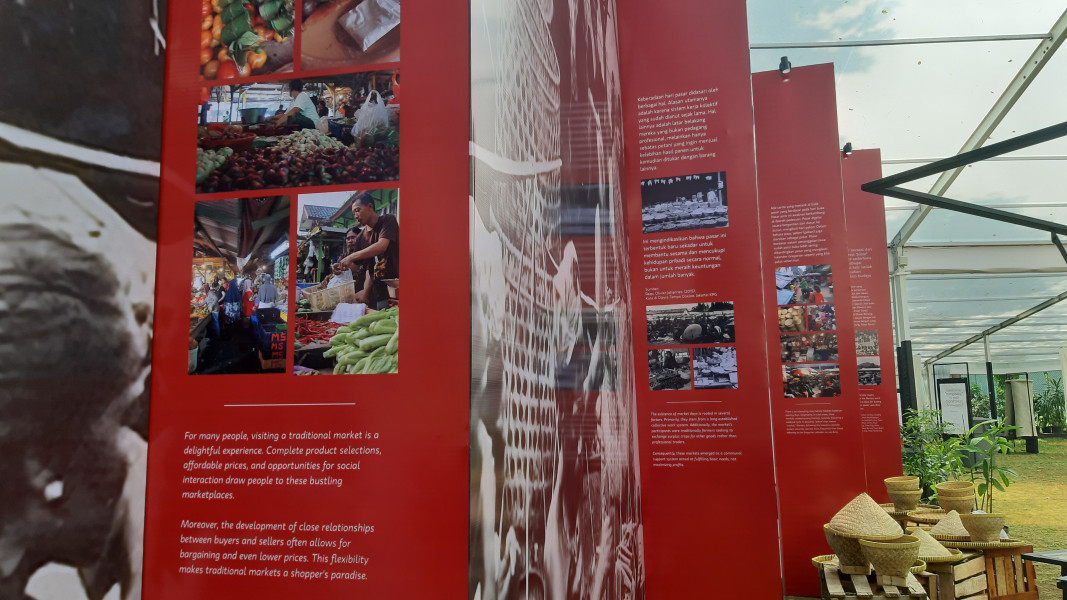
Have we ever imagined how rich and prosperous the archipelago was in the past? The Spice Route, a maritime trade route connecting several continents and oceans, made our region the center of the world's attention. The abundant spices not only provided economic benefits but also became a bridge for intercultural exchange and a wealth of knowledge. The values of tolerance, diversity, and the spirit of mutual cooperation that we inherit today are largely influenced by the interactions that occurred along the Spice Route. However, as time goes by and the era changes, the Spice Route begins to be forgotten.
My experience watching a foreign documentary thirteen years ago inspired me to delve deeper into the spice route. The host narrated the story of the spice route in a very engaging way. His presence among traditional communities and being part of their daily lives made me wonder: To what extent do our children still have a connection with their ancestral traditions? How can we preserve the memory of knowledge stored in the wisdom of traditions that are often alienated by modernization? Spices and us are essentially not distant. We do not need to look too far back into history to find answers to the question: “how can we survive beyond space and time?” We only need to return home to the tradition where spices are part of the rites of life - from being in the womb, being born, growing up, getting married, aging, to returning to the womb of Mother.
Spices are so close to our daily lives that they are always present as expressions of gratitude and even as wards against misfortune. For us, the people of the archipelago, spices are not just ingredients. They reflect our dreams, fears, hopes, and victories. From the bustling markets in Southeast Asia to the grand kitchens in various parts of the world, spices are revered for their flavor, healing properties, and cultural significance.
On August 18, 2024, a day after the commemoration of Indonesia's 79th independence anniversary, we will hold the "Spices and Us" exhibition until August 31 at the Borobudur Hotel Jakarta. This event is an initiative led by the Spice State Foundation and its community network to rediscover the deep relationship between humans and nature, especially spices. As living beings that are very good at adapting, humans always learn from their environment.
From generation to generation, traditional communities have gathered deep knowledge about beneficial spice plants in their own ways, in harmony with their natural conditions. Spices are used from religious ritual complements, medicines, preservatives, flavor enhancers, fragrances, natural dyes, to body care. It is not surprising that spices are deeply embedded in the cultural fabric of Indonesia. The tradition and practice of utilizing spices have been passed down continuously through generations. Highlighting traditional knowledge from several regions in Indonesia, this exhibition invites us to slow down for a moment to rediscover the memory of flavors that have been lost in the hustle and bustle of the times, as well as to introduce our children to the traditional knowledge inherited from their ancestors.
This exhibition presents the role of spices in our life rites as wards against misfortune, expressions of gratitude, artistic expressions, including how Indonesians cope with a very familiar health disturbance known as 'entering the wind'.
Mutual Cooperation in Preserving Cultural Heritage
From the preparation phase until the public program “Spices and Us” is implemented, I have been greatly inspired by the spirit of friends and collaborators from various communities and backgrounds. From cultural heritage preservers, academics, culinary practitioners, teachers, farmers, designers, researchers, artisans, MSME actors, business people, to students - across ages, sectors, and disciplines - all showed extraordinary enthusiasm to contribute. Opened with a betel leaf chewing ceremony, this program became a collaborative space for mutual learning.
Fresh ideas and concepts emerged when everyone involved realized the importance of preserving various traditional knowledge and began discussing creative potentials for the future in social, cultural, and economic contexts. Some of these include the emergence of unique and high-value spice-based products such as processed spice foods, herbal drinks, body care, including books and memorabilia inspired by the narrative of the Spice Route.
Towards the Registration of the Spice Route as a World Heritage
Since 2017, the Indonesian government through the Ministry of Education, Culture, Research, and Technology has been working to propose the registration of the Spice Route as a World Heritage. This intercultural exchange and knowledge route plays a significant role in shaping the history of civilization. Due to its transnational nature, the proposal for the Spice Route must be made jointly with other countries connected to this route. This means that the Spice Route is no longer just Indonesia's heritage, but a world heritage entrusted to all of us for its preservation and continuity.
This status has the potential to be a medium that sparks inspiration and real action towards improving the quality of life as it provides a contextual perspective for us to contribute to addressing contemporary challenges such as food security, climate change, poverty alleviation, equality, and various other challenges. The Spice Route, although rich in history, is not widely understood by the public. This concept transcends spice trade, even becoming a metaphor for dynamic cultural interactions. A deep understanding of the Spice Route requires a society that values differences and is always learning.
Indonesiana Fund: A Catalyst for Collaboration and Innovation in Preserving Spice Heritage
The support from the Ministry of Education, Culture, Research, and Technology through the Indonesiana Fund LPDP has been an important catalyst in the success of the "Spices and Us" program. The financial assistance provided allows us to carry out various activities that were previously difficult to conduct due to resource limitations, especially funding.
This Indonesiana support is very helpful for: (1) supporting the collection of data and information about traditional knowledge that is still scattered in various remote areas; (2) facilitating communities and the general public, especially the youth, to find new ways in knowledge production; (3) facilitating public programs such as exhibitions and sharing sessions; and importantly (4) building collaborative networks and partnerships with various parties to collectively expand the impact of the program.
The tangible impact of the support provided includes the emergence of creative initiatives to find fresh methods of knowledge production to introduce traditional knowledge to the younger generation, such as bringing spice characters to life, spice card games, and sharing sessions with various communities. Although technology offers possibilities, it cannot replace the power of human relationships and collaborative learning.
Similarly, the enthusiasm of community collaborators from several regions such as Cultural Heritage Friends (Palembang, South Sumatra), Incense Community (Makassar, South Sulawesi), Ternate Heritage Society (Ternate, North Maluku), Puta Dino Kayangan (Tidore, North Maluku), Telinsong Culture (Belitung), Sumatra Heritage Porch (Medan, North Sumatra), Seed Terminal and Goronto traders (Gorontalo), and others. They are eager to share stories and traditional knowledge from their respective origins.
The "Spices and Us" program is a tangible proof that with good support and collaboration, we can build a better future. Through the preservation of cultural heritage, we not only maintain national identity but also share knowledge, thus opening up more opportunities for sustainable development. Thank you, Indonesiana.[*]