



Librarians and Libraries in the Cloud

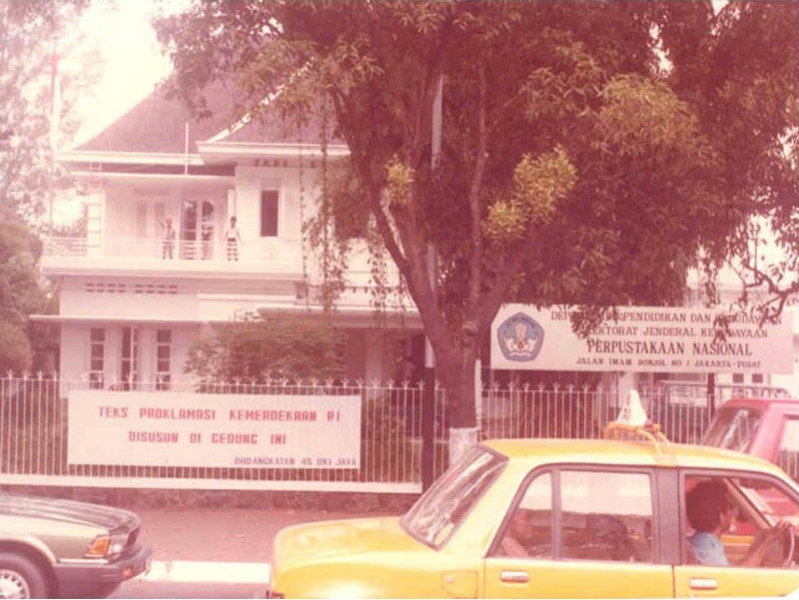
Collections of manuscripts, newspapers, magazines, and other printed works will gradually deteriorate or be damaged by age. The digitization of these collections continues alongside technological advancements. Rapidly changing technology will certainly impact the renewal of collections that are also updated continuously. We have likely experienced this when visiting libraries, where we are only presented with digital book collections because the original library materials can no longer be accessed due to their material vulnerability. However, the development of digital collections does not stop there, considering that generations continue to change and the rapidly evolving information technology also affects the means of presenting collections.
Here, the role of a librarian must include the ability to adapt to changes, not merely converting materials into digital formats. According to Suhenrik (2006), "A librarian is someone who engages in activities at the library to provide services to visitors and users according to what has been provided by the institution based on knowledge, documentation, and information they possess based on education." Meanwhile, according to Reitz (2004), "A librarian is a person trained to be a professional in managing libraries and is responsible for the content within the library, as well as selecting, organizing books, and processing them well, providing information sources, teaching, and serving book loans to meet user needs."
Many Challenges in Becoming a Librarian
The role of a librarian in a country with a low literacy culture certainly presents its own challenges. According to a survey by CEOWORLD magazine in 2024 conducted among book readers in 102 countries, Americans read an average of 17 books per year, and Indians read 16 books. Meanwhile, Indonesians rank 31st with an average of 5.91 books per year. Another interesting fact is that both Americans and Indians prefer printed books over electronic or audio books, even though digital trends are starting to penetrate book products. Essentially, the challenge for a librarian is no longer just to increase public interest and reading culture with existing library collections, but further to create innovations in presenting new forms of library sources to the community. In the future, library spaces may become exhibition areas for library materials that can no longer be touched, as their contents have been converted into traveling collections accessible to the public without needing to visit the library directly.
Collections that are already in a vulnerable condition will transform in form and function into part of the library museum itself. What could once be physically held while reading a book, for example, will in the future only be viewed as display objects in the library's exhibition space. Librarians will eventually become museum curators who will think about how to manage exhibition spaces with various themes. The themes of exhibitions will not only be limited to the use of the Dewey System but will also touch on more dynamic thematic aspects according to the tastes of the librarian as curator. A librarian will make the exhibition space a showcase of the library that resembles a catalog of collections to guide visitors in finding the library collections they desire.
In another part of the library building, librarians and their teams are busy organizing the flow of digitization of library collections, the production process of converting library materials, and distributing them to the community that constantly wants to access them. This database ultimately becomes the main source of the outflow of library materials for user access. A database that travels the world without territorial boundaries invades private spaces, coming before its readers. This presents both challenges and bright opportunities for the librarian profession to remain sustainable even though the original library materials have been lost forever.
Happy Librarian's Day!
References:
Chairul, R. (2019). Digital literacy in education: Utilizing technology and new media. Digital Education Journal, 5(2), 45-58
Librarian Writing Class. 2019. Literacy and Librarians in the 4.0 Era. Surakarta
Reitz, Joan M. 2004. Dictionary for Library and Information Science. London. Libraries Unlimited