



Prambanan, A Bridge of Cultural Diplomacy Between Indonesia and India in Preserving World Heritage

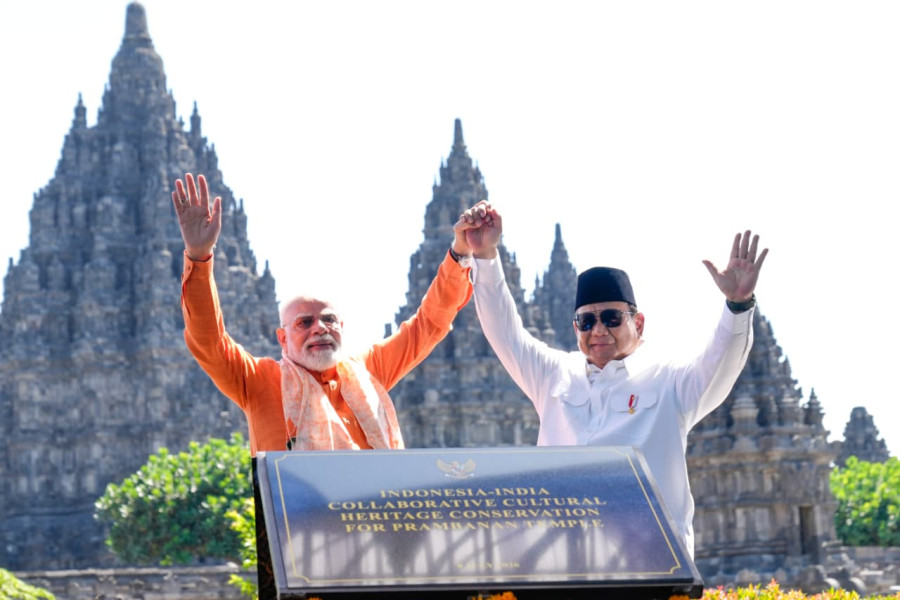
Amid various challenges threatening the preservation of world historical sites, cross-country cooperation becomes increasingly important. The preservation of cultural heritage can no longer be viewed as the sole responsibility of one country, but rather as a shared commitment to safeguard the traces of human civilization. The signing of the conservation cooperation agreement for Prambanan Temple between Indonesia and India serves as evidence that culture can be a bridge connecting two nations in caring for world heritage.
This commitment is realized through the Indonesia–India Collaborative Heritage Conservation program for the conservation and restoration of the Perwara Temple in the Prambanan Temple Complex. This agreement, which will last for ten years, is a strategic step in preserving one of UNESCO's World Heritage Sites, while also strengthening the cultural ties that have been closely woven between Indonesia and India.
This cooperation did not arise without reason. The cultural relationship between Indonesia and India has been established long before both countries emerged as modern nations. The traces of Indian civilization's influence in the archipelago can be traced through the development of Hinduism and Buddhism, the use of Pallava script, and the emergence of great kingdoms such as Kutai, Tarumanegara, Mataram Kuno, and Majapahit. Throughout this historical journey, the people of the archipelago did not merely accept external influences but transformed them into a distinctive cultural identity. The Prambanan Temple Complex stands as one of the most tangible proofs of this acculturation process.
As the largest Hindu temple complex in Indonesia and a UNESCO World Heritage Site, Prambanan holds significant importance not only for Indonesia but also for the international community. This temple complex represents the high achievements of architecture, art, and building technology during the Mataram Kuno period, while also symbolizing the rich cultural heritage of the archipelago recognized by the world. Preserving Prambanan means safeguarding a civilization heritage that holds universal value for both current and future generations.
In this context, the cooperation between Indonesia and India carries a meaning that extends far beyond mere conservation programs. This collaboration is a form of cultural diplomacy built on shared history, respect for civilization heritage, and a spirit of knowledge sharing. Unlike political diplomacy, which is often influenced by short-term interests, cultural diplomacy has a stronger resilience as it is based on values inherited across generations. Through the preservation of cultural heritage, both countries not only strengthen bilateral relations but also demonstrate to the world that culture can be a space for dialogue, mutual trust, and sustainable cooperation.
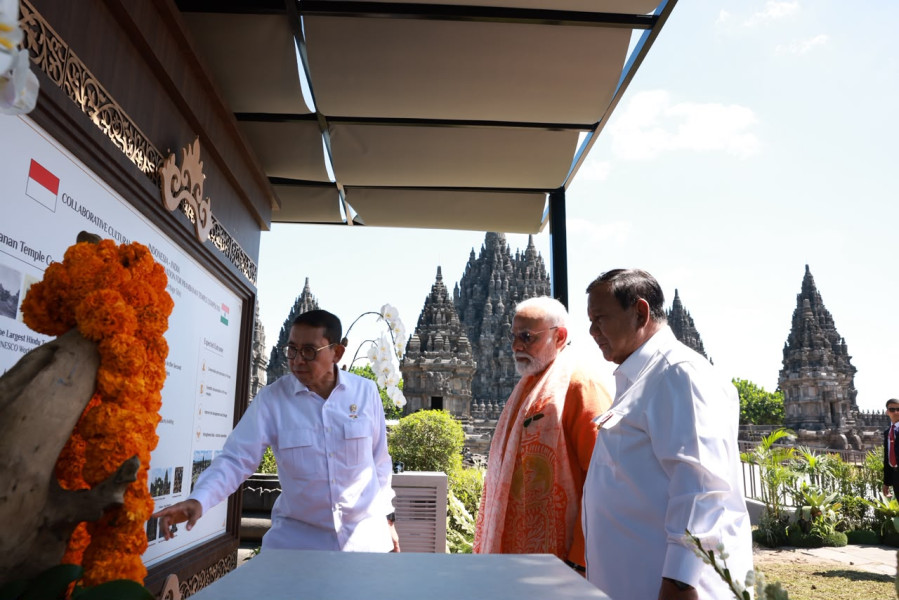
Amid various global challenges, the preservation of cultural heritage faces increasingly complex issues. Factors such as the age of buildings, climate change, seismic activity, natural disasters, development pressures, and the rise of tourism activities present challenges that require sustainable management. These conditions indicate that conservation can no longer rely solely on conventional approaches but requires innovation, research, international collaboration, and knowledge exchange between countries.
One important aspect of this cooperation is the utilization of technology in the conservation process. The use of technologies such as LiDAR, photogrammetry, and Artificial Intelligence (AI) allows for documentation, mapping, and analysis of building conditions to be conducted with a higher level of accuracy. These technologies help conservators understand the structural conditions more comprehensively, enabling preservation measures to be designed more precisely, effectively, and sustainably.
However, the success of conservation is not solely determined by technological sophistication. Strengthening human resource capacity is also a crucial factor. Through this cooperation, Indonesia and India have the opportunity to exchange experiences, conservation methods, and technical expertise in caring for cultural heritage sites. This knowledge transfer is expected to enhance the capacity of Indonesian conservators so that the management of cultural heritage sites can continue to develop according to international standards without neglecting the local values inherent in each site.
Furthermore, this collaboration also opens opportunities for strengthening joint research, developing conservation education, and managing cultural tourism more sustainably. Thus, the benefits of cooperation do not stop at the physical restoration of buildings but also encourage the emergence of a stronger and more adaptive cultural preservation ecosystem in response to future challenges.
On the other hand, the preservation of cultural heritage still requires the involvement of all elements of society. The government plays a role as policy makers and facilitators, while academics, cultural communities, business actors, media, and the younger generation have important roles in preserving, utilizing, and revitalizing cultural values in everyday life. Cultural heritage will remain preserved if there is a sense of ownership from the community that inherits it.
This cooperation between Indonesia and India demonstrates that cultural preservation is not only oriented towards maintaining historical buildings but also ensuring that the values contained within them continue to live through research, education, innovation, and cross-cultural dialogue. Thus, cultural heritage does not cease to be a relic of the past but becomes a relevant source of learning for contemporary society and an inspiration for future generations.
The Ministry of Culture's efforts in building this international collaboration reflect Indonesia's commitment to continuously strengthen cultural advancement efforts while reinforcing Indonesia's position as a country actively contributing to the preservation of world cultural heritage. This collaboration shows that cultural preservation is a long-term investment that requires synergy among governments, international institutions, academics, communities, and society.
Ultimately, preserving Prambanan is not just about maintaining the temple stones that have stood for over a thousand years. What is truly being preserved is the collective memory of humanity about civilization, creativity, tolerance, and the cultural ability to unite nations. From Prambanan, Indonesia and India demonstrate that cultural heritage is not only a relic of the past but a foundation for building a more peaceful, respectful, and sustainable future together.
As stated by the Minister of Culture of the Republic of Indonesia, Fadli Zon, "We hope this cooperation becomes a shared legacy of Indonesia and India, and serves as an example of how two nations can work together to preserve world cultural heritage for future generations." This hope emphasizes that the success of conservation is not only measured by the solidity of the restored buildings but also by the strength of the friendship built through culture.