



Our Traditional Medicine: "There Is No Medicine!"

Indonesia's extraordinary biodiversity, marked by more than 25,000-30,000 plant species, over 17,000 islands, and more than 50 types of ecosystems, serves as the foundation for the cultural and traditional wealth of its people. The ethnic heterogeneity, reaching 300-700 groups, has given rise to various traditional medicine practices, each with unique properties and plant compositions. The use of traditional medicine in Indonesia, driven by belief in its efficacy and affordability, has become an integral part of the public health system. Empirical studies have confirmed the effectiveness of various traditional medicine formulas in maintaining health and treating various diseases (Adiyasa & Meiyanti in Bunga et al., 2025).
Indonesia's biodiversity is an asset and cultural resource that must be protected and managed so that it can become a heritage from ancestors and benefit the community for public health maintenance. Therefore, efforts are needed to document traditional medicine knowledge in line with efforts to preserve medicinal plants for conservation knowledge and community welfare. One way to document this is through ethnobotanical studies of medicinal plants.
Ethnobotany is the behavior of a community in a region in utilizing the plants that live around them. Ethnobotany is a branch of science that studies the cultural relationship between humans and the surrounding plant life (Hakim, 2014). Ethnobotany has the potential to reveal the traditional knowledge systems of a community regarding biological resources, conservation, and culture, including the use of medicinal plants. Medicinal plants are one of the forest products that have benefits for the environment, culture, social, and economy. Medicinal plants must be managed with consideration for the needs of both current and future generations, with support from communities that have different local and traditional knowledge about the use of medicinal plants from various tribes and cultures, which are believed to have healing properties for various types of diseases.
The use of traditional medicine among the Indonesian population remains a belief for some in addressing various diseases. Although technological advancements have rapidly developed with the use of chemical substances and mass production of medicines through industry, knowledge about the efficacy of the plants around us remains a fundamental source of knowledge and serves as a guide and initial step in preventing the spread of diseases. Ethnobotanical studies have concluded that Indonesian traditional medicine consists of combinations of various plants that have been empirically proven to be quite effective in maintaining health, as well as preventing and treating diseases. Ethnomedicine studies aim to gather in-depth information regarding the use of medicinal plants in the community, their benefits, and their economic potential in the market, as well as their existence in an ecological context.
Ethnomedicine is an interdisciplinary field that studies the local knowledge systems of communities regarding health, disease, and treatment. The main focus of ethnomedicine is on exploring the utilization of natural resources, particularly plants, by various ethnic groups. The traditional knowledge systems that occur among ethnic groups in Indonesia regarding medicine not only discuss the raw materials of medicinal concoctions but also regulate traditions and specific rituals as healing methods, including summarizing the roles of shamans in the circle of traditional medicine knowledge.
The IndonesianaTV Cultural Channel aims to preserve and promote Indonesia's diverse culture to the wider community, both domestically and abroad, through the airing of programs that highlight various aspects of Indonesian culture, such as arts, customs, traditions, and history. The IndonesianaTV Cultural Channel seeks to enhance public knowledge and awareness of Indonesian culture through educational and informative programs presented in an engaging and easily understandable manner for all audiences.
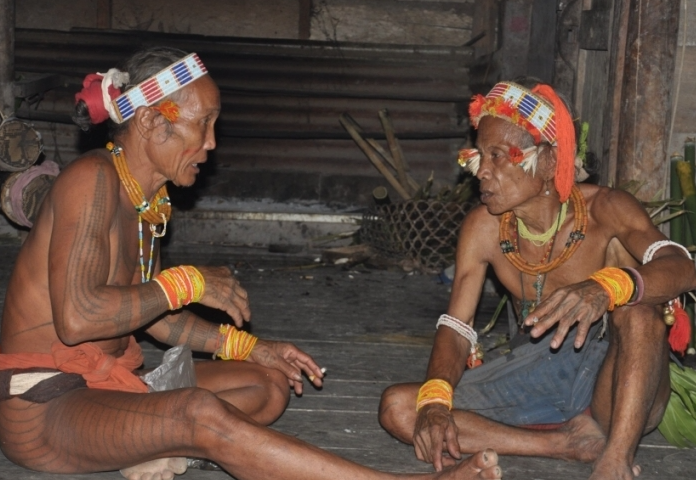
Cultural content related to traditional medicine knowledge currently available on the IndonesianaTV platform is the "Sikerei Festival of Ancient Healing Rituals of the Mentawai Tribe." This documentary program presents an in-depth portrayal of a unique ceremony aimed at preserving the ancient healing traditions of the Mentawai people. This festival not only celebrates the expertise of shamans or sikerei who possess deep knowledge of traditional medicines and healing methods passed down through generations but also emphasizes the importance of preserving cultural heritage that has existed for hundreds of years. During this festival, viewers can witness various rituals, dances, and offerings that reflect spiritual values and local wisdom, as well as interactions among communities that express gratitude to nature and ancestors.
The airing of cultural content on the IndonesianaTV Channel is a form of good practice that is expected to provide educational information that ultimately leads to the preservation of Indonesian culture and serves as a guide for future generations.
References
Bunga, Cut Dewi et al. 2025. Ethnomedicine Study: Analysis of the Potential Utilization of Traditional Medicinal Plants in Tempurejo Village. Mandala Pharmacon Indonesia Journal Vol. 11 No. 1. Muhammadiyah University of Magelang
Perbawa, Jaka. 2006. Ethnobotanical Study: Dynamics of Traditional Medicine in Rancakalong District, Sumedang Regency 1973 – 2000. Thesis. Department of History, Faculty of Literature, Padjadjaran University. Sumedang
Hakim, L. 2014. Ethnobotany and Management of Home Garden: Food Security, Health, and Agrotourism. Malang: Selaras Publisher
Friedberg and Claudine. 1995. Ethnobotany and Its Future. Proceedings of the National Ethnobotany Seminar January 1995. Bogor: Botanical Research and Development, Biological Research and Development Agency-LIPI