



Managing Civilization Waste

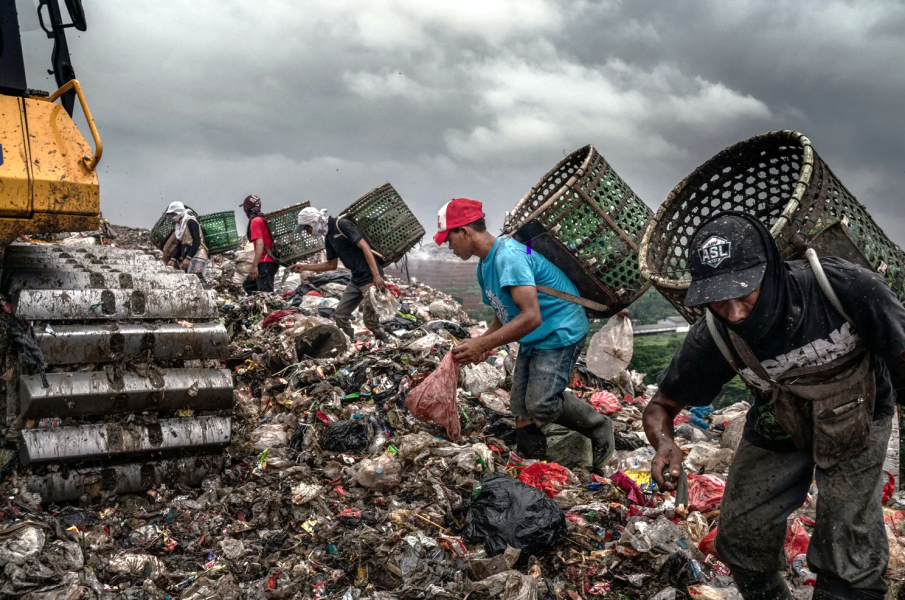
The environment is one of the factors that influence the level of physical and mental health, thus there is a societal responsibility to maintain the environment. The issue of waste has become an inseparable part of human life. Every civilization experiences a life cycle in all its activities. The chain of life from production, distribution, to consumption becomes daily activities that inevitably lead to waste. The problem of waste management has become a global issue that is increasingly complex, especially in developing countries with rapid population growth and high urbanization. In Indonesia, waste production reaches 64 million tons per year, with 3.2 million tons of it being plastic waste that ends up in the ocean, placing Indonesia as the second-largest contributor of plastic waste in the world after China (Jambeck in Wandira et. Al, 2024). According to a study published in Science Advances in July 2017, humans have produced at least 8.3 trillion tons of waste. By 2050, the amount of waste is expected to increase by 50 percent, referring to a report by the World Economic Forum. The article states that by that year, the population of plastic waste will outnumber fish in the sea.
In the past, the issue of waste was also a central topic of discussion. Archaeological studies have found that in the past, shellfish shells became remnants of waste from that time which would become fossils of civilization in the future. One can imagine if in the future archaeologists will find and study fossilized plastic waste to unravel the story of human civilization. Initially, plastic was a material that had many advantages that could be shaped as desired with the help of heat and/or pressure. However, over time, it turns out that plastic has long-term impacts due to its durability and difficulty in decomposing in the environment over a long period. This certainly can have an impact on the environment, both on land and in the sea. Plastic production has dramatically increased worldwide over the past 60 years and is now recognized as a serious threat to the environment due to its non-degradable nature, allowing it to persist in the environment (Bernat in Khoirunnisa, 2022).
The development of technology and its long-lasting nature is due to its full acceptance by society and its use in daily life. Users generally consider the benefits first before calculating the drawbacks. Benefits are often short-term and functional when used, unlike drawbacks that may be felt over a long period in the future and may not necessarily be experienced directly by the current generation. Technological innovations are certainly fully dedicated to improving human life over time. The rapid advancement of science will certainly correlate with new innovations that are improvements of previously existing technologies. However, science can also harm human life if it does not consider the environment and other living beings.
The IndonesianaTV Cultural Channel aims to preserve and promote Indonesia's diverse culture to the wider community, both domestically and abroad, through the airing of programs that highlight various aspects of Indonesian culture, such as arts, customs, traditions, and history. The IndonesianaTV Cultural Channel seeks to enhance public knowledge and awareness of Indonesian culture through educational and informative programs that are packaged attractively and are easy to understand for all audiences.
Cultural content related to waste management in the community currently available on the IndonesianaTV platform is "Bocah Sampah". The "Bocah Sampah" program tells the story of Joseph, a 12-year-old boy, who spends his time exploring the world in non-formal educational spaces. His days are filled with playing with children around his home.
The cultural content available on the IndonesianaTV Cultural Channel is a form of good practice that is expected to provide educational information aimed at realizing a sustainable Indonesian culture that serves as a guide for future generations. Through its content, Indonesiana TV invites individual involvement in addressing environmental issues and problems in society.
References
Khoirunnisa, Fitriah & Asep Kadarohman. 2022. The Dilemma of Plastic Use: Needs and Environmental Sustainability (A Review of Ethical Aspects from an Axiological Perspective). Indonesian Philosophy Journal, Vol 5 No 1 Year 2022;
Martias, Irsyad. 2012. Model Transformation of Shell Waste in the Coastal Settlement of Watukarung, Pacitan: An Ethnoarchaeological Study. Archaeological Periodical Bulletin Vol.32 Edition No.1/May 2012 Gadjah Mada University, Yogyakarta;
Wandira, Rezky Surya et al. 2024. A New Paradigm of Waste Management: The Role of Organizational Culture and Dynamic Capabilities in Waste Bank Programs. PAMARENDA Journal: Public Administration and Government Journal Volume 4. No. 2. (November, 2024), pp. 347-360. Hasanuddin University, Makassar, Indonesia.