



Revisiting the Role and Status of Women in Indonesia

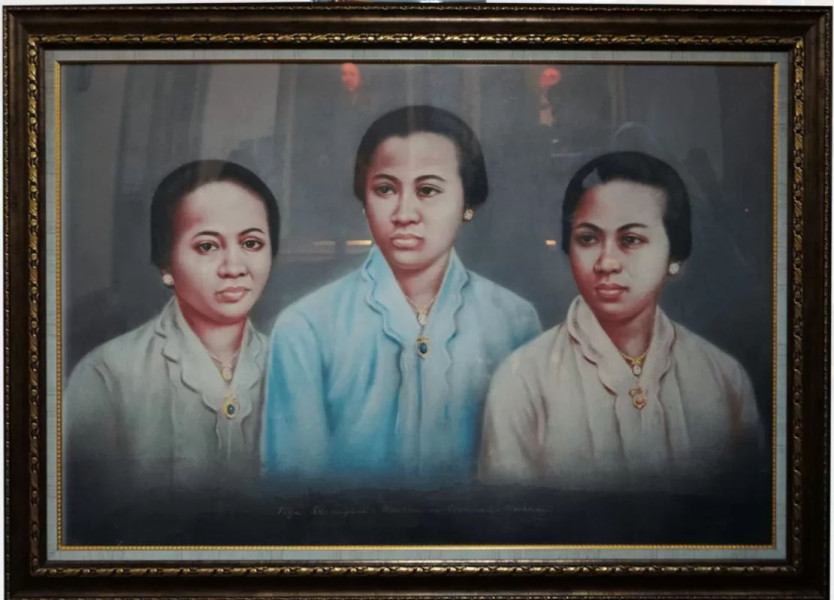
“Men are defined as human beings and women are defined as women. Whenever she tries to behave as a human, she is accused of trying to imitate men.”
The above sentence is an expression of feminist philosopher, Simone de Beauvoir in her book The Second Sex published in 1949. Beauvoir argues that a woman should be who she wants to be and have the opportunity to determine her own destiny and not feel limited by others. Furthermore, she argues that being a woman is not something predetermined, but determined by the choices one makes throughout her life.
Long before Simone de Beauvoir wrote that book, the concept of gender equality was already known in Ancient Java. Women had strategic roles and positions in Ancient Javanese society. Of course, these positions were not merely about cooking in the kitchen or washing clothes and dishes in the bathroom as in the patriarchal concept of today. The roles and positions of women in Ancient Java are explained in inscriptions, such as the Bunur/Kancana Inscription (860 AD and 1367 AD), the Guntur Inscription (907 AD), the Simanlayang Inscription (1046 AD), and the Mula Malurung Inscription (1255 AD).
Titi Surti Nastiti in her 2009 dissertation titled The Position and Role of Women in Ancient Javanese Society (8th-15th Century AD) explains several roles and positions of women in various fields, such as politics, social, economy, law, religion, and arts.
In the political field during Ancient Java from the 8th to the 15th century, there were 52 individuals who occupied the throne as kings and queens. Among these 52 leaders, there were three queens who had served as high leaders of the kingdom. These three queens were Sri Isanatunggawijaya from the Ancient Mataram Kingdom, Tribhuwanattunggadewi Jayawisnuwarddhani, and Dewi Suhita from the Majapahit Kingdom.
The existence of women as the highest leaders of the kingdom shows that there was no distinction in inheritance rights. This culture from the time of Ancient Mataram to the Majapahit era did not change, but there were certain rules that had to be followed. For example, to occupy the position of crown prince/princess, one must be the first child of the queen, but this was not related to gender differences.
The role of women in Ancient Java certainly did not stop at queens who became leaders of the Kingdom, but included other professions under the Kingdom, such as in the fields of economy, law, religion, and arts. For example, in the legal field, women served as court officials and inheritance law experts.
In the legal field, for instance, one evidence of women's status can be found in the Guntur Inscription (907 AD) from the Ancient Mataram era. This inscription mentions women who served as witnesses in court (tatra sākśī) and adjudicators of a case (pinariccheda guńadośa). During the Majapahit era, there were also judicial officials called dharmmopapaőői (royal advisory council).
Are Women Becoming More Oppressed?
However, as time progressed, the role and status of women in Indonesia during the colonial period—especially in the late 19th and early 20th centuries—did not become more equal, but increasingly oppressed, especially for Javanese women.
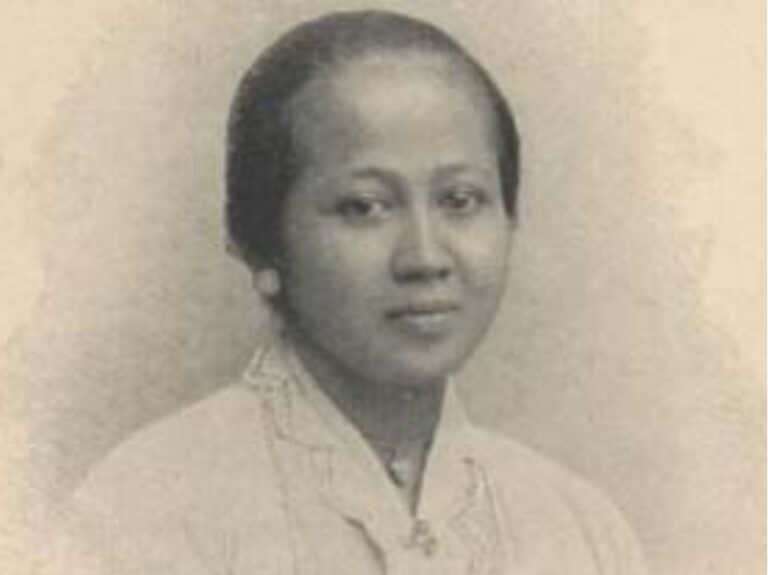
Kartini, through her letters, described the suffering of Javanese women at that time. According to her, women were shackled by tradition, such as being forbidden to go to school, being secluded, and having to be ready to marry men they did not know. It can be assumed that the role of women was limited to marrying and managing households. Kartini's criticism and resistance then inspired the establishment of schools. One of them was the Kartini School in Batavia, established three years after her death, specifically in 1907.
The spirit of Kartini has recently experienced a narrowing of meaning in the era of globalization. Kartini Day is only interpreted as a day when women wear Javanese kebaya or other regional women's attire to take photos and upload them on social media with the caption “Happy Kartini Day.”
The meaning of Kartini Day should be broader. Women, in particular, should be able to interpret Kartini Day as a day of resistance. Resistance against patriarchy, resistance against inequality, and resistance against gender discrimination. Moreover, on Kartini Day, women should be able to become a milestone of awareness to become whole human beings, not limited by gender boundaries. Happy Kartini Day!
References:
De Beauvoir, Simone. The Second Sex. New York: Vintage Books.2010.
Surtinastiti, Tuti. “The Position and Role of Women in Ancient Javanese Society (8th-15th Century AD),” Dissertation for Doctoral Program, Faculty of Cultural Sciences, University of Indonesia, 2009.
Erianto, Dwi. Kartini and Feminism in Indonesia. 2024. Jakarta. Kompaspedia.kompas.id https://kompaspedia.kompas.id/baca/paparan-topik/kartini-dan-feminisme-di-indonesia . 15 April 2024.
Mukthi.M.F. 2024. Jakarta. Historia.id https://historia.id/politik/articles/wanita-tak-dijajah-pria-sejak-dulu-DLLxb/page/1 . 15 April 2024.
Putri, Risa Herdahita. Jakarta. Historia.id https://historia.id/kuno/articles/peran-perempuan-jawa-kuno-PdjE9 . 15 April 2024.