



Emulating Kartini: Breaking Stigmas and Affirming Women's Roles in the Modern Era

The celebration of Kartini Day on April 21 often gets trapped in ceremonial traditional clothing, whereas its true essence is a reflection and internalization of women's struggle values. In Yogyakarta, a city that witnessed the first Women's Congress in 1928, this spirit of emancipation continues to transform. Gusti Kanjeng Ratu (GKR) Bendara, the youngest daughter of Sri Sultan Hamengkubuwono X, emphasizes that women's roles in the history of leadership are not limited to the domestic sphere alone. The history of the Yogyakarta Palace proves that women's involvement in state affairs existed long before the modern era. The stigma of women being confined to "kitchen, well, bed" is indeed irrelevant when looking at the traces of past queens. For example, Queen Hamengkubuwono I was a warrior skilled in weaponry, while the wife of Hamengkubuwono II had the capacity as a negotiator in dealings with the Dutch and English. Even the management of state finances during the reign of Hamengkubuwono VII was conducted by his wife, who performed functions akin to the Ministry of Finance.
The emancipation that has been proclaimed seems to suggest that the reduction of women began in the era of R.A. Kartini, whereas the palace queens had already started it long ago. This indicates that noblewomen of the past were educated and played a strategic role in the sovereignty of the state, even though these roles experienced degradation due to the social stigma that later developed. One important message from Kartini's figure is the courage to speak out. Gusti Bendara states that to be recorded in history and bring about change, women must "be loud enough". Doing good quietly is indeed beneficial, but without a sufficiently loud voice, the impact is difficult to capture in the larger narrative of history.
The challenge for modern women is to balance being vocal to be heard with the effort to maintain ethics and dignity to avoid mere criticism. In the Yogyakarta Palace itself, significant breakthroughs have occurred with the positioning of five daughters of the Sultan in the traditional decision-making structure. Strategic positions such as Pengageng (department heads), financial affairs, and secretariat are now often held by women. In the context of modern emancipation, GKR Bendara highlights a unique challenge she refers to as "Triple Standard". While women in general face double standards, noblewomen in the palace environment face layered standards, prompting them to consider their steps much more deeply. Often, this caution is misunderstood as slowness in decision-making. In fact, it results from a habit of thinking in many layers (multiple layers) instilled since childhood.
Obstacles to emancipation are also evident in the professional world, where many women at the managerial level "drop out" upon entering their 30s due to social pressures related to marriage and child-rearing. Gusti Bendara emphasizes the importance of a more supportive business environment and the need for strong legal protections for women, including the provision of safe houses for victims of violence.

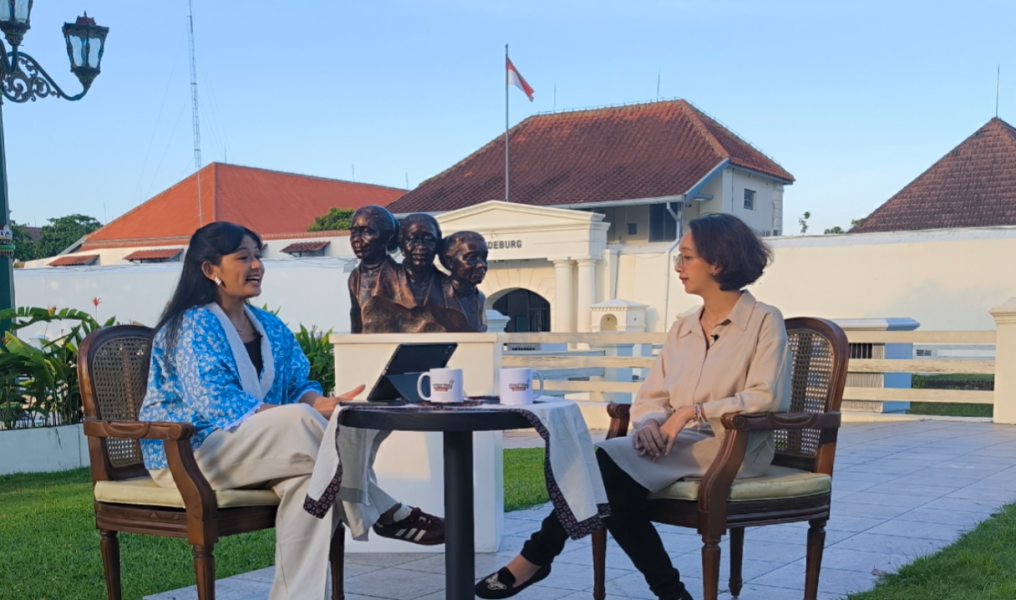
Documentation of the Kulturasi Podcast production with speaker GKR Bendara at the Vredeburg Fort Museum
Emancipation does not mean making men enemies or opponents of women, but rather strategic partners. The opening of doors for women often starts with the support of men who provide space, as demonstrated by Sultan Hamengkubuwono in the palace. The main message for women in the modern era is to remain be bold. By occupying strategic positions as leaders and policymakers, women can ensure that laws, visions, and missions of organizations will be more favorable to women's interests. Emancipation is not just about equality, but about the courage to contribute meaningfully to the advancement of culture and society.
This article is a summary of the Kulturasi Podcast by the Ministry of Culture, produced by the Cultural Media Center, where the excitement of the podcast with Gusti Bendara in facing the stigma of noble princesses can be fully listened to through the YouTube channel of the Ministry of Culture and IndonesianaTV.