



Leading Dreams

For some people, dreams may only be considered as fleeting thoughts that do not need to be taken seriously. Dreams are a part of human life. Because they are part of the series of human life and activities, in some ethnic groups, dreams also play an important role in the formation of human culture. Dreams are something that is never separated from human life. Sometimes in our daily lives, we experience dreaming and after waking up, we often recount to others the stories presented in our dreams. Patterns and stories that recur in dreams and are experienced by more than one person in a group will become notes for that group. Everything that happens, is accepted, and done by humans has become part of the manifestation of our cultural behavior.
The emergence of cultural products such as dream interpretations in various ethnic groups around the world, including in Indonesia, like Primbon among the Javanese, in Rokan Hulu Riau, and in various other places, shows that the phenomenon of the subconscious has become part of human life. The traditional knowledge systems in these various tribes serve as guides for living daily activities and life in various fields.
History also shows that thousands of years ago, there were humans who paid great attention to dreams. Records about dreams were first discovered in Nineveh, specifically in the library of King Ashurbanipal (669-629 BC), or the traditions practiced by ancient Egyptian society that created a kind of ritual called dream incubation (Craze, 2013).
Dreams became a serious topic and part of scientific studies after psychoanalyst Sigmund Freud explained this topic with his psychoanalytic theory. Freud (2001) argued that dreams are a way to fulfill repressed desires in the subconscious and cannot be achieved in the conscious mind. According to Freud (2001), dreams are a link between waking and sleeping conditions. For him, dreams are distorted expressions of forbidden desires that are revealed in a waking state. Freud often identified dreams as barriers to unconscious mental activity in expressing something that the individual thinks, along with erroneous psychic actions, slips of the tongue, and jokes. Meanwhile, Arabi (1972) identified them as part of imagination. Haffner (Freud, 2001) stated that dreams continue the life of the conscious mind, always connecting us with certain thoughts that had just appeared in our consciousness.
The IndonesianaTV Cultural Channel aims to preserve and promote Indonesia's diverse culture to the wider community, both domestically and internationally, through the airing of programs that highlight various aspects of Indonesian culture, such as arts, customs, traditions, and history. The IndonesianaTV Cultural Channel seeks to enhance public knowledge and awareness of Indonesian culture through educational and informative programs that are packaged attractively and are easy to understand by all groups.
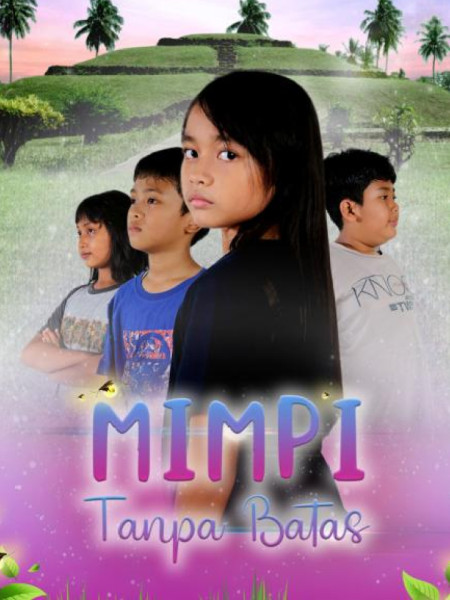
Cultural content related to dreams as part of a culture and psychological aspects that give rise to a form of motivation currently available on the IndonesianaTV platform is "Dreams Without Limits." The content "Dreams Without Limits" is a drama that tells the story of the community life in Pugung Raharjo Village in Lampung Province, focusing on the journey of a child with a leg disability who has extraordinary talent in drawing. Despite facing physical limitations, Arif does not let this condition hinder him from pursuing his dream of becoming an artist. Amid the challenges he faces, Arif is surrounded by support from his family, who work hard and always serve as a source of inspiration, teaching the importance of hard work and belief. In a village that still holds strong stigma against disabilities, they struggle against the skeptical views of some people. This drama showcases the child's interactions with his peers who always support him and become loyal friends. Together, they face various obstacles, including a drawing competition held in the village. This moment serves as an opportunity to showcase his talent and prove that dreams can be achieved without limits.
The airing of cultural content on the IndonesianaTV Cultural Channel is a form of good practice that is expected to provide educational information that ultimately leads to the preservation of Indonesian culture and serves as a guide for future generations. A culture that is dynamic and follows the times will experience various things in the future, whether it be adaptive culture, adopted culture, assimilated culture, or acculturated culture.
From dreams, we can learn, both from a cultural approach and psychological aspects, that nightmares can enhance vigilance and adaptability to a sign so that the bad things do not truly happen in real life. Conversely, with our good dreams, we can learn to motivate ourselves, plan so that the goodness woven in dreams can be realized in actual life. The restlessness and happiness of each individual after waking up from sleep do not merely become stories that are passed by and forgotten, but instead shape one's character to continue their life towards a better direction... Leading Dreams.
References
Craze, R. (2013). Dream Interpretation: Unveiling the Mysterious Symbols of the Subconscious, trans. I. Sugiri, Yogyakarta: Kanisius.
Freud, S. (2001). The Interpretation of Dreams: trans. Apri Danarto. Yogyakarta: Jendela.
Wulandari, Desi and Asih Ria Ningsih. 2022. Analysis of Dream Meaning in Langkitin Village, Rambah Samo District, Rokan Hulu Regency in Journal of Literature Rokania Volume 1 Number 1 April 2022. STKIP Rokania.
Yuminah. 2018. The Concept of Dreams in the Perspective of Islamic Psychology: A Comparative Study of Islamic Psychology and Western Psychology in the Journal of Islamic Psychology, Vol. 5, No.2 (2018): 87—102. Syarif Hidayatullah State Islamic University, Jakarta.