



Humanizing Civilized Indigenous Communities

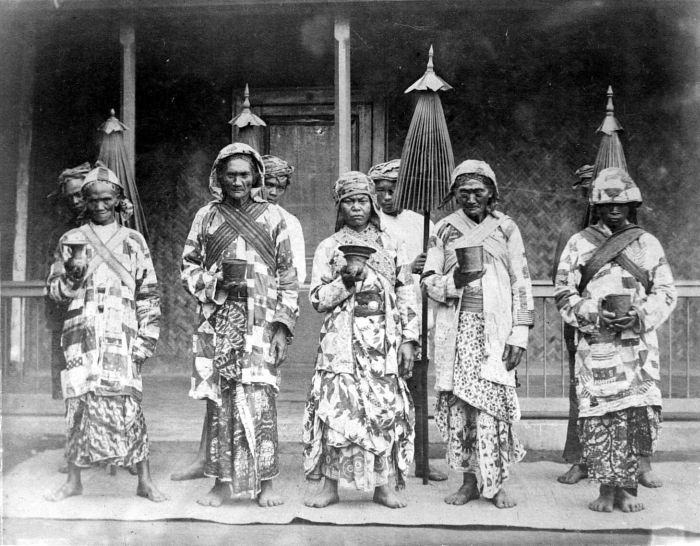
Indigenous communities are defined as "A legal unity, a unity of authority, and a unity of the environment based on common rights to land and water for all its citizens" (Hazairin in Haba, 2010). The recognition of the existence of indigenous communities has actually been included in the 1945 Constitution Article 18, as well as its explanation about "zelfbestuurende landschappen" (self-governing regions) and "volksgemeenschappen" (indigenous communities); where the state is obliged to respect the rights of the regions concerned. The amendment of the 1945 Constitution places the issue of indigenous communities in Article 18 B paragraph 23 related to regional governance; and Article 28 paragraph 3 regarding Human Rights (HAM). There is an inconsistency in the phrasing here because Article 18 B uses the term "customary law communities" and Article 28 paragraph 1 refers to "traditional communities"; where both articles actually refer to the same entity, namely "indigenous communities" (Indigenous Communities and Poverty Reduction in Indonesia in Haba, 2010).
The Alliance of Indigenous Peoples of the Archipelago defines indigenous communities as "Communities that live based on ancestral origins passed down through generations over a customary territory, which have sovereignty over land and natural resources, and a socio-cultural life regulated by customary law and institutions that manage the sustainability of their community life" (AMAN in Haba, 2010).
The issues that arise whenever discussing indigenous communities always revolve around identity, patterns of habits, self-existence, their ways of survival, their existence within their living space and residence, and so on. Efforts to integrate their existence with state law often lead to grievances that result in their resistance to defend the aspects inherent in their daily life patterns.
On one hand, efforts to preserve the culture of indigenous communities protected by the Cultural Advancement Law sometimes do not align with regulations governing land management, protected forests, and natural resources in their living environment. The implementation of each of these regulations will gradually uproot their cultural roots from their living locations. The government from various sectors needs to accompany the implementation of each regulation that has the potential to offend the existence of indigenous communities. We must ensure that conflicts between these regulations do not result in the erosion of the cultural ecosystem that has sustained the existence of indigenous communities. The state must always be present for their survival, so that misunderstandings regarding a regulation do not lead them to violate general laws and state laws.
Empowerment programs for indigenous communities should be understood as efforts to improve welfare that stem from their understanding and needs in living together with parties outside their communities. This is to avoid the imposition of empowerment programs that only benefit external parties without fostering a mutual understanding that is committed to the sustainability of cultural entities.
The IndonesianaTV Cultural Channel aims to preserve and promote Indonesia's diverse culture to the wider community, both domestically and abroad, through the airing of programs that highlight various aspects of Indonesian culture, such as arts, customs, traditions, and history. The IndonesianaTV Cultural Channel seeks to enhance public knowledge and awareness of Indonesian culture through educational and informative programs presented in an engaging and easily understandable manner for all audiences.
Cultural content related to the existence of indigenous communities with the dynamics and encounters with modern culture currently available on the IndonesianaTV platform is "Harmony of Tengger Bromo." The "Harmony of Tengger Bromo" program tells the meaningful journey of a father and son exploring the Bromo area, a place famous for its natural beauty and the unique life of the Tengger community. In this journey, they not only enjoy the stunning natural charm of Bromo but also delve deeper into the life, customs, and traditions of the Tengger community, which is rich in spiritual values and local wisdom. The Tengger community, known for traditional ceremonies such as Yadnya Kasada, maintains harmony between humans and nature and continues to preserve their ancestral heritage amidst changing times. This documentary showcases how these traditions still play a vital role in the daily lives of the Tengger community, inviting viewers to understand the richness of Indonesian culture that is deeply rooted in values of togetherness and balance with nature.
The cultural content aired on the IndonesianaTV Cultural Channel is a form of good practice that is expected to serve as educational information leading to the realization of Indonesian culture that remains sustainable and serves as a guide for future generations. Through its content, Indonesiana TV invites individual involvement in addressing environmental issues and societal problems.
References
Haba, John. 2010. The Reality of Indigenous Communities in Indonesia: A Reflection. Journal of Society & Culture, Volume 12 No. 2 Year 2010