



Manuscript: Ethical Compass for Managing Ecological Resources

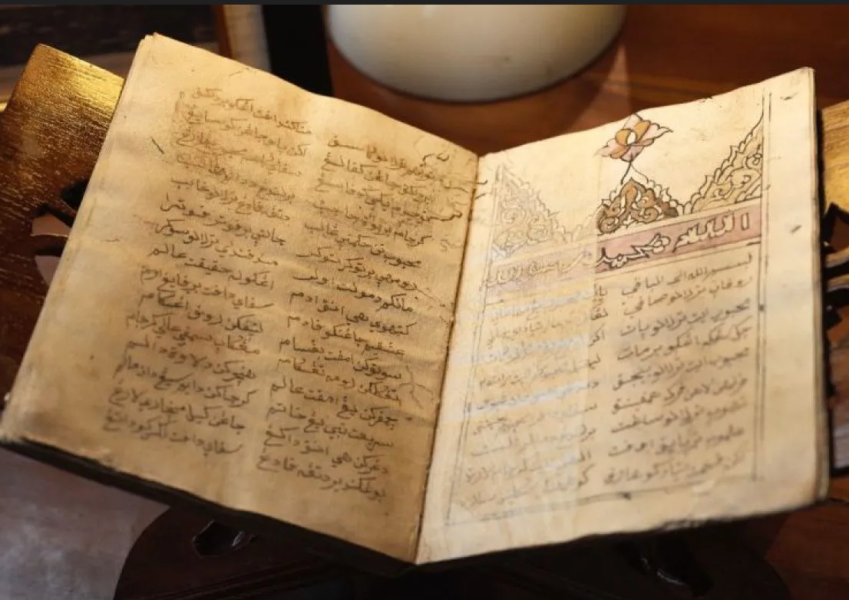
The transition from the year 2025 to 2026 became a heartbreaking change for some communities in Indonesia. How could it not be, at the end of 2025, specifically in November, flash floods struck West Sumatra, North Sumatra, and Aceh. Then at the beginning of 2026, a landslide occurred in Cisarua District, West Bandung Regency. Both disasters devastated and paralyzed the life systems in the affected areas.
Indeed, when the floods and landslides occurred, Indonesia was experiencing a rainy season with very high intensity. However, most people believe that the cause of the floods in Sumatra and the landslide in Cisarua is not solely due to the high intensity of rain, but rather more due to changes in land use in the disaster-affected areas.
Forests with vegetation that originally served as the main barrier to absorb rainwater and prevent erosion have gradually been converted into open fields and plantations. The soil's ability to absorb water has decreased, so when it rains with high intensity, more water flows over the surface of the soil, ultimately causing floods and landslides.
Flood and landslide disasters could have been prevented if the community (especially the government) had been wiser in managing nature and its environment. Learning from ancestors who have passed down the knowledge of utilizing and managing space while understanding nature without exploiting it. This ecological knowledge is encapsulated in written manuscripts and serves as a guide that directs humans in managing nature and their living environment.
In the ancient Sundanese manuscript, Sanghyang Siksa Kandang Karesian, which is estimated to have been written in 1581 AD, for example. In the section Dasa Kreta, it contains guidelines for working together to maintain the world (ngretakeun bumi lamba) to create prosperity manifested in a clean environment, fertile plants, well-managed fields, filled granaries, and preserved tapping forests. In another section, Karma ning Hulun mentions the prohibition of damaging nature by creating boundaries between forests and gardens. The aim is to protect forest resources by marking certain resources to prevent excessive exploitation.
In addition to ancient Sundanese, ecological knowledge is also possessed by the Bugis tribe. This knowledge is written in manuscripts made from lontar leaves called Lontarak Bugis. Among the many Lontarak Bugis manuscripts, the Puang Rimaggalatung manuscript discusses the role of ethics and morals of humans in preserving nature. In the Puang Rimaggalatung manuscript, it is stated that everything that happens in nature is a result of human behavior and morals.
“Na ia na rekko makessingi bicara e na makessing libunna tau we ri laleng mpanua, madecengi tekna pananrang e. Makessingi turunna wongek e. Na jajina anre tekko e. Makessing i o i ajajingenna ase taneng e. Maruwae wekkadua manengtoi panarang e.”
“If the regulations are applied properly and the people in the country are united, the planting season will proceed normally. Rain will fall regularly. The cultivated land will become fertile. The rice planted will grow abundantly. There will be water twice in the planting season.” This is a quote from one of the contents of the Puang Rimaggalatung manuscript.
Ecological knowledge in manuscripts does not stop as mere reading texts. This knowledge is then applied in the lives of the community and becomes rooted in culture. Like the Urang Kanekes or known as the Baduy Community. Although they do not fully implement the contents of manuscripts like Sanghyang Siksa Kandang Karesian and Puang Rimaggalatung, the Urang Kanekes always maintain, manage, and treat nature and their living environment according to their needs without the need to exploit it.
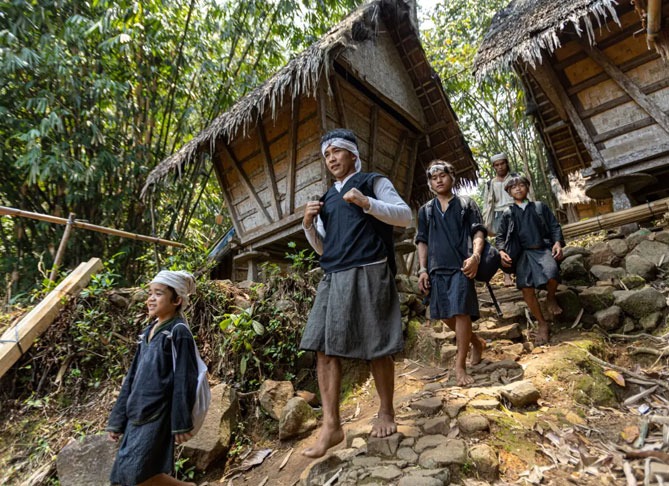
Doc: kemenpar.go.id (Image: Urang Kanekes/Baduy Community)
The concept of pikukuh karuhun (not changing something or changing as little as possible) has been held firmly by the Baduy Community from the past until now. This concept is manifested in part by establishing forest zoning called leuweung kolot or forbidden forest. In the forbidden forest: 1) it is prohibited to enter the forbidden forest to cut down trees, open fields, or take other forest products; 2) it is prohibited to cut down certain types of trees and plants such as trees or plants that produce fruit.
With this pikukuh karuhun, the Baduy community always applies a simple and friendly way of life while respecting nature. The Baduy community is a real example of the manifestation of manuscripts in the lives of indigenous people to create harmony between humans and nature and their living environment.
The floods and landslides that struck several regions in Indonesia should serve as a reflection for the community and the government in treating nature. Development can continue, but it must be based on sustainability principles that consider ecological knowledge in manuscripts and local wisdom. Manuscripts are certainly not intended as technical guidelines for development but can serve as an ecological ethical compass that views nature as a living space of civilization that has limitations.
References:
Siksa Kandang Karesian: Text and Translation (2020) by Ilham Nurwansah, Perpusnas Press.
Lontarak Bugis (1995) by Muhammad Sikki, Department of Education and Culture.
Environmental Preservation of the Baduy Community Based on Local Wisdom (2013) by Suparmini et al., Journal of Humanities Research Vol. 18 No.1
Leuweung Kolot: Sustainable Environmental Utilization by the Baduy Community (2022) by Donia Helena (https://medium.com/@doniahelena/leuweung-kolot-pemanfaatan-lingkungan-berkelanjutan-oleh-masyarakat-baduy-campaign-article-for-6974c904051e).