



Kite – A Cultural Bridge Soaring in the Skies of the Archipelago

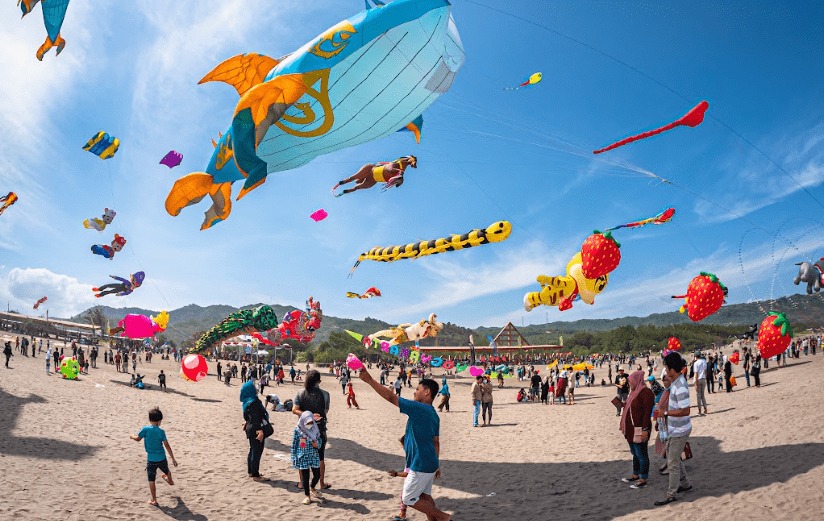
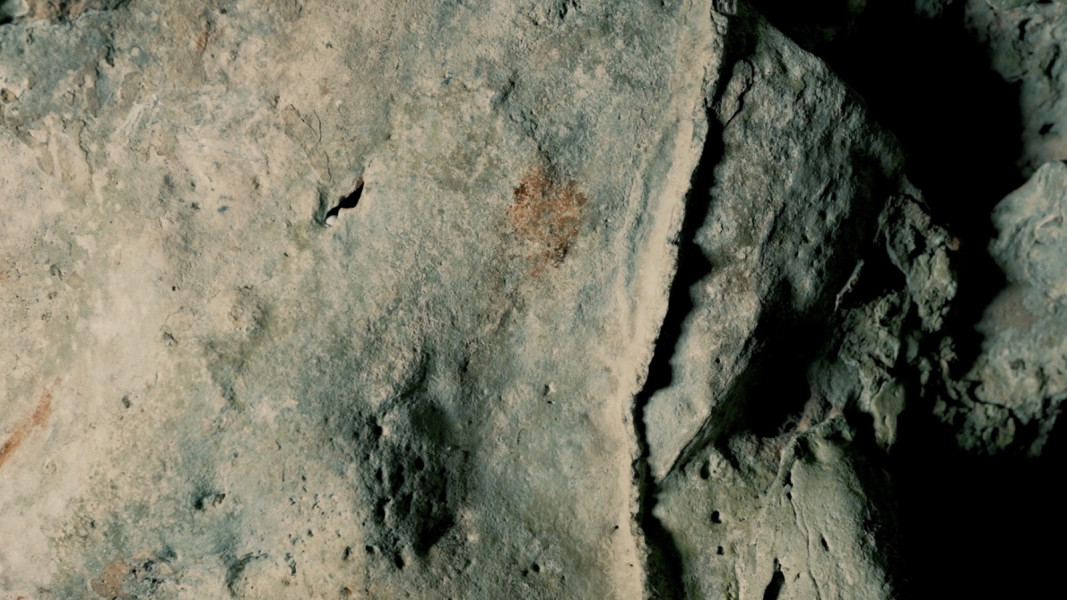
January 14 is International Kite Day, and the kites we often see soaring in the sky during the afternoon have a long history that reveals the culture of the Archipelago. The common understanding of the history of kites over the centuries places China as the origin of the practice of flying kites. This global historical narrative has changed through archaeological findings that shift the paradigm. Archaeological research conducted by an international team of experts at the Sugi Patani Cave, located in Liangkobori Village, Muna Regency, Southeast Sulawesi, discovered the oldest paintings depicting the practice of flying kites. Based on multispectral analysis and careful carbon dating, these paintings are estimated to date back to the period of 9,000 to 9,500 years Before Christ, making Muna the oldest location of this cultural practice in the world.
This archaeological finding is not merely an enhancement of academic records. It represents a fundamental transformation in our understanding of the civilization of the Archipelago and the technological capacity of prehistoric Indonesian society. This discovery affirms that the ancestors of Indonesia developed sophisticated technical knowledge and art to interact with natural elements, particularly a deep understanding of wind aerodynamics, structural design, and material engineering that far exceeds conventional expectations of prehistoric societies' capabilities. In other words, the paintings in Sugi Patani Cave are not just documentation of recreational activities but a testament to the level of technological sophistication and ecological knowledge possessed by early Indonesian communities.
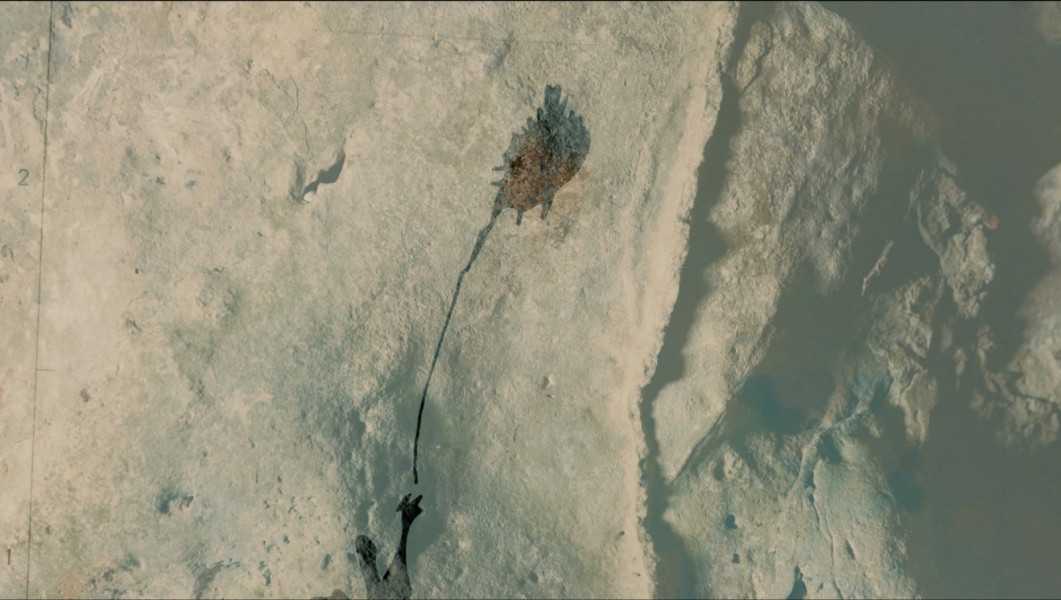
In the local cultural context of Muna, specifically, kites known as Kaghati Kolope hold deep and complex spiritual meanings. The initial designs depicted in ancient paintings show humans flying kites near coconut trees and environmental structures that are believed to represent ritual or ceremonial spaces. Ethnographic analysis indicates that the function of kites in the context of Muna society is not limited to playful activities but serves as a religious ritual instrument that acts as a medium of communication with the spiritual realm or cosmic dimensions believed by the local community. The concept of "reaching God" in Muna culture indicates that kites are viewed as a mediating tool between the terrestrial human world and the metaphysical or divine world above. This interpretation transforms our understanding of this practice from merely a game to a serious and spiritually meaningful religious practice.
Kites as a manifestation of culture and locality showcase the diversity of the island's culture. Indonesia has more than 17,000 islands scattered throughout the archipelago, displaying an unmatched ethnolinguistic richness globally. This wealth, with all its intricacies, is clearly manifested in various forms, designs, materials, and significances of kites across different geographical regions and cultural groups. Balinese kites stand out as one of the most visually stunning and ornate representations of Indonesian kite aesthetics. The main characteristics of Balinese kites involve the use of bright colors such as red, yellow, blue, and green arranged in intricate geometric designs and details. The decorations adorning the surfaces of Balinese kites reflect the rich cultural aesthetics of Bali, infused with religious symbolism, particularly from the dominant Hindu-Buddhist traditions that shape the spiritual life of the Balinese. In contrast to the decorative variety of Balinese kites, traditional Javanese kites have a more minimalist design yet possess a unique charm. The shapes of Javanese kites are generally simpler and more functional, emphasizing perfect proportions and structural harmony over flamboyant decoration. The decorative patterns adorning Javanese kites often feature traditional Javanese batik motifs, highlighting the aesthetic relationship between various cultural expressions.
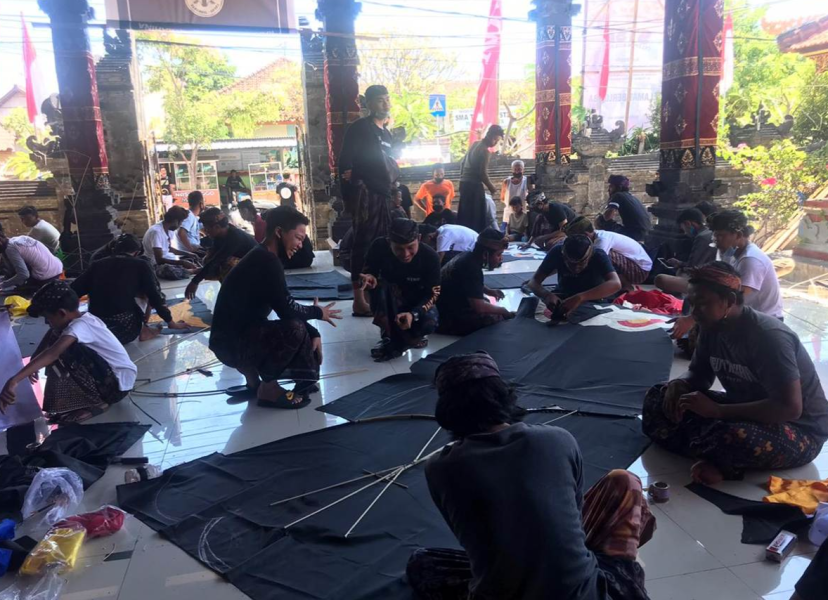
The process of making kites within the family context involves intensive and meaningful collaboration across genders and generations. This collaborative structure is not hierarchically rigid but represents an organic division of tasks based on the skills, experiences, and physical capabilities of each family member. Fathers or male figures in the family are generally responsible for constructing the structural frames of the kites, which requires technical expertise in shaping bamboo, measuring proportions, and ensuring structural integrity. Mothers and daughters traditionally take on the task of decorating the surfaces of the kites and layering them with carefully selected materials, a task that requires patience, precision, and aesthetic sensitivity. Meanwhile, grandparents often take on advisory and consultative roles, providing advice on the best designs based on decades of experience in making and flying kites. They become the keepers of cultural memory, recounting stories about past kites, explaining the symbolic meanings of various designs, and transmitting the values embedded in this cultural practice. The workspace for kite-making, therefore, becomes more than just a production workshop; it is an intimate and meaningful locus of cultural transmission, where stories, songs, ethical values, and traditional knowledge are conveyed while hands continue to tie, measure, fold, and decorate the kites.
The communal dimension of kite practices reaches its highest intensity when kite festivals are held in various regions of Indonesia. These festivals are not merely entertainment events or visual displays. They represent crystallization moments where the collective identity of the community is strengthened, cultural values are celebrated together, and social bonds are reinforced through meaningful shared activities. The profound significance of these kite festivals lies in their ability to create embodied and multisensory collective experiences. When thousands of kites fly together in the sky, it is not only the eyes that are captivated by the spectacular visual beauty; the whole body feels the vibrations of communal togetherness, of collective satisfaction, of the awareness that these different individuals unite in one universal yet local cultural expression. This experience, repeated every year, strengthens collective identity and ensures that younger generations have an embodied memory of what it means to be part of this cultural community.
Despite having deep cultural roots and layered meanings, kites face serious challenges in the contemporary digital era. These challenges are not only material or infrastructural but also involve fundamental changes in values, preferences, and ways people organize their leisure time. Contemporary youth, especially those growing up in urban environments with access to digital technology, are increasingly drawn to gadgets, mobile applications, and digital entertainment rather than outdoor activities that require patience, manual work, and intensive physical engagement. Video games, streaming content, social media, and various forms of digital entertainment offer instant gratification and constant stimulation, contrasting with the experience of making and flying kites, which requires a significant time investment before enjoying the results.
This phenomenon, often discussed in literature about "digital natives" and changing youth behavior, creates a real risk that the cultural transmission of kites may be interrupted. If younger generations are not exposed to this cultural practice and do not have the opportunity to experience the meaning and satisfaction that can be derived from making and flying kites, the traditional knowledge accumulated over thousands of years may be lost in a short time. However, the awareness of the importance of preserving kite culture has sparked various innovative and diverse revitalization strategies. The first strategy integrates kites into formal educational learning. By incorporating kite learning into school curricula, whether in the context of art, cultural history, or science lessons, educational institutions can ensure that younger generations at least have exposure to this cultural practice and an understanding of its significance. The second strategy involves systematically documenting and disseminating knowledge through various media. Kite museums, academic publications, video documentation, and educational websites all contribute to the creation of a cultural archive that can be accessed and studied by future generations. Digital initiatives, in particular, open up new possibilities for knowledge transmission that are not limited by geographical boundaries or physical access. This is where IndonesianaTV, as a cultural channel, can participate in the preservation of kite culture by producing more kite-related content and documenting festival activities in various regions of Indonesia. The third strategy revitalizes kite practices through creative adaptation and innovation. This does not mean sacrificing the cultural integrity of traditional practices but finding ways to keep kites relevant and appealing in contemporary contexts. Innovative urban kite festivals, kite competitions that combine traditional elements with contemporary formats, and collaborations between traditional artists and contemporary designers all represent efforts to keep kites alive and dynamic in the modern era.
In conclusion, when all the dimensions of kites analyzed in this essay are integrated together, the resulting picture is richer, more complex, and more nuanced than the conventional understanding of kites as "just a traditional game." Kites are an integrated manifestation of profound ecological knowledge, sophisticated aesthetic expression, meaningful social practices, and holistic pedagogical instruments. With proven archaeological roots, which make kites the oldest documented cultural practice in the world, kites carry stories of how Indonesia's ancestors interacted with nature, how they expressed their creativity and imagination, and how they built community cohesion and collective identity through meaningful cultural practices. In a contemporary era marked by rapid technological change, uncontrolled urbanization, and constant globalization pressures on local cultural practices, the presence of kites, even in evolving and adapting forms, reminds us of fundamental values that are often forgotten: the balance between humans and nature, the importance of meaningful communal practices, and the extraordinary power of tradition in shaping collective identity and giving meaning to human life. Ongoing efforts to preserve and revitalize kites through museums, festivals, educational programs, and digital initiatives are not merely nostalgia for a romantic past. Instead, these efforts represent a deliberate and purposeful investment in humanity itself, in the human capacity to remain connected to their cultural roots while embracing a dynamic, innovative, and ever-changing future. Through the preservation and revitalization of kites, Indonesia not only safeguards its valuable cultural heritage but also ensures that future generations will have access to sources of wisdom, creativity, and meaning that have accumulated through the history of the Archipelago's civilization.