



Born from Diversity, Growing into a Unifying Force for the Nation

Born from Diversity, Growing into a Unifying Force for the Nation
Reflection on the Birth of Pancasila Day 2026 Amidst the Dynamics of Indonesian Culture
Every June 1st, the Indonesian nation commemorates the Birth of Pancasila Day as a moment to remember the founding of the state and to reflect on the values that form the foundation of national life. In 2026, the commemoration of the Birth of Pancasila Day carries the theme "Pancasila as the Unifier of the Nation, Foundation for World Peace."
This theme serves as a reminder that Pancasila is not only a historical legacy but also a guide that remains relevant in facing the various challenges of increasingly complex modern society.
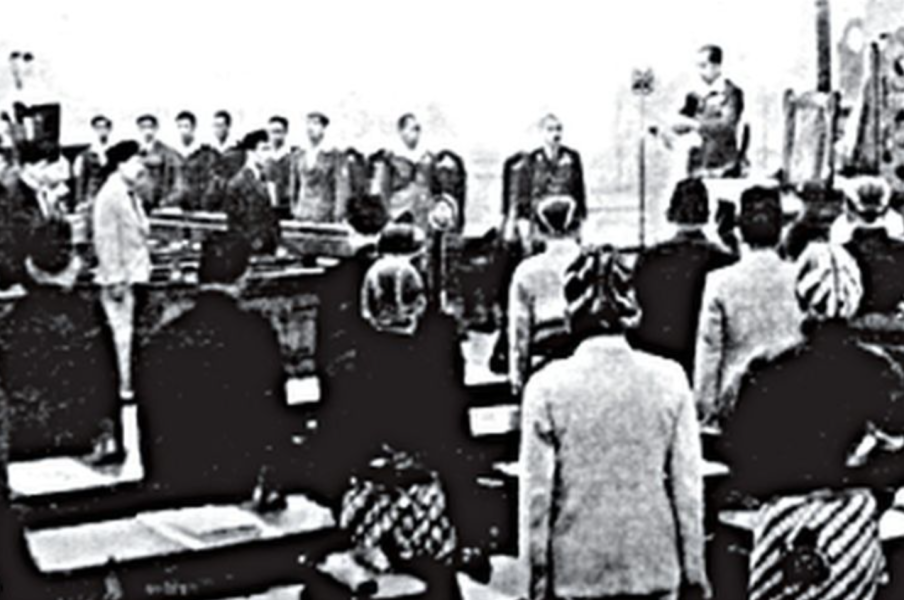
The history of the birth of Pancasila began with the first session of the Investigating Committee for Preparatory Work for Indonesian Independence (BPUPKI) held from May 29 to June 1, 1945. In this session, the nation's figures discussed the foundation of the state that would become the basis for an independent Indonesia. On June 1, 1945, Ir. Soekarno delivered a speech that later became known as “The Birth of Pancasila”. In this speech, Soekarno articulated five principles that form the foundation of the Indonesian state: nationalism, internationalism or humanity, consensus or democracy, social welfare, and divinity. These ideas became the seeds of Pancasila's birth.
The birth of Pancasila cannot be separated from the reality that Indonesia is built on diversity. The founders of the nation recognized that Indonesia consists of various ethnicities, religions, languages, cultures, and social backgrounds. Therefore, Pancasila was formulated not to erase differences but to be a meeting point that can unite all this diversity.
The value of unity contained in Pancasila becomes increasingly important in the context of contemporary Indonesia. In the digital era, society lives in a very open information space. Social media allows for the rapid exchange of ideas, but at the same time, it also presents challenges in the form of polarization, disinformation, and identity conflicts that can fracture unity if not addressed wisely.
Amidst this situation, the phenomenon of Indonesian culture shows something interesting. In recent years, there has been an increase in interest among the younger generation in local culture. Traditional music combined with modern elements, the use of regional languages in digital content, the resurgence of fashion based on Nusantara textiles, and the growing number of films and creative works that highlight local stories are evidence that culture continues to find its space amidst the changing times.
This phenomenon shows that Indonesia's cultural diversity is not merely a legacy of the past but a strength that continues to evolve and adapt. Culture becomes a meeting space that allows people from various backgrounds to get to know, understand, and build a sense of togetherness.
The Minister of Culture, Fadli Zon, stated that Indonesia is a nation with an extraordinary level of megadiversity in culture. According to him, Indonesia's cultural wealth is not just diversity but an abundance of cultural expressions that stretch from Sabang to Merauke. Indonesia has thousands of cultural heritage, regional languages, traditions, local knowledge, and intangible cultural heritage that are an important part of the nation's identity.
In this context, Pancasila can be understood as a large house that shelters all the cultural wealth of Indonesia. The values of mutual cooperation, deliberation, tolerance, respect for humanity, and social justice contained in Pancasila have long lived in various cultural practices of the archipelago's society.
The theme of the Birth of Pancasila Day in 2026 also emphasizes that these values have broader relevance, not only for Indonesia but also for the world. The Pancasila Ideology Development Agency (BPIP) explains that the theme "Pancasila as the Unifier of the Nation, Foundation for World Peace" underscores Pancasila's role as a unifier of national diversity and a foundation for building global peace that is just.
Amid various conflicts, humanitarian crises, and tensions occurring in different parts of the world, Indonesia's experience in nurturing diversity becomes an important lesson. Indonesia demonstrates that differences in identity do not have to end in conflict. On the contrary, diversity can be a strength if built on a foundation of mutual respect and a spirit of living together.
Therefore, commemorating the Birth of Pancasila is not just about remembering a historical event, but also reaffirming the commitment to maintain national unity through culture. Every preserved regional language, inherited tradition, developed cultural work, and continuously built dialogue space is part of the effort to bring Pancasila's values to life in everyday life.
Ultimately, Pancasila was born from Indonesia's diversity and continues to live through that very diversity. Amidst the dynamics of a constantly changing era, Pancasila remains the foundation that keeps Indonesia as a united, cultured nation capable of delivering a message of peace to the world.
Happy Birth of Pancasila Day 2026.
"Pancasila as the Unifier of the Nation, Foundation for World Peace".