



Kring Kring Kring: Early Warning for the Sustainability of Our Environment.

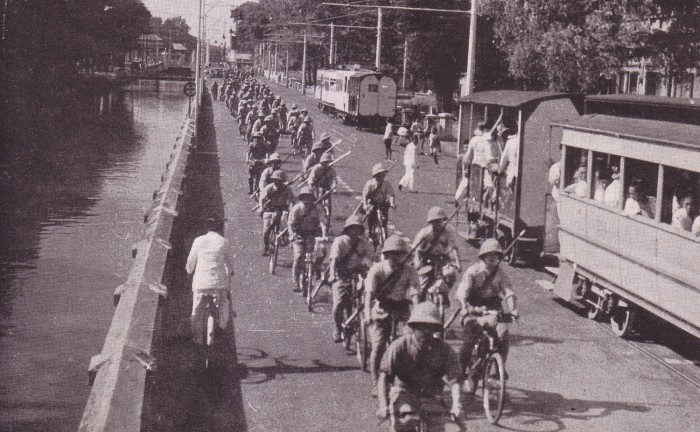
Cycling is a tangible action we take as citizens of the earth for the sustainability of the environment we live in, as it is an eco-friendly mode of transportation. Bicycles, of course, do not use fossil fuels and do not produce greenhouse gas emissions, which will help reduce air pollution and other negative impacts on the environment.
As time progresses in this era of massive industrialization and the use of fossil fuels that cannot be stopped abruptly, efforts are needed to slow down the degradation of the environment. The explosion in population and industrialization ultimately leads to the need for new land for housing and industrial centers, causing green spaces that were once the lungs of the earth to diminish. Efforts to slow down environmental degradation are continuously promoted by policymakers in every global forum. One of the joint policies among various policies on environmental protection is to socialize the cycling movement.
For some people in Indonesia, cycling is currently a less popular mode of transportation. The functional value of bicycles is only used as a recreational tool. Society currently agrees that cycling activities are considered a culture of healthy living for the global community. A culture created to build a go green trend and a culture of love for the environment. A culture formed to maintain the quality of nature for the continuity of human life (Mushawwir & Sudrajat: 2019). Looking at the use of bicycles in other developed countries, for example, in the United States, cycling ranks at the top of the most popular sports. It is estimated that there are more than 50 million cyclists in America according to the Bicycle Institute of America, with a composition of 54% adults from the population, 55% women, and 45% men, while 44% are children under 16 years old from the population (Carmichael 2003:5). In Indonesia, cycling has indeed been socialized since childhood, even in toddlers, with the reason that cycling is very useful for training balance, but when reaching adolescence, the culture of cycling becomes less popular, as seen from the number of motorcycles parked at schools and campuses. Cycling has regained momentum in the form of a bike-to-work movement, where thousands of white-collar workers choose to cycle to work even without the support of bike lanes or adequate infrastructure (Arif 2010:39).
There has indeed been a shift in the function of bicycles, which initially served as a mode of transportation, but with the development of technology and the emergence of motor vehicles, bicycles have become merely a tool for recreation or exercise done occasionally. The tropical climate, which has high humidity, accelerates the onset of sweating, which is certainly considered to reduce productivity when people engage in activities afterward if cycling becomes a daily culture. Unlike countries in cooler regions with relatively low humidity, the issue of excessive sweating does not hinder daily cycling activities.
Even when the Republic of Indonesia Law Number 22 of 2009 on Traffic and Road Transportation was enacted, providing special lanes for cyclists did not immediately mobilize society to switch to using bicycles in their daily lives. Article 106 of the Republic of Indonesia Law Number 22 of 2009 states, "every person driving a motor vehicle on the road must prioritize the safety of pedestrians and cyclists," does not mean it is easy to encourage society to switch to using bicycles in their daily lives.
In formulating a policy that leads to a shared desire to achieve the same goals, there must be a connection in a common understanding of the system. Laws protecting road users such as cyclists and pedestrians must be accompanied by other policies that can support the community's transition to support shared goals. It is not enough to limit the number of motor vehicles operating on the roads; has there ever been an effort to stop the production of fossil fuel-powered vehicles? The motor vehicles produced every day that flood the streets are actually the biggest source of pollution.
Aspects of preserving local culture based on the natural environment become the main focus of the Ministry of Culture as part of its duties and functions, but the small steps taken by the Ministry of Culture to continuously explore local wisdom based on environmental preservation must be accompanied by other significant steps. This is something beyond the reach of the Ministry of Culture.
Imagining the future, a snippet of the song by Vina Panduwinata – Kring Kring Kring (1989), always accompanies the mornings of cyclists heading to their daily activities.
I pedal lightly on my bike in the bright morning...
Birds sing above my head...
Welcoming the heart with a cheerful atmosphere...
The heart sings along with the dancing butterfly
References
Carmichael, Chris & Edmund R. Burke. 2003. Fit with Cycling Complete with Training Programs for Competition. Jakarta: Raja Grafindo Persada.
Arif, Ahmad. 2010. Exploring Indonesia by Bicycle. Jakarta: PT Kompas Media Nusantara.
Mushawwir, Muhammad Hasan Al & Arief Sudrajat. 2019. The Habitus of the Local Bicycle Brand Community Polygon (A Study on the Strattos Cycling Club (SCC) Community in Surabaya) in the Journal Paradigma, Volume 08 Number 04, Year 2019. Sociology Study Program, Faculty of Social Sciences, State University of Surabaya.