



The Tale of 1001 Foods at Prambanan Temple

Human beings have a fundamental need for food. In their efforts to sustain life, humans require nourishment. Food is something that is essential for human survival. From the past to the present, there has been continuous development in the ways of obtaining and processing food materials into meals ready to be consumed. In the quest for food, prehistoric humans during the Paleolithic and Mesolithic eras relied on hunting and gathering, still dependent on nature. Subsequently, during the agricultural stage or Neolithic period, humans began to develop the cultivation of plants and the domestication of various animal species (Sukardi in Nasoichah, 2009). At that time, humans were already familiar with various methods of food processing. Food was not only eaten raw, roasted, or heated with stones, but it was also already being grilled and boiled (Jacob in Nasoichah, 2009).
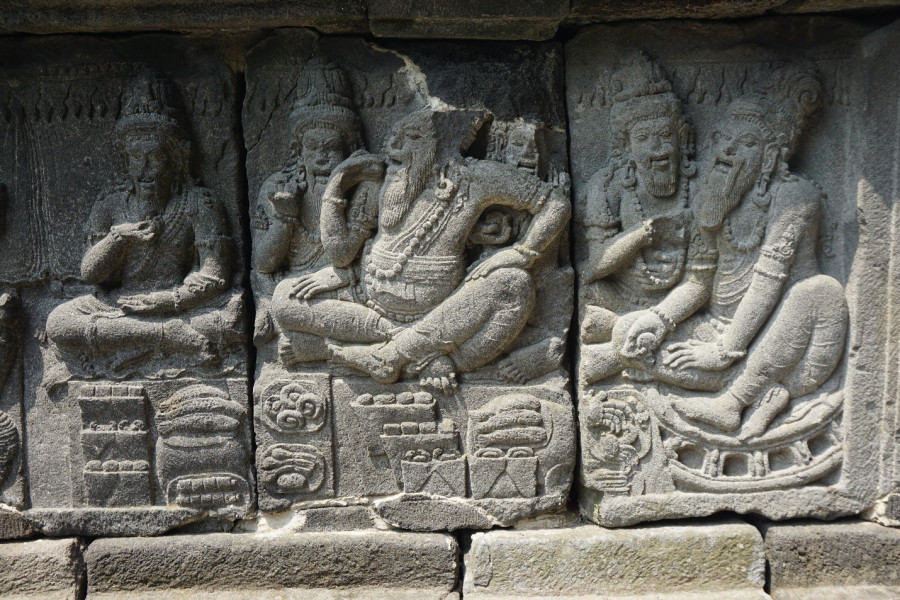
Prambanan Temple is the largest Hindu temple in Indonesia and Southeast Asia. This temple was built around 850 AD by Rakai Pikatan, the second king of the Mataram dynasty, or Balitung, during the Sanjaya dynasty (Sumartono in Istanto & Syafii, 2017). The form of Prambanan Temple is very grand, and its magnificence can be seen from its towering structure. On the walls of Prambanan Temple, there are various types of ornaments and decorative motifs. These ornaments include kala motifs, makara, human and animal figures, tendrils, rosettes, Prambanan motifs, geometric motifs, textiles, food, and so on.
The reliefs depicting stories on Prambanan Temple are one of the archaeological data that can be used to reconstruct life in the ancient Mataram Kingdom during the agrarian period in Central Java. The plants depicted in a naturalistic manner on the reliefs serve as primary data in reconstructing the behavior of ancient Javanese people in managing economically valuable plants. Several temples from the ancient Mataram period in Central Java have naturalistic reliefs depicting various types of plants. The plants illustrated in these reliefs are the result of the artists' observations of the actual environmental conditions at that time (Kusen in Setyawan, 2022). The identification of plants in the reliefs of Prambanan Temple can be found in the reliefs of the Ramayana story on Shiva Temple, where there are depictions of plants including mango, banana, coconut, jackfruit, durian, mangosteen, and water guava (Setyawan, 2022). The Prambanan area, assumed to be one of the centers of the ancient Mataram Kingdom, occupies a space in the interior of Java Island. This is supported by its fertile soil, as it is an area formed by the Merapi volcano (Mundardjito in Setyawan, 2022).
Nutrition and food have become an important focus for the dynamics of society over time, especially today. The idea of commemorating Nutrition and Food Day dates back to the early days of the Indonesian nation when it returned to a unitary state in 1950. The living conditions in the early days of an independent Indonesia were still far from prosperous and thriving. Centuries of being under colonial rule resulted in a society plagued by malnutrition due to a long period of neglect regarding nutritious food intake. This poses a significant problem in planning for the development of the people's physical and mental well-being if fundamental issues, such as the availability of nutritious food sources, are overlooked.
How important the position of food, especially nutritious food, is in every civilization produces the secret legacies of ancestors that are passed down through popular media in every era. This includes the ancient Mataram period, which is presented through the reliefs embedded in Prambanan Temple, showcasing food sources from both plants and fruits.
The IndonesianaTV Cultural Channel aims to preserve and promote Indonesia's diverse culture to the wider community, both domestically and internationally, through programs that highlight various aspects of Indonesian culture, such as arts, customs, traditions, and history. The IndonesianaTV Cultural Channel seeks to enhance public knowledge and awareness of Indonesian culture through the presentation of educational and informative programs that are packaged attractively and are easy to understand for all audiences.
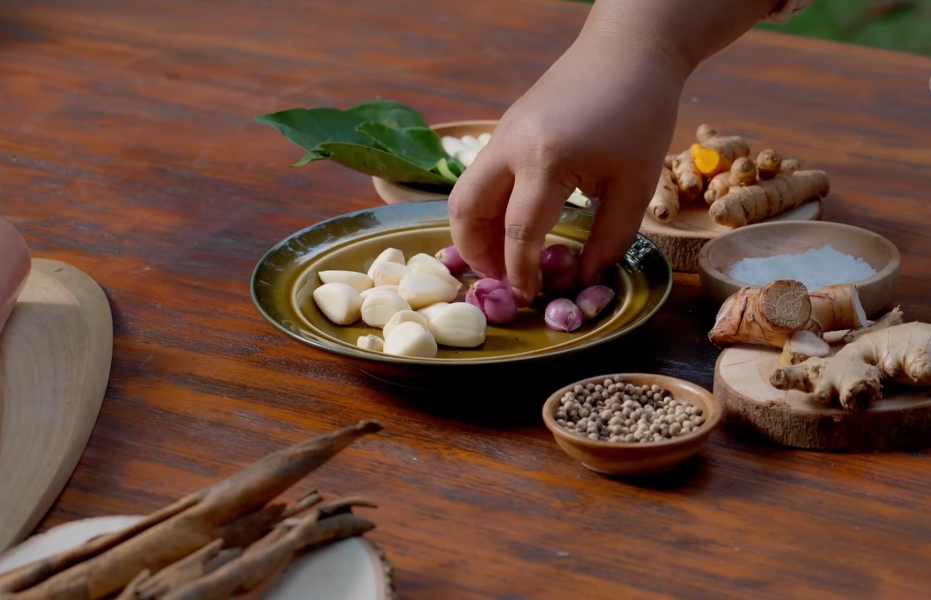
Cultural content related to the variety of foods during the ancient Mataram period currently available on the IndonesianaTV platform is “The Culinary Footprint of Ancient Mataram.” A docudrama that reveals the rich culinary traces from the ancient Mataram era through the reliefs of Prambanan Temple and ancient inscriptions. This program takes viewers on a historical journey that ignites curiosity about the dishes recorded in the temple's carvings, showcasing the importance of cuisine in the cultural and spiritual life of ancient society. By combining drama and documentation, The Culinary Footprint of Ancient Mataram highlights how culinary traditions carved in the past are not only sources of food but also expressions of taste, status symbols, and beliefs passed down from generation to generation. This program presents a new perspective on the culinary history of the archipelago and challenges viewers to explore the hidden culinary heritage behind the beauty of Prambanan Temple.
The cultural content presented on the IndonesianaTV Cultural Channel is a form of good practice that is expected to serve as an educational information source aimed at realizing a sustainable Indonesian culture that guides future generations. A culture that is dynamic and follows the times will experience various developments, whether adaptive culture, adopted culture, assimilated culture, or acculturated culture.
From the reliefs found in Prambanan Temple, we gain an illustration of the diversity of plants as food sources that thrived in the surrounding environment during the ancient Mataram period, which was so abundant that it could be processed into food sources. The ecosystem that emerged at that time can serve as a lesson for current and future generations to maintain the diversity of flora so that human civilization does not lose its sources of nutritious food.
References
Nasoichah, Churmatin. 2009. Food Preservation: Human Efforts to Maintain Food Quality (Based on Data from Ancient Javanese Inscriptions) in Food Traces in Archaeology. Cultural Heritage Series of Northern Sumatra No. 0409. Medan Archaeological Center.
Istanto, Riza and Syafii. 2017. Decorative Motifs of the Tree of Life at Prambanan in Jurnal Imajinasi Vol XI no 1 January 2017. Semarang State University.
Setyawan, Hari. 2022. Identification and Utilization of Plants in Ancient Java: A Case Study of the Ramayana and Kresnayana Reliefs of Prambanan Temple. Naditira Widya Vol.16 No.1 April 2022 - South Kalimantan Provincial Archaeological Center
Riyani, Mufti. 2015. Local Genius of Ancient Javanese Society in the Reliefs of Prambanan Temple. Jurnal Seuneubok Lada, Vol. 2, No.1, January - June 2015. Samudra University, Langsa