



Ministry of Culture Presents Achievements for 2025, Affirms Cultural Policy Direction for 2026

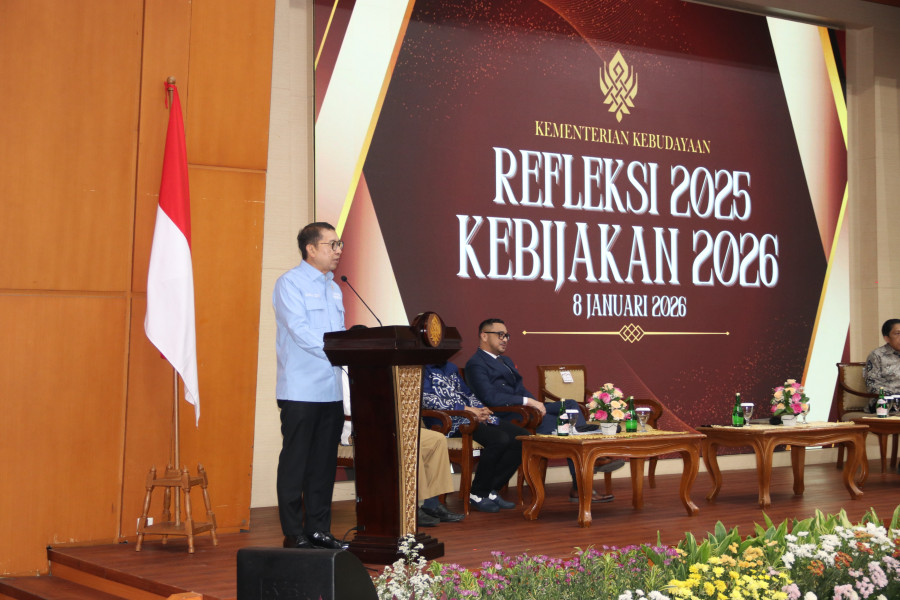
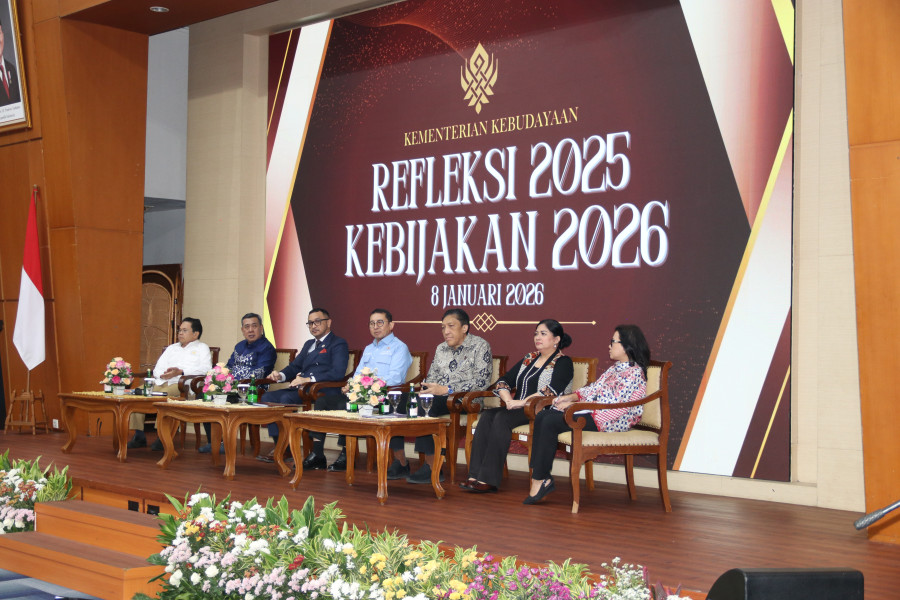
The Ministry of Culture reaffirms its commitment to making culture the foundation of national development, an economic strength, and a tool for global diplomacy. This was conveyed during the "Reflection on 2025 and Policy for 2026" event held at the Main Hall of Building A of the Ministry of Culture on Thursday (January 8).
Cultural Minister Fadli Zon stated that Indonesia is a great nation with extraordinary cultural diversity or megadiversity. According to him, this diversity is not a burden but a strategic opportunity to promote the advancement of the nation.
“Culture plays an important role as an instrument of social resilience and a bridge for dialogue. Through culture, differences can be nurtured without having to be contested,” said Fadli.
Throughout 2025, the Ministry of Culture recorded several strategic achievements. One of them is the repatriation of 28,131 fossil collections discovered by paleoanthropologist Eugene Dubois from the Dutch Government. This return marks the largest fossil collection repatriation in Indonesia's history.
In the field of preservation, the designation of National Cultural Heritage has significantly increased. If in 2024 there were only 10 designations, in 2025 the number surged to 85 cultural heritage sites. Overall, 1,250 cultural assets have been successfully preserved. The number of Indonesia's Intangible Cultural Heritage also increased from 2,213 at the end of 2024 to 2,727 in 2025.
The culture-based economy sector also showed positive performance. Indonesian films set a record with an audience of 80.27 million people throughout 2025, indicating the strong position of national films in the domestic market. Meanwhile, museum visits reached 4.32 million people. Specifically, the National Museum recorded visits during the New Year holiday reaching 10,000 to 12,000 people per day.
“We hope that in the future, visits can increase to 15,000 to 20,000 visitors per day,” said Fadli.
Preservation efforts are also realized through the revitalization of cultural infrastructure, ranging from traditional houses, places of worship, to historical sites. Several strategic programs include the revitalization of the Immanuel Church in Ambon built in 1512, the restoration of historic mosques and graves, the Songgo Buwono stage, as well as temples such as Plaosan Temple, the Dieng area, and Muara Jambi Temple. This program has reached 845 beneficiaries.
The Ministry of Culture also supports indigenous communities and followers of the belief in the One Supreme God across all provinces through various capacity-building programs and workshops as spaces for interaction and preservation of local culture.
In the field of cultural diplomacy, the Ministry of Culture expands international cooperation with various countries, including France, the Netherlands, the United States, India, and the United Kingdom. “I believe culture can be a pathway to world peace,” said Fadli.
At the multilateral level, Indonesia hosted the Culture–Heritage–Art–Narrative–Diplomacy and Innovation (CHANDI) 2025 attended by representatives from 43 countries, involving 50,000 invitations, and witnessed by around 4 million television viewers. Additionally, the Indonesia-Pacific Cultural Synergy (IPACS) 2025 was held in November to strengthen art collaboration, cultural dialogue, and maritime values with Pacific countries. In terms of human resource development, the National Talent Management (MTN) for Arts and Culture recorded that 36,369 talents received capacity building throughout 2025.
Regarding financing, the management of the Indonesiana Fund continues to be improved. In 2025, the fund allocation reached around IDR 5 trillion with a realization of around IDR 300 billion disbursed to about 2,800 communities and individuals. The number of recipients has sharply increased compared to the previous period, which only reached around 300 recipients. “In 2026, we will establish a special service center for the Indonesiana Fund to simplify and make the disbursement process more accessible. The Ministry of Finance has also added an allocation of IDR 1 trillion,” said Fadli.
The Cultural Development Index (IPK) also experienced an increase of two points compared to the previous year. The government hopes that by 2026, cultural access will become more inclusive and culture can be enjoyed as a right of all citizens, while also strengthening national resilience.
Through these various achievements, the Ministry of Culture emphasizes the future direction of cultural policy based on data, cross-sector collaboration, and the utilization of culture as the foundation for national unity and Indonesia's competitiveness on the global stage.