



Our Diversity as Capital to Rise Towards the Center of World Culture

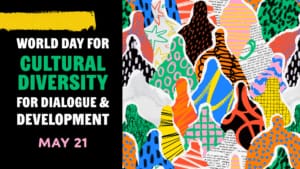
The world's civilization, consisting of diverse cultures, makes it a shared wealth for the world. This uniqueness gives each culture its own distinctive characteristics. On one hand, it colors the life of the world today, but on the other hand, it can become a challenge and even a boomerang if each culture prioritizes egocentrism, primordialism, and tends to belittle one another.
The discourse of global cultural meetings through the World Culture Forum is based on a shared understanding for harmonious life among nations and peoples. Dialogue for development based on culture becomes a fundamental narrative together. Before discussing the position of Indonesian culture in the global arena, it is interesting to revisit our diversity. Regional cultures as the foundation of national culture stretch far in line with the historical journey of this nation.
Indonesia, as a country, has various ethnic groups with their own cultures. Each ethnic group builds and develops its culture through various historical experiences, through its ability to adapt to its environment, and through the knowledge it possesses. Thus, the culture of each ethnic group evolves over time in accordance with the development of the times. The influence of one ethnic group's culture on another or the acceptance of a new cultural value deemed useful and beneficial because it meets the needs of a supporting cultural community has provided a new nuance to its culture. This new value is then accepted as part of its own culture. The results of this cultural acculturation have long occurred throughout the history of ethnic groups in this archipelago (Ajawalla, 2003).
Indonesia's development faces global influences and interactions that, in many ways, are even stronger than our own ability to resist them. In this era of globalization, there is not only the dissemination of culture from developed countries to developing countries, but also the cultural conquest from developing countries. In this regard, national and regional cultures face challenges: (1) how to develop a cultural system that enables it to compete in the global competition, (2) how to utilize the dissemination, intervention, and even cultural conquest for the purposes of development. To respond to the above global challenges in culture, regional cultures must be open. That is, they must be able to adapt and adjust to global demands while remaining rooted in the values, morals, and norms of their original culture. Positive values of global culture are adapted to the positive values of our culture, so that our national identity remains strong but has a positive global nuance (Nugroho, 2001:71-73).
Behaviors that lead to cultural exclusivity are one of the obstacles in efforts to build togetherness within a pluralistic society. Free, open, and natural blending will result in mutual understanding among the supporters of one ethnic culture with another, which will then provide a shared perception for living together amidst existing differences. In this context, a new value emerges from the combination of various cultural values from different ethnic groups inhabiting a particular area, beyond the cultural values held by each ethnic group, and becomes a shared value. This cultural value is then referred to as regional cultural value. If accepted by various ethnic groups within the territory of Indonesia, this cultural value will automatically be accepted as a national cultural value (Ajawalla, 2003).
The current issue that poses a challenge for our nation is how our cultural diversity can serve as a unifying asset in facing clashes between civilizations. The founders of our nation have realized that this diversity can be capital to rise and unite, but it can also become a ticking time bomb if not properly nurtured. Samuel P. Huntington, through his work “The Clash of Civilizations”, explores the occurrence of clashes between civilizations based on global economic and political issues. For a nation born from diversity, the ongoing task for Indonesia is to nurture this pluralism. Indonesia must learn from the conflicts that have occurred in countries that initially had unity as a nation but were also formed from diverse ethnic cultures. Yugoslavia disintegrated due to ethnic conflicts that ultimately led to the emergence of individual nation-states. The Balkan conflict serves as a lesson for us on how the diversity that underpinned the birth of Yugoslavia could not be nurtured and managed to remain intact.
“The Clash of Civilizations” is quite relevant to be reflected upon in the context of Indonesia. Our leaders have long tried to unite our diversity as one nation. The historical narrative related to nationalism is always emphasized and monumentalized as a reminder that we are one nation. From the Youth Pledge on October 28, 1928, to the Proclamation on August 17, 1945, the Indonesian nation has declared itself while pledging as one nation-state named Indonesia. This Indonesian identity has been recognized worldwide, that Indonesia is a country characterized by unity since its establishment as a nation.
The issues related to this diversity are not without challenges. Horizontal conflicts among citizens have become our daily narrative. Conflicts between ethnic groups, dissatisfaction with their fate as a cultural identity, and the desire to separate from the Unitary State of the Republic of Indonesia are problems and challenges that will determine the future of this nation-state. Will it endure throughout time as it was at birth? Will it remain intact as the children of the proclamation of August 17, 1945? We have too many differences and diversities. Once we have managed this diversity, strengthening our identity as one nation, the next step is to position the nation and state in the international arena. The challenges and problems faced as citizens of the world civilization will become increasingly complex.
References
Ajawaila, J.W. 2003. Cultural Identity: Me in Local Culture, National Culture, and Global Culture. Proceedings of Cultural Dialogue: A Means of Preservation and Development of National Culture. Cultural and Tourism Development Agency, Deputy for Preservation and Development of Culture, Directorate of Tradition and Belief.
Pakan, Djon. 2002. Return to the Identity of the Indonesian Nation. Jakarta: Millenium Publisher.
Widjajanto, Nugroho 2001. Accounting Information Systems. Jakarta: Erlangga.