



Jaranan & Campursari Mayangkoro Original with Niken Salindri: A Space for Cross-Generational Cultural Representation

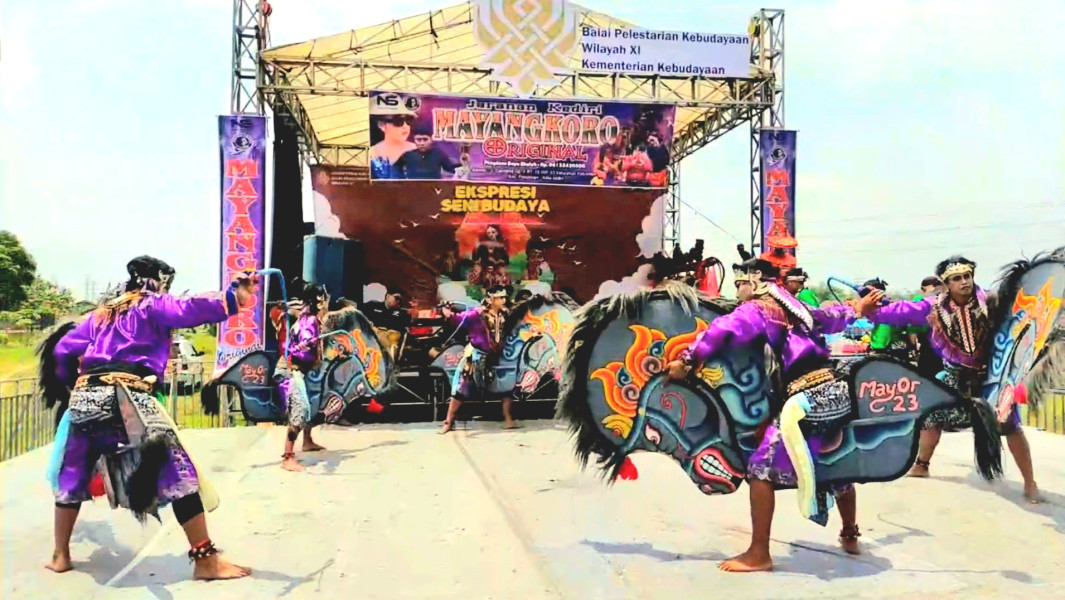
Mojokerto — A different atmosphere was present in the field of Trowulan Village when the Regional Cultural Preservation Hall XI held a performance of Jaranan and Campursari Mayangkoro Original with Niken Salindri on Wednesday, September 17, 2025. The performance was part of an event titled "Art and Cultural Expression of BPK Region XI Trowulan" held in September 2025. Thousands of spectators from various corners gathered to witness how Javanese traditional art transforms, bridging generations and uniting communities in a cultural celebration arena in the field of Trowulan Village from noon to evening local time.
Jaranan itself showcased a powerful audio-visual experience, featuring the horse dance, stage design, and gamelan music blended with modern instruments that created an intense sense of togetherness: costumes, instrumentation, rhythm, and movements that also invited trance resonance among the dancers (or at least a dramaturgy of trance as a spectacle commodity). On the other hand, the campursari segment emphasized vocalization, popular melodious Javanese songs, accompanied by gestural performances and audience interaction—practices that economically and socially generate direct interaction between the stage and the audience (exchange of money, gifts, or goods).
Such performances display a continuum; from what is hoped to be a “heritage of tradition” towards a “market entertainment product”—both coexist in the same arena (the field of Trowulan Village).
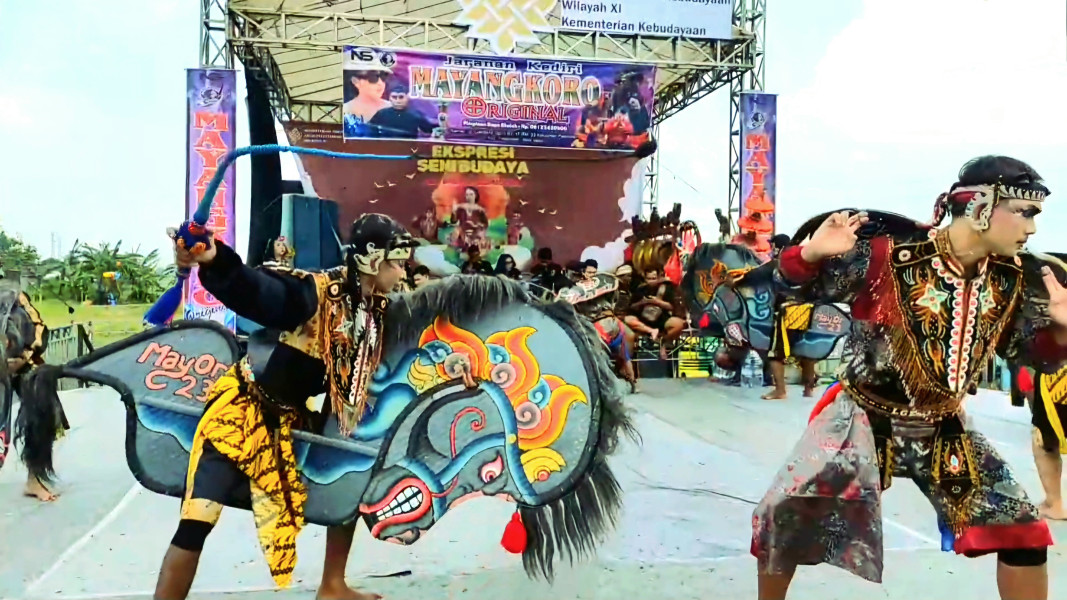
The dynamics of the audience are also important, with the presence of cross-generational families, local traders, and “urban” spectators who came due to the vocalist's name, showcasing media penetration and communication networks (video recordings, digital invitations/Instagram/YouTube) in the circulation of local culture. Videos of performances widely spread across online platforms extend into an attention economy phenomenon that transcends village boundaries.
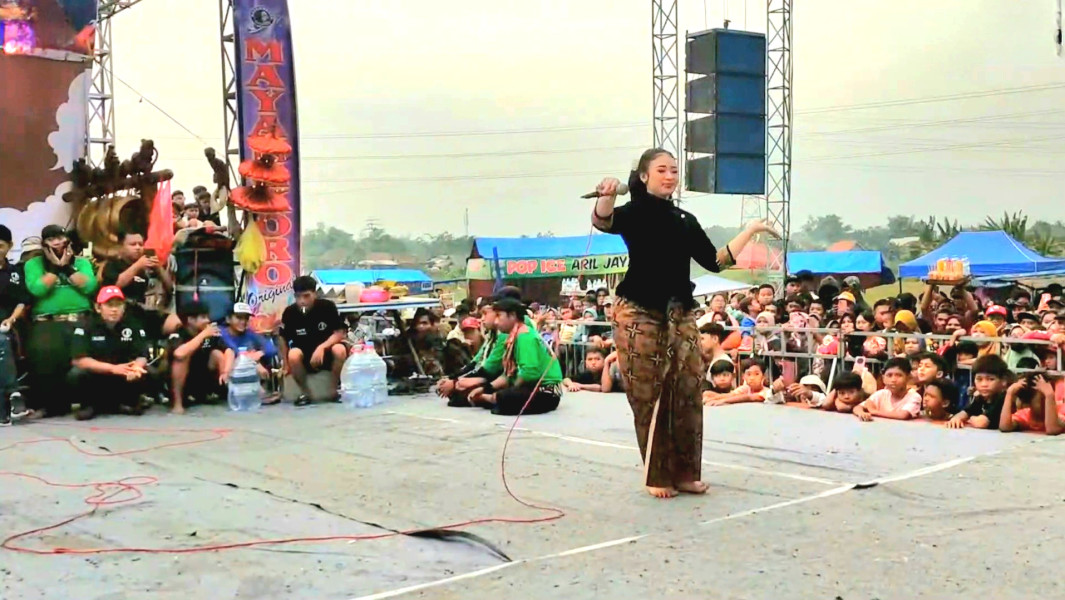
The atmosphere changed when it was Niken Salindri's turn to take the stage. With her distinctive voice, she performed popular campursari songs on social media, complete with audience interaction and modern stage design.
Interestingly, these two segments did not operate independently. Jaranan and campursari appeared side by side, showcasing two faces of Javanese culture: traditional roots and fluid popular entertainment. They complement each other, creating an intimate meeting space for the audience.
The diversity of the audience also emphasizes the social function of the performance. Children, parents, traders, and youth attended not just as passive spectators. They actively welcomed, interacted, and even recorded the performances to share.
Cultural Actors
It is clear here that the community is a cultural actor. This event serves as evidence that culture is never stagnant. It is fluid, changing with the times, without losing its local roots. The transformation from a simple stage to modern lighting, from traditional songs to popular formats—actually brings traditional art closer to today's public.
The constructed tradition reminds us that many traditions we treat as “authentic” are often reproduced—adapted to needs. In the context of Jaranan, the “ritual” elements can be restaged with modern customization, new choreography, or commercialization that maintains the image of tradition while reconstructing it for today's audience.
This applies to the practice of celebrity staging (such as Niken's presence) as part of the process of reconstructing tradition to remain relevant and economically viable. The Jaranan and Campursari Mayangkoro performance with Niken Salindri in the field of Trowulan is a concrete example of how cultural heritage interacts with market logic, media, and preservation institutions. Such events are simultaneous—they nurture community memory while transforming into modern entertainment products.
The challenge for stakeholders (cultural actors, institutions, local government) is to design policies and practices that ensure that this transformation does not negate its socio-cultural roots—but rather strengthens them in forms that provide welfare and meaning for the actors and the community.
References:
Appadurai, A. (1990). Disjuncture and Difference in the Global Cultural Economy. Theory, Culture & Society, 7(2-3), 295-310.
• Hall, S. (1990). Cultural identity and diaspora. In J. Rutherford (Ed.), Identity: Community, Culture, Difference (pp. 222-237). London: Lawrence & Wishart.
• Williams, R. (1958). Culture is ordinary. In Culture and Society: 1780-1950. London: Chatto & Windus / Basil Blackwell.
• Hobsbawm, E., & Ranger, T. (Eds.). (1983). The Invention of Tradition. Cambridge: Cambridge University Press.
• Regional Cultural Preservation Hall XI. (2025). Profile, programs, and announcements. BudayaJatim.com. Accessed September 19, 2025 from https://budayajatim.com/author/bpk-wilayah11gmail-com/ budayajatim.com
• Suseno Audio. (2025). Live NIKEN SALINDRY Jaranan MAYANGKORO ORIGINAL. YouTube. Accessed September 19, 2025 from https://www.youtube.com/watch?v=qVVrldPzM28 YouTube
• Pangestuti, A. W. (2023, July 11). Jaranan Pegon Grub Mayangkoro Original in Pojok Village, Mojoroto District, Kediri City 2012-2021 [Thesis, University of Jember]. UNEJ Repository. Accessed September 19, 2025 from https://repository.unej.ac.id/xmlui/handle/123456789/125303 UNEJ Repository