



Eid al-Adha, Tradition, and Environmental Awareness

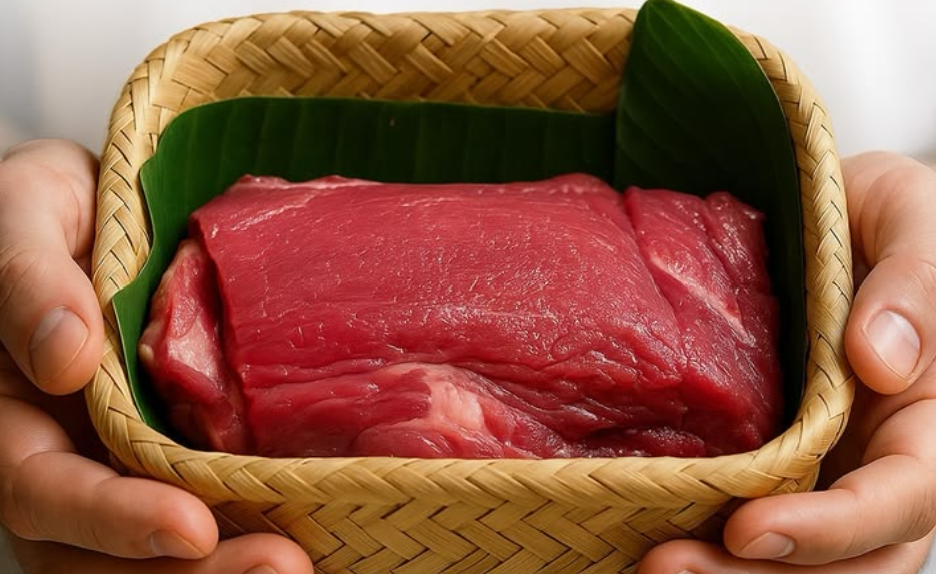
Eid al-Adha, in addition to being a moment of worship and sacrifice, also showcases the strong tradition of sharing and mutual cooperation among the people of the archipelago. From the distribution of sacrificial meat in villages, the tradition of cooking together, to the involvement of residents in the slaughtering and distribution process, Eid al-Adha presents a vibrant sense of togetherness within the community.
As the country with the largest Muslim population in the world, Indonesia has a significant tradition of sacrifice every year. Data from the Ministry of Religious Affairs records that the number of sacrificial animals during Eid al-Adha 2025 reached around 1.8 million, consisting of cows, buffaloes, goats, and sheep. This figure indicates the high participation of the community in the sacrificial worship while also reflecting the strong values of social solidarity in Indonesia.
However, behind the large-scale implementation of sacrifice, there exists a unique sharing culture of the archipelago that continues to be passed down through generations. In many regions, the process of distributing sacrificial meat is carried out through mutual cooperation. Residents gather from the morning to help cut, weigh, wrap, and distribute the meat to the surrounding community. This activity is not merely a food distribution process but also serves as a space to strengthen social relationships among residents.
The Basirakaik Tradition in West Sumatra
In West Sumatra, the spirit of togetherness is embodied through the Basirakaik tradition. This tradition represents a form of collective work or mutual cooperation in various activities, such as gardening and farming.
The activities are conducted in groups and led by a leader known as Tua Sumando. Its members consist of urang sumando or male sons-in-law in the Minangkabau community. They work together to gather the results or wages that will later be used to buy sacrificial animals ahead of Eid al-Adha.
In the local community, the sacrificial animals are referred to as "hewan bantai" or "daging banting". This tradition demonstrates that the spirit of sacrifice is not only performed individually but also grows from the togetherness and social solidarity of the community.
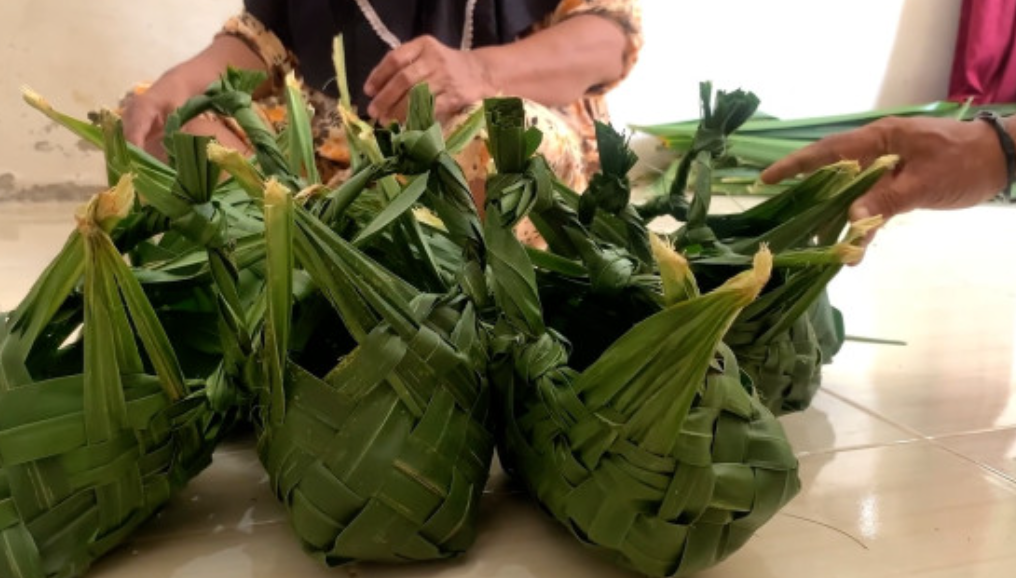
Kamboti: a traditional container or basket made from woven sago, nipah, or coconut leaves
Environmentally Friendly Sacrifice Begins to Be Implemented
In several other regions, local culture is also present through the use of environmentally friendly containers for distributing sacrificial meat. Communities are starting to switch to using teak leaves, bamboo besek, or bamboo weavings as substitutes for single-use plastic bags. In addition to helping reduce plastic waste, the use of these traditional containers also supports the sustainability of local crafts. On the other hand, the rising prices of plastic have become one of the considerations for the community to start reducing the use of single-use plastics in the implementation of sacrifice.
The increase in plastic bag prices has made the distribution costs of sacrificial meat even higher, especially for the sacrificial committees in mosques and community environments. This situation has encouraged many parties to seek more economical and environmentally friendly alternatives, such as using bamboo besek, leaves, and traditional weavings. Besides being more sustainable, the use of natural containers is considered easier to decompose and reduces waste accumulation after the Eid al-Adha celebration.
Similar movements have begun to be implemented in the city of Palu, Central Sulawesi. The Palu City Government is running the Eco Kurban program, inviting the community to use kamboti or traditional containers made from woven pillar leaves to distribute sacrificial meat. This program aims not only to reduce plastic waste but also to open economic opportunities for local artisans.
The implementation of sacrifice is now no longer solely focused on the aspects of religious law but is also starting to pay attention to environmental impacts. The use of bamboo besek, reduction of plastic waste, and management of slaughter waste have become part of efforts to realize a clean, hygienic, and sustainable sacrifice.
Regulations and Appeals for Environmentally Friendly Sacrifice
Efforts to implement a more environmentally friendly Eid al-Adha are also being strengthened through various regulations and appeals from local governments and related agencies. Several local governments have issued circulars inviting the community to reduce the use of single-use plastic bags in the distribution of sacrificial meat.
In addition, the Ministry of Environment and Forestry (KLHK) regularly encourages the implementation of low-plastic waste sacrifices through the Environmentally Friendly Eid al-Adha campaign. This appeal invites the community to use reusable containers or natural materials that are easily decomposed.
In several areas, sacrificial committees are also starting to be directed to pay attention to the management of slaughter waste to avoid environmental pollution. This step is taken as part of efforts to maintain cleanliness, public health, and environmental sustainability during the Eid al-Adha implementation.
Education on Clean and Sustainable Sacrifice
The concept of environmentally friendly sacrifice has also become one of the focuses in the "Training on Handling and Slaughtering Sacrificial Animals" for the Mosque Prosperity Council (DKM) and the general public, organized by the Halal Science Center of IPB University in collaboration with LPPOM on May 16, 2026, at the IPB Cilibende Campus, Bogor.
Through this activity, the community is invited to understand the importance of carrying out sacrifices that are not only in accordance with religious law but also consider public health and environmental sustainability. The idea of Environmentally Friendly Sacrifice is gradually becoming a new culture in the celebration of Eid al-Adha in various regions. The spirit of sharing is not only manifested through the distribution of sacrificial meat to others but also through the concern for keeping the environment clean and healthy.
This phenomenon shows that the value of sharing during Eid al-Adha can coexist with ecological awareness and the preservation of local culture. The tradition of sacrifice is not only a symbol of religious obedience but also a reflection of the culture of mutual cooperation, social solidarity, and environmental concern that has long existed in Indonesian society.
In the midst of an increasingly individualistic and consumptive modern life, the tradition of sharing during Eid al-Adha serves as a reminder that happiness often arises from simple things: gathering, helping each other, and sharing with others. These values continue to be an important part of the cultural identity of the archipelago community.
References
https://www.pasbana.com/2022/07/8-tradisi-unik-saat-hari-raya-kurban-di-sumatera-barat.html
https://mabur.co/budaya/religi/kurangi-sampah-plastik-saat-iduladha-gerakan-eco-kurban-digencarkan/