



Jakarta's 498th Anniversary, Towards a Global City that Remains Culturally Rich

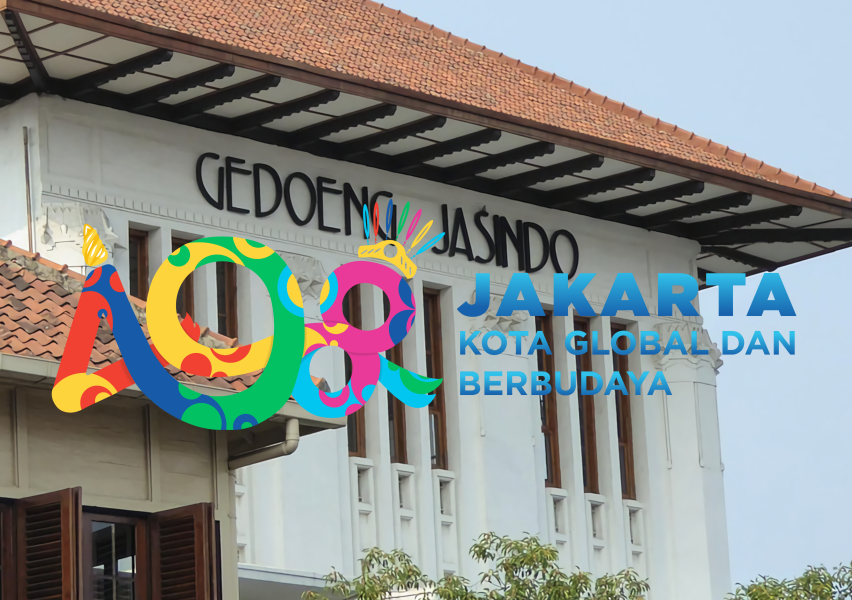
Commemorating Jakarta's 498th anniversary on June 22, 2025, with the theme "Jakarta, a Global and Cultural City." This year's celebration highlights Jakarta's transformation into a cosmopolitan city that remains deeply rooted in local cultural values. Throughout its long journey, Jakarta has undergone an identity change from Sunda Kelapa, Jayakarta, Batavia, to the Jakarta we know today.
As the institution responsible for the protection and development of national culture, the Ministry of Culture continues to initiate various strategic programs, ranging from the revitalization of historical sites, conservation of cultural heritage, strengthening museums, to the preservation of intangible cultural heritage. In Jakarta, areas such as Kota Tua and the Sunda Kelapa Port are developed into public educational spaces based on historical values, supported by participatory approaches and public archaeology studies (Tenezu & Teh, 2024).
The Betawi cultural heritage, which is Jakarta's local identity, is also continuously preserved. Performing arts such as lenong, tanjidor, and iconic traditions like ondel-ondel, as well as the typical cuisine of kerak telor and soto Betawi, have been designated as Indonesia's Intangible Cultural Heritage. As of 2024, 85 cultural elements from DKI Jakarta have obtained this status through a verification and recognition process facilitated by the Ministry of Culture (WBTb Indonesia, 2024).
The Jakarta History Museum, Maritime Museum, and other cultural institutions in the capital are also strengthened through thematic museum transformation programs, digitization of collections, and opening public access to historical and cultural resources. All of this is in line with the mandate of the Cultural Advancement Law and national policies utilizing culture as a resource for development.
Archaeological studies of Jakarta's history further reinforce the direction of preservation policies. From the Sunda Kelapa port, which has been active since the 12th century, the presence of Jayakarta in 1527, the colonial era of Batavia, to the transformation into modern Jakarta, all leave layers of history that continue to be researched and interpreted. Gultom (2018) refers to Jakarta as "the city that never grows old," as it always adapts without losing its historical values.
The Ministry of Culture views that the commemoration of Jakarta's anniversary is not just a ceremony, but also an opportunity to strengthen collaboration between the state, cultural communities, academics, and society in maintaining the sustainability of cultural heritage. Amid the pace of urbanization and the challenges of globalization, culture remains a foundation that must not be neglected.
Happy 498th Anniversary, Jakarta! Let us celebrate progress without forgetting the history and culture that shape the nation's identity.
References
Gultom, A. M. (2018). Kalapa–Jacatra–Batavia–Jakarta: An old city that never gets old. SPAFA Journal. https://doi.org/10.26721/spafajournal.v2i0.173
Tenezu, F., & Teh, S. W. (2024). Reinterpreting Collective Memory in Sunda Kelapa. Jurnal STUPA, 6(2). https://doi.org/10.24912/stupa.v6i2.30912
Ministry of Culture of the Republic of Indonesia. (2024). Indonesia's Intangible Cultural Heritage: DKI Jakarta Province. https://kebudayaan.go.id
Law No. 5 of 2017 on Cultural Advancement
Government Regulation No. 87 of 2021 on Cultural Advancement Database