



After Inheriting, It Is Time to Pass Down

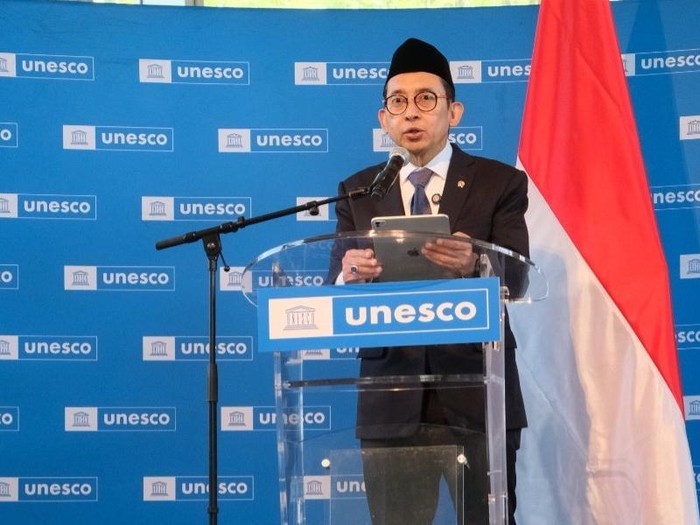
On June 17-18, 2026, during the 11th General Assembly of the States Parties to the 2003 UNESCO Convention held at UNESCO Headquarters in Paris, France, Indonesia was elected as a member of the UNESCO Intergovernmental Committee for the Safeguarding of the Intangible Cultural Heritage (ICH UNESCO) for the 2026–2030 period. This is an honor and recognition of all the efforts that have been and are being made by stakeholders in the field of Culture in the Republic of Indonesia.
As a mega-diversity nation, Indonesia is rich in its culture and nature. The development of culture in Indonesia is very diverse, referring to Law Number 5 of 2017, which establishes 10 Objects of Cultural Advancement (OPK) including oral traditions, manuscripts, customs, rituals, traditional knowledge, traditional technology, arts, languages, folk games, and traditional sports. Each OPK has the potential to reveal substantive cultural values that are relevant to current development needs.
According to a release from the Central Statistics Agency, the number of ethnic groups in Indonesia reaches 1,340 ethnic groups, highlighting the vast Objects of Cultural Advancement that exist among these ethnic groups. From the 10 OPK derived from various ethnic groups, Indonesia has the duty and obligation to protect all intangible cultural heritage in Indonesia through various stages, starting from identification, inventory, research, preservation, accelerating advancement to prevent disconnection from its cultural roots, conveying cultural values through early childhood education, non-formal education (community centers, associations, courses), and formal education (from primary education to higher education), as well as involving various elements such as cultural activists, communities, social groups, and individuals. There is a need for awareness to preserve it through cultural transmission from generation to generation, to continue the struggle so that this intangible cultural heritage can remain sustainable. It is crucial to love our cultural heritage to be more aware and proud of Indonesian culture. Stakeholders in the field of culture, namely the Central Government, Provincial Governments, District/City Governments, and the Indonesian people need to strive to take steps to save threatened natural and cultural heritage; prepare input materials for the formulation of government policies and strategies; and facilitate as well as strengthen preservation mechanisms. Indonesia's struggle to gain recognition for its intangible cultural heritage from UNESCO is not only to avoid cultural claims from other nations but also to prevent protests from other nations regarding what Indonesia possesses.
So what needs to be done after Indonesia becomes a member of the committee is not an easy task. The world's eyes will certainly be focused on the success of achieving this position. The success of implementing Law No. 5 of 2017 will serve as a model and knowledge capital for other countries in protecting their intangible cultural heritage. The methods and work ethics of preserving intangible cultural heritage that have been carried out by cultural activists in this country for years will be under the world's spotlight. It is a challenge for us, stakeholders and cultural activists, to transfer our good practices into shared knowledge in managing world civilization. This is an achievement and a precise strategy for our government to make Indonesia the capital of cultural diversity. The work process of cultural stakeholders, both at the central and regional levels, in managing the cultural resources inherited by our ancestors should not merely end as the management of past remnants that only become a documented but unpreserved memory by the current heirs, or ideally, we should not only be managers of cultural heritage but also become new heirs of cultural legacies for future generations.