



Indonesian Film from a Dimming Era to a Continuous Life

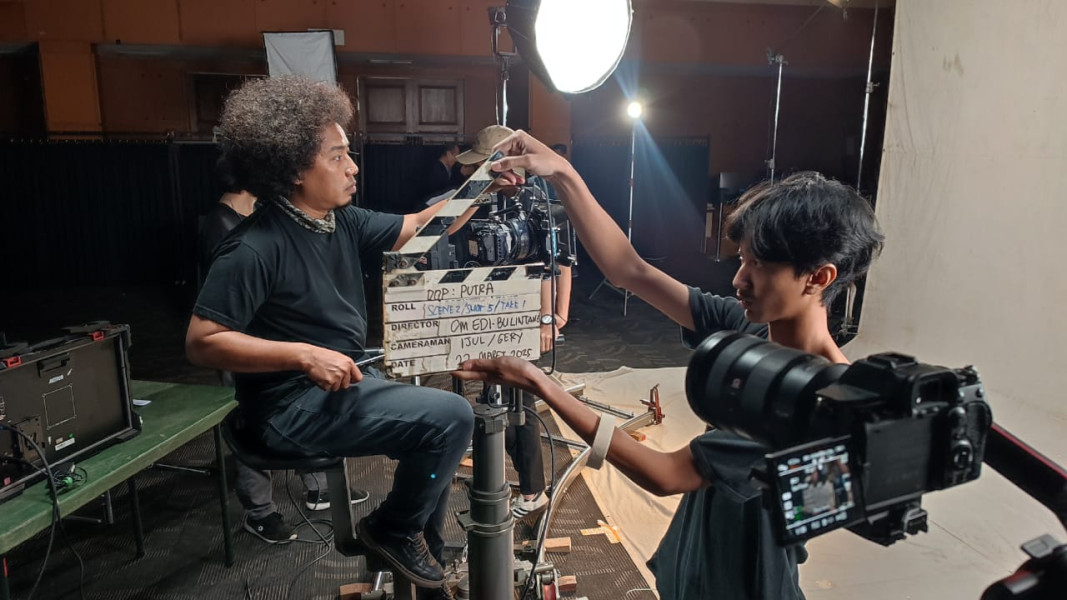
“Film is the greatest artistic gift ever possessed by humanity.” - Joni, Janji Joni (2005 )-
Every March 30, Indonesia celebrates National Film Day. This date is not chosen arbitrarily. It refers to the start of filming for the movie Darah dan Doa in 1950, a work by Usmar Ismail that is remembered as the milestone of the birth of national cinema. From that point, Indonesian films began to walk with their own identity, no longer just a shadow of foreign productions as in the pre-independence era.
The journey of Indonesian film has never been truly smooth. In the early era, the industry was still searching for its identity. Studios emerged, stories were drawn from social realities, but the limitations of production and distribution tools posed significant challenges. Nevertheless, the spirit of storytelling never faded. Names like Usmar Ismail and Djamaluddin Malik became the foundational pillars that brought the world of cinema to life in the homeland.
Entering the 1970s to 1980s, Indonesian films experienced a golden age. Various genres emerged, from family dramas to comedies. Warkop DKI films became icons that brought laughter to the big screen, while drama, action, and romance films also found a place in the hearts of viewers. Cinemas became a meeting space for popular culture enjoyed by the wider community.
However, that glory did not last long. Entering the 1990s, the Indonesian film industry faced a downturn. Many cinemas closed, film production drastically decreased, and imported films began to dominate the screens. This period is often referred to as a retreat when national films lost their stage in their own country.
A revival began to be felt in the early 2000s. The film Ada Apa dengan Cinta? (2002) became one of the important markers that reignited audience interest in Indonesian films. After that, various genres began to flourish again. Horror, drama, comedy, and socially themed films emerged with fresher approaches. Digital technology also encouraged film production to become more flexible and opened opportunities for a new generation of filmmakers.
In the last decade, the development of the Indonesian film industry has shown very significant growth. Data shows that the number of national film productions continues to increase. In 2019, around 129 film titles were produced. This number rose to 222 titles in 2020, then 214 titles in 2021, and sharply surged to 445 titles in 2022. This trend continued in 2023 with around 565 film titles produced in Indonesia. This increase indicates that the national film ecosystem is becoming more active and productive.
This growth in production is also accompanied by an increase in audience interest. In recent years, Indonesian films have increasingly been able to compete in the domestic market. Even during certain periods, national films managed to capture more than half of the cinema audience share in Indonesia. In 2022, for example, Indonesian films contributed about 56.5 percent of the total cinema audience, or around 57 million viewers.
This development continues. By 2025, the number of viewers of Indonesian films is expected to exceed 80 million people, an achievement that shows that national films are increasingly accepted by the wider community. This condition is often referred to as a sign that Indonesian films have returned to being at home in their own country.
Behind this growth, state support has also become an important factor in strengthening the national film ecosystem. Through various policies and programs, the government strives to promote the growth of the film industry as part of strengthening the cultural ecosystem. The Ministry of Culture, for example, pays attention to the development of film human resources, promotional support, and strengthening the distribution and appreciation of Indonesian films, both domestically and in international forums.
In addition, various film festivals, alternative screening spaces, and digital platforms have also expanded public access to the works of Indonesian filmmakers. This ecosystem opens opportunities for a new generation of filmmakers to present more diverse stories, from local tales to universal themes that can reach a global audience.
Today, Indonesian films stand at an interesting crossroads. On one hand, the industry is increasingly developing with rising production numbers and a growing audience. On the other hand, challenges remain: competition with global films, changes in consumption patterns through digital platforms, and the need to continually maintain story quality. The development of digital technology also presents new spaces for distribution and appreciation of films. In addition to cinemas and streaming services, various cultural platforms are beginning to play a role in expanding public access to audiovisual works. One of them is Indonesiana TV, a platform that presents various content related to art, culture, and documentary films that capture the diversity of Indonesia's cultural expressions. Through this platform, the public can enjoy audiovisual works that are not always present in commercial spaces but hold significant value in enriching cultural knowledge and experience.
The presence of platforms like Indonesiana TV shows that films are not only understood as an entertainment industry but also as a medium of culture. Films can record the journey of society, preserve collective memories, and serve as a way to introduce the richness of Indonesian culture to a broader public.
One thing has remained constant since the era of Usmar Ismail to today: the desire to tell stories. As long as there are stories about humanity, about society, and about Indonesia itself, Indonesian films will continue to live, surpassing their dimming periods, and finding their way to continue shining on the screen.
References