



Limitless Expression: World Art Day

“So much… What is in the heart awaits to be revealed… Wanting to express… And pour out various feelings… And impressions about life”
“So full… What is in the mind waits to be implied… There are all kinds of ways and various paths… To realize the desires in the heart… Imagination into creation and art”
“Let’s create in poetry and song… Music and dance… The silver screen of the stage… Is our place… Humanity of the world expresses itself”
“So many things that are possible… That we can do… To share feelings, share dreams… In a noble way… Realize all hopes… Into creation and art”
(Titi DJ, Ekspresi – 1988)
World Art Day, celebrated every April 15, was chosen as a tribute to Leonardo da Vinci, a famous artist. Da Vinci represents tolerance, world peace, freedom of expression, and multiculturalism.
The definition of art is the expression of the human soul, contained in various forms of artistic works. The reflection of human life is conveyed through the medium of art in the form of artistic works. All arts (dance, music, visual arts, theater, and literature) have values that can be translated into everyday life or vice versa. In art, there are symbols of life that have profound meanings about the essence of life. Dancing with expressive movements, music with sounds and human voices, theater with expressive movements and vocal expressions, art with various visual media, all with different styles and genres are iconic expressions (Suartha, 2013). Philosopher Leo Tolstoy argued that art is the communication of emotions conveyed by the artist to the public. Art also has the function of uniting humanity in shared experiences. If someone is possessed by the artist's state of mind, then the work successfully fulfills its function as art.
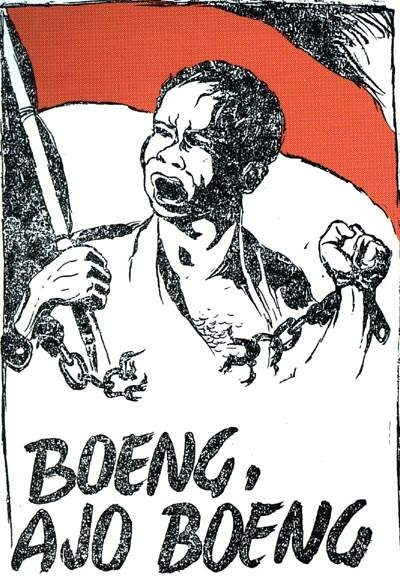
The song “Ekspresi,” released in 1988 and popularized by Titi Dwi Jayanti, illustrates the journey of a human being in expressing themselves during their lifetime, influenced by and becoming part of a phenomenon in their life that is responded to in another form. Expression becomes an honest necessity in responding to the dynamics experienced. Branches in the world of art open up vast media for self-expression and works as another way to understand the socio-cultural phenomena experienced by each generation. Every individual certainly has what is called expression, which distinguishes whether it is poured into the form of artistic media or just dances in their mind alone. Each era gives birth to figures of reformers who have the passion to express themselves. Hundreds of movement figures during the colonial period poured their criticisms into other forms, and those who could not express them in works could collaborate with individuals who have creative abilities. Anonymous artists spread their grievances in response to the conditions of their homeland at that time.
Material remnants scattered across various media in the past are a form of honest expression of the fate of their colonized nation. The explicit and implicit meanings in artistic works such as caricatures, poems, lyrics, posters, and performance scripts converge towards the desire for freedom of expression to voice opinions. The history of the development of art during the colonial period has discussed this extensively. The vibrancy of the national movement poured into artistic works has become a unique treasure and represents the generation before this nation-state was born.
Now in the era of independence, freedom of expression in the arts is protected and guaranteed by the 1945 Constitution. The works of Leonardo da Vinci, which represent tolerance, world peace, freedom of expression, and multiculturalism, are very relevant to our Indonesian identity. A nation born from diversity and fought for by our predecessors and founders for the freedom to associate, gather, and express opinions.
Art is one of the pillars in the advancement of culture as stated in Law Number 5 of 2017 on Cultural Advancement. Art is one of the 10 objects that are protected and developed. Freeing artists and the community in the arts is part of a noble effort to safeguard cultural advancement.
Happy to appreciate the freedom of expression on World Art Day.
Reading List
Suartha. Contemporary Painting Art Themed Wayang in Bali. The Form of Wayang in Contemporary Indonesian Art. Jakarta: TinTin: CV. Phicom: 2013.
Sumarni, Lili. The Role of Qasidah Art in Developing Education in Central Bengkulu. Thesis. UIN Fatmawati Sukarno Bengkulu. 2023.
Soetisna, Kiki Rizky & Zusfa Roihan. Art Approach as Expression: Methodology of Art Creation (Presentation Material). Visual Arts Study Program, Faculty of Fine Arts and Design, Bandung Institute of Technology. (No Year)