



Two Pillars That Quietly Determine the Future of Indonesia

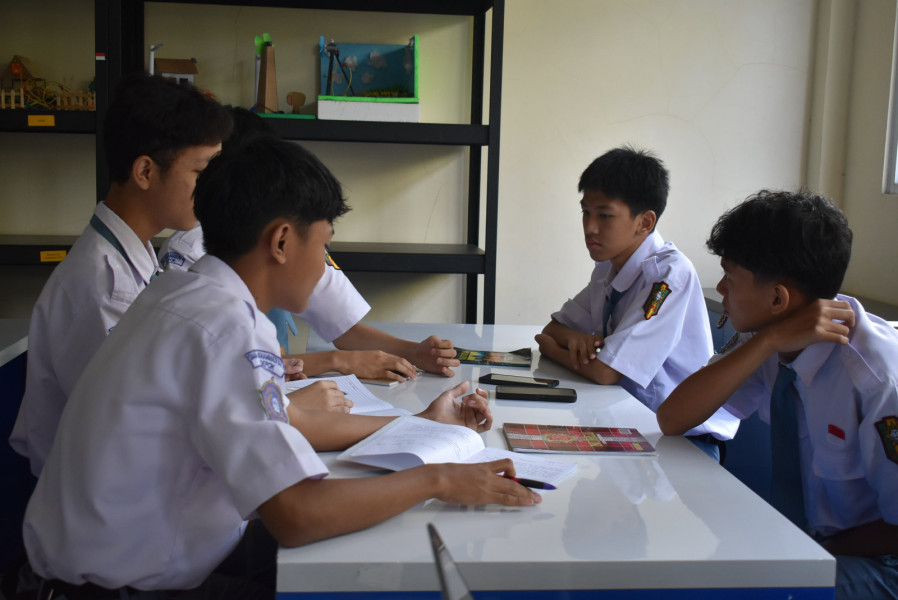
Education and Culture: Two Pillars of National Identity
In the midst of increasingly rapid globalization, the greatest challenge for a nation is no longer merely to maintain territorial sovereignty, but to safeguard the sovereignty of identity. The explosion of information technology, high human mobility, and massive cultural exchange have created a borderless world. In this condition, cultural boundaries are increasingly fading, making national identity vulnerable to erosion (Tilaar, 2002).
As a country with extraordinary ethnic, linguistic, and traditional diversity, Indonesia faces significant challenges. On one hand, globalization offers a gateway to progress; on the other hand, it risks eroding the local wisdom values that have long been the foundation of community life (Mulyana, 2011). Therefore, we need a grand strategy that is not only adaptive to change but also capable of preserving the authenticity of national identity.
Education and culture are two inseparable elements. Both are the main pillars that support each other in building and maintaining national identity. If education serves as a medium of transformation, then culture is the substance that is transformed (Kemendikbud, 2017).
Education as a Means of Value Transmission
Often, education is narrowly defined as a process of transfer of knowledge. In a deeper essence, education is a process of enculturation, an effort to instill values, norms, and philosophies of life into the younger generation (Mulyana, 2011).
Ki Hadjar Dewantara (2013) emphasizes that education is the place for "the sowing of cultural seeds." This means that schools are not only tasked with producing individuals who are intellectually smart but also shaping characters that are deeply rooted in the noble values of the nation. Through the education system, values such as mutual assistance, integrity, and tolerance are passed down in a structured manner (Kemendikbud, 2017).
However, the current reality shows a tendency for education to be overly obsessed with cognitive achievements and global competition. As a result, character-building aspects are often sidelined (Tilaar, 2002), creating a generation that is academically smart but alien to its own culture and social sensitivity. Therefore, the curriculum must place cultural values as the main spirit, not merely as an administrative supplement.
Culture as the Foundation of Character
Culture is the breath of a nation. It is not only manifested in arts and traditions but also lives in our mindsets, values, and daily interactions. Koentjaraningrat (2009) defines culture as the entire system of human ideas and works acquired through the learning process. This indicates that culture is dynamic, continuously evolving with the times.
In the classroom, culture functions as an anchor of identity. When local wisdom is integrated into learning, students not only learn about the outside world but also understand who they truly are (Mulyana, 2011). This strengthening can be achieved by:
Reviving local languages in creative spaces.
Integrating local arts and history into teaching materials.
Developing contextual learning based on students' social environments.
These steps are not a rejection of modernity but a strategy to build resilience. With a strong identity, the younger generation will be more critical and selective in absorbing global influences (Tilaar, 2002).
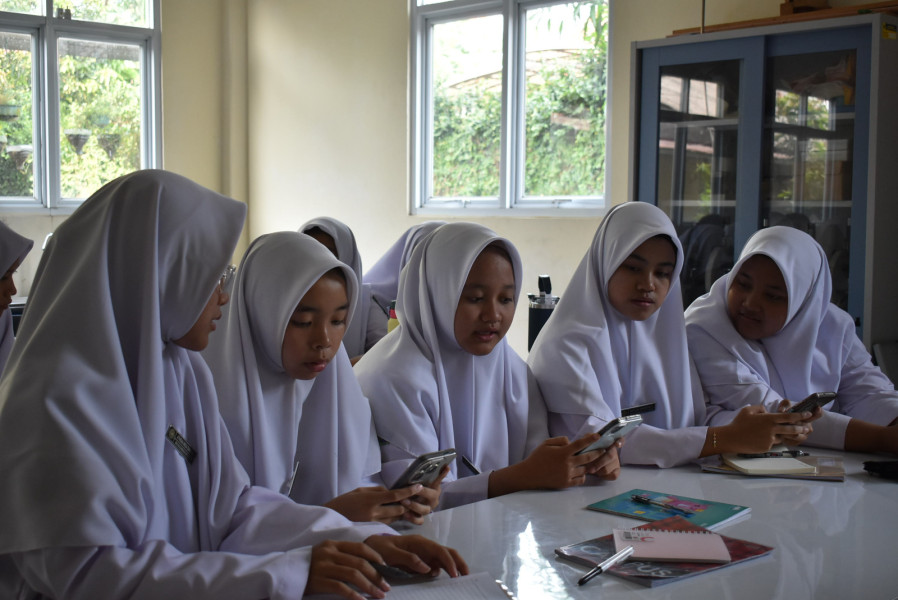
Challenges of the Digital Era and Cultural Disruption
Entering the digital era, efforts to maintain national identity become increasingly complex. Social media and the global entertainment industry now hold significant control in shaping the lifestyles of young people. Often, global popular culture is considered more appealing than local traditions, triggering the phenomenon of cultural lag (Koentjaraningrat, 2009).
The emergence of cultural homogenization, where local diversity is slowly replaced by uniform global standards, poses a real threat. In this situation, education must serve as both a fortress and a bridge. Education must equip students with strong digital literacy so that they can balance technological advancement with cultural awareness.
Synergy Towards Golden Indonesia 2045
The vision of Golden Indonesia 2045 demands the emergence of superior and character-driven human resources. Progress without identity will only lead to dependency, while identity without progress will result in backwardness (Tilaar, 2002).
The synergy between education and culture is the key to creating a complete Indonesian person. Education provides the tools to move forward, while culture provides direction and meaning for that progress. The role of the government in formulating policies, educators as role models, and parents as the first school is crucial for the success of this synergy.
Conclusion
Education and culture are two sides of an inseparable coin. Education without culture will lose its compass, while culture without education will fade away with time (Dewantara, 2013). In the midst of global dynamics, strengthening these two pillars is not an option but a necessity. We must safeguard the national identity not by closing ourselves off from the world but by strengthening our roots to stand tall amidst international interactions.
References
· Dewantara, K. H. (2013). Thoughts, Concepts, Exemplary, Independent Attitude. Yogyakarta: Majelis Luhur Persatuan Tamansisya.
· Ministry of Education and Culture. (2017). Strengthening Character Education (PPK). Jakarta: Kemendikbud RI.
· Koentjaraningrat. (2009). Introduction to Anthropology. Jakarta: Rineka Cipta.
· Mulyana, R. (2011). Articulating Value Education. Bandung: Alfabeta.
· Tilaar, H. A. R. (2002). Social Change and Education: An Introduction to Transformative Pedagogy for Indonesia. Jakarta: Grasindo.