



Colonial Legacy Capital Villages: Self-Sufficient Villages for the Nation

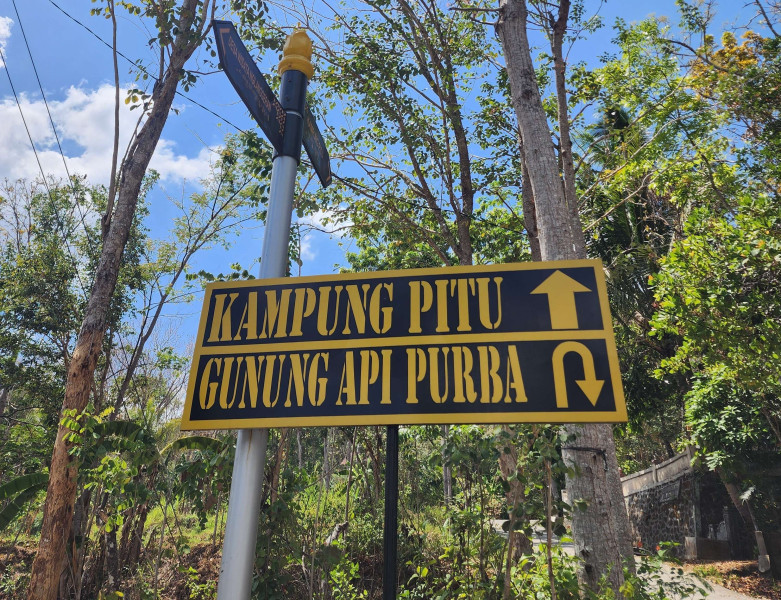
The management of upstream to downstream agricultural and plantation sectors in villages since the colonial era, with the emergence of policies such as Preanger Stelsel (1720), Cultuurstelsel (1830-1870), Agrarische Wet (1870), Suiker Wet (1870), and so on, even to this day, revolves around the issues of capitalization and liberalization intended for the needs of urban communities. Have these policies ever touched the roots of the desires of village residents that arise from their creative power in building their villages? The suction power of top down policies during the colonial period of the Dutch East Indies was excessive, as the natural resources and agricultural products were transported for the interests of the development of the Netherlands. However, what remains in the Dutch East Indies, especially in rural areas, is only poverty and endless structural ignorance. Infrastructure development, both in rural and urban areas, is solely to facilitate the exploitation of natural resource outputs.
Plato expressed that the state arises from the desires and needs of humans; therefore, the state is formed by humans and for all humans. According to the ethical teachings he developed, for Plato, the purpose of the state is very much in sync with the purpose of human life, which is the happiness and pleasure of all citizens. One of the main issues in the state is the safety of all people, both those who are governed and those who govern. (Andariati, 2020). The concept of the state according to Plato can be equated with the birth of a village that begins from the agreement of a group of people to settle in a place, marking the beginning of village formation in Indonesia. Like the decision of a group of people in the Middle Stone Age who underwent a life revolution by deciding to change their lifestyle and behavior from originally living nomadically by hunting and gathering food to settling down and farming in a new area. The development and situations that occur in group life lead the community to cooperate in solving problems related to efforts to alleviate the fulfillment of their group's needs. "If there was a group of people living a wandering life in ancient times, they eventually chose a place where they, in large or small groups, decided to stay forever, passed down through generations," (Kartohadikoesoemo, 1984: 18)
The development and ongoing activities and life cycles of a village depend entirely on the dynamics of its population. Livelihood activities certainly look at the potential of natural resources and the environment where they live. Policies that are still instructive from the center to the regions may not necessarily align with the desires and capabilities of a village's population. Village management and governance policies should be adjusted to local wisdom and the local cultural environment to sustain its residents as the rightful owners of the territory that has become customary practices passed down through generations.
Soetardjo Kartohadikoesoemo, in his book titled “Desa,” designed small autonomous regions (local self-government) which are a conversion of the colonial-era villages created by the Japanese into modern villages in the era of independence that can prosper the village people. The new village government manages and takes care of its household affairs, both those that already exist and those that come from the center that have been decentralized.
Nurcholis (2014) reviewed Law No. 6 of 2014 on Villages by first comparing it with Law No. 22/1948, which converted adat rechtsgemeenschap (customary law community) into formal autonomous regions with the nomenclature of Village (Small Town). The explanation of Law No. 22/1948 on Regional Government states as follows.
"According to this basic law, the lowest autonomous region is the village, state, marga, small town, and so on. This means that the village is placed within the environment of modern governance, not pulled out as it was in the past. At that time, the colonial government understood that the village was the backbone of the state, realizing that the village as the backbone of the state needed to be improved in all aspects, strengthened, and dynamized so that the state could progress. However, for the interests of colonization, the village was left static (its condition remained the same). The granting of autonomy according to this, Gemeente-ordonnantie, means nothing because the village with that right cannot do anything, as it has no finances and is bound by customs, which in fact no longer live in the village. Often, customs that have died are revived or conversely, living customs are extinguished, contrary to the will of the village residents, solely because of the interests of the colonizers. The village remains backward, and the state is powerless, in accordance with the political goals of the colonizers."
However, our Republic's government has the opposite goal. To fulfill Article 33 of the 1945 Constitution, the state with the Indonesian people must prosper. To achieve this prosperity, it must start from the bottom, from the village. Therefore, the village must be created in a state of constant progress (dynamic). Thus, for this purpose, village governance is included within the environment of governance that is perfectly regulated (modern), and not just that, but it will also be proposed that guidance for regions that receive governance according to this basic law be prioritized in villages. Nurcholis believes that Law No. 6 of 2014 on Villages will revert to the concept of villages during the colonial period, whereas the founders of the nation such as Soepomo, Soetardjo Kartohadikoesoemo, Moh Yamin, and others have positioned the village as the core of a nation's civilization.
The Indonesiana.TV Cultural Channel aims to preserve and promote Indonesia's diverse culture to the wider community, both domestically and abroad, through the airing of programs that highlight various aspects of Indonesian culture, such as arts, customs, traditions, and history. The Indonesiana.TV Cultural Channel seeks to enhance public knowledge and awareness of Indonesian culture through educational and informative programs presented in an engaging and easily understandable manner for all audiences.
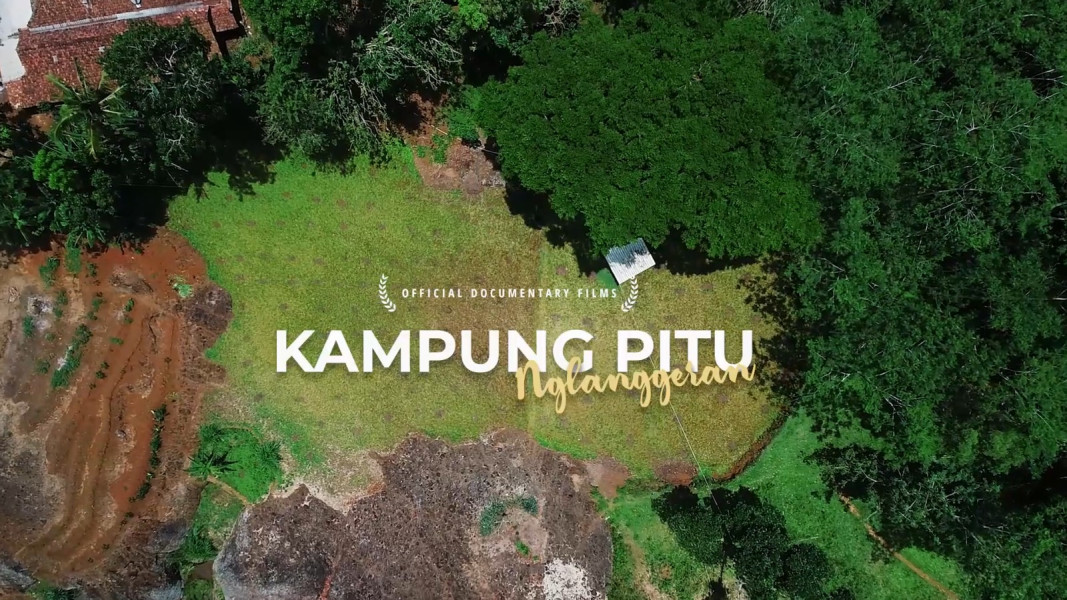
Cultural content related to the development and management of villages as a spearhead of civilization and culture currently available on the IndonesianaTV platform is “Kampung Pitu Nglanggeran. The program “Kampung Pitu Nglanggeran” tells the inspiring journey of a father and son exploring the village of Nglanggeran in Gunung Kidul. In this journey, they learn about local culture and unique traditions that have long been preserved by the people of Kampung Pitu, a small village known for its strong beliefs and values in maintaining the balance of nature. Kampung Pitu, which is only inhabited by seven families according to local customs, has local wisdom in preserving and caring for its surrounding environment, including the Nglanggeran Ancient Volcano area. This documentary not only reveals the natural beauty of Gunung Kidul but also highlights how the local community lives in harmony with nature, preserving cultural heritage, and maintaining the traditions of their ancestors. Viewers are invited to understand the importance of a harmonious relationship between humans and nature in sustaining life in the village. The airing of cultural content on the Indonesiana.TV Cultural Channel is a form of good practice that is expected to provide educational information that ultimately leads to the preservation of Indonesian culture and serves as a guide for future generations.
References
Andariati, Leni. 2020. Plato's Political Philosophy in the Journal of Political Review Volume 10, Number 01, June 2020. UIN Sunan Kalijaga.
Kartohadikoesoemo, Soetardjo. 1984. Desa. Jakarta: Balai Pustaka.
Nurcholis, Hanif. 2014. Critical Review of Law No. 6 of 2014 on Villages in the National Symposium of the Association of State Administration Scientists IV, with the theme “Village Autonomy in the Context of Law No. 6 of 2014 on Villages” at Udayana University Bali on September 18-19, 2014