



Between Books and Low Reading Interest

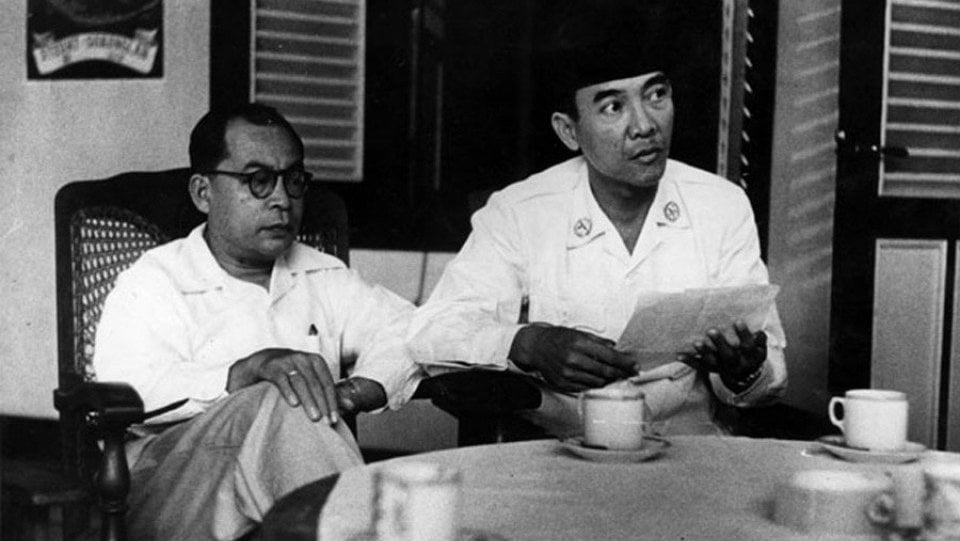
The book lover's name is Mohammad Hatta. Throughout his life, Hatta was always surrounded by books. He would feel restless when far from books. Even when he was to be exiled to Boven Digul, Papua, what occupied his mind was how to bring all his books there. Undoubtedly, one of his legendary quotes is: "I am willing to be imprisoned as long as I am with books, because with books I am free."
“In a book box measuring ¼ cubic meter, there are 16 books. So, altogether it is four cubic meters. Packing those books took at least three days,” Hatta wrote in his book Memoir (citing History of Books: Chronicle of Indonesian Books Through Three Eras).
With those books, Hatta filled his days in Boven Digul by teaching economics and philosophy to the prisoners. His high interest in books also drove Hatta to actively write. At the age of 18, Hatta wrote a story published in the magazine Jong Sumatra in 1920 titled “My Name is Hindiana.”
Bung Hatta collected around 10,000 book titles throughout his life, in addition to writing 180 books. This is certainly a fantastic number for an Indonesian (even to this day).
Besides Hatta, Indonesia also has another “book lover” named Sukarno. In the autobiography titled Bung Karno: The Voice of the People written by Cindy Adams, the first President of Indonesia stated, “In books, I meet great people. Their thoughts become my thoughts. Their ideals are the foundation of my establishment.”
One of Sukarno's daughters, Rachmawati, also revealed her father's hobby for books. If there were no guests at the palace, Bung Karno was said to spend time reading. His bedroom was filled with books. The bed, chairs, and bathroom transformed into a library.
Not only fond of reading, Sukarno was also a skilled writer. He was very productive in writing from a young age, even becoming an editor at a magazine published by Sarekat Islam. Some of Sukarno's works include Achieving Independent Indonesia (1933), The Birth of Pancasila (1945), Sarinah (1951), and a collection of writings titled Under the Flag of Revolution Volume 1 (1959) and Volume 2 (1960). Bung Karno's writing prowess certainly reflects the references he used: books!
In addition to the two proclaimers, another book lover is Soetan Sjahrir, the first Prime Minister of Indonesia. In his book titled Sjahrir: Politics and Exile in Indonesia, historian Rudolf Mrazek describes Sjahrir as a bookworm. Sjahrir claimed to have read hundreds of books since his teenage years, plus Dutch children's novels.
The narrative about the “madness” of these figures towards books sufficiently proves how the book culture in Indonesia has spread since the 20th century. Quoting Trimansyah (2022), the VOC has directly or indirectly brought book culture as it had previously grown in Europe since the 17th century.
This book culture actually does not only originate from the educated class but also from the literary community. Literary works contributed to sowing the seeds of book culture among Indonesian children in the past, which ultimately encouraged reading behavior.
Not to mention when we talk about the tradition of writing scriptures that even began during the era of the archipelago kingdoms. The culture of writing scriptures—which certainly started with reading—has existed since the time when kingdoms stood strong in the archipelago, although it was only controlled by the nobility.
So, How About Now?
Unfortunately, currently, the culture of reading books in Indonesian society is not very good—if not to say concerning. UNESCO states that Indonesia ranks second to last in global literacy. According to UNESCO data, the reading interest of the Indonesian people is only 0.001%. This means, out of 1,000 Indonesians, only 1 person is diligent in reading.
Another study on World’s Most Literate Nations Ranked conducted by Central Connecticut State University in 2016, states that Indonesia ranks 60th out of 61 countries in terms of reading interest, just below Thailand (59) and above Botswana (61). In fact, in terms of infrastructure to support reading, Indonesia ranks above European countries.
Meanwhile, a survey conducted by the Central Statistics Agency (BPS) in 2020 showed that only about 10% of the Indonesian population regularly reads books. This figure indicates a low level of literacy interest in society.
The numbers above are certainly saddening for all of us. After all, borrowing the words of Pramoedya Ananta Toer: reading is the window to the world. Reading is the first step to understanding the world; learning from the past to become better in the future.
That is why, May 17 becomes a moment to reignite the spirit of reading books. A target of one book every week could be a choice to start the habit of reading books. Happy National Book Day!
References:
Trimansyah, Bambang Trimansyah. 2022. History of Books: Chronicle of Indonesian Books Through Three Eras. Jakarta: Center for Books of the Standardization Agency, Curriculum, and Educational Assessment of the Ministry of Education, Culture, Research, and Technology
“Low Literacy Interest in Indonesia”. https://kallainstitute.ac.id/rendahnya-minat-literasi-di-indonesia. Accessed May 14, 2025.
“5 Tips to Increase Reading Interest”. https://lib.ub.ac.id/berita/5-tips-meningkatkan-minat-baca/. Accessed May 14, 2025.