



Preserving Sundanese Heritage: Minister Inaugurates Kujang Museum in Paseban Cultural Village, Bogor

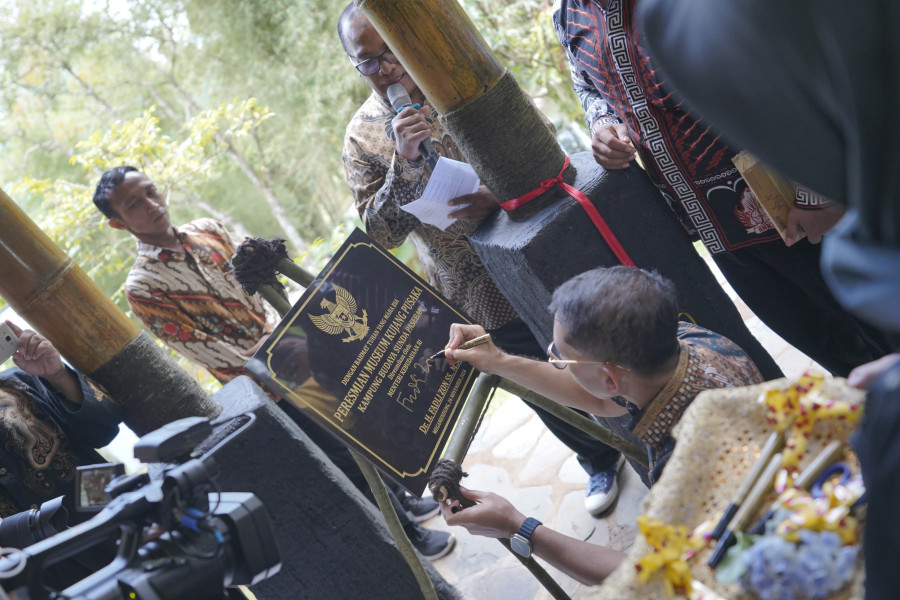
BOGOR – Minister of Culture, Fadli Zon, inaugurated the Kujang Pusaka Museum in the Sundanese Cultural Village of Paseban, Bogor Regency, West Java, on Wednesday, November 27, 2024. This inauguration is part of efforts to elevate the status of the kujang, a traditional Sundanese weapon, as one of the cultural heritages of the Padjajaran land.
In the culturally and environmentally rich area of Paseban stands the Kujang Kanjeng Kiai Bhairawa monument, an extraordinary work in the form of a giant kujang weighing 1.5 tons. Crafted using traditional techniques by keris artisans from Madura, this monument took two years to complete and has become a symbol of pride for the Sundanese community.
Fadli Zon stated that the Kujang Museum is designed as a center for cultural studies and a symbol of Sundanese identity. The museum's collection includes various types of kujang from different eras, including the oldest kujang dating back to the 9th century. The collection has been curated by Traditional Weapon Expert, Basuki Teguh Yuwono.
“Like the Keris Museum in Solo, this Kujang Museum is expected to be a pioneer in the preservation of traditional Sundanese weapons. In the future, we plan to seek a more strategic location to make this museum more accessible,” said Fadli Zon.
Paseban Cultural Village: A Symbiosis of Culture and Environment
The Kujang Museum is located in an area that serves as a model for the preservation of Sundanese culture and ecosystem. Initially, this area was just a stretch of grass. Now, Paseban has become a vibrant cultural ecosystem space. This area is filled with rare plants such as baobab trees, bodhi, pule, and 41 varieties of bamboo. Bamboo, known for its ability to absorb carbon up to 1.7 tons per hectare per year, makes Paseban an environmentally friendly area while also preserving traditional arts such as angklung and gamelan.
Fadli Zon also highlighted the importance of traditional Sundanese architecture in Paseban Village, with various traditional houses such as Badak Helai, Jalopong, and Tagok Anjing being rebuilt. Their designs not only reflect local philosophy but are also environmentally friendly.
Paseban Village is also actively hosting cultural activities, such as pencak silat festivals, gamelan performances, and a harp art event titled Harp on the Mountain. "I suggest adding activities like the Paseban Writers Festival and Jazz Festival to attract the interest of the younger generation," Fadli added.
Moreover, this area is also home to Bale Adat, a place for storing the heirloom gamelan from Giri Harja II, enriching the local cultural heritage.
Green Culture for the Future
Fadli Zon emphasized the importance of integrating environmental preservation into cultural preservation. According to him, traditional arts such as angklung and gamelan depend on the sustainability of raw materials like bamboo. Therefore, Paseban Village serves as a real example of the application of "green culture."
“We must build a mindset and culture that is environmentally friendly and sustainable. Paseban Village has already started this step with various green initiatives,” said Fadli Zon, who is also known as the owner of the largest keris library in Indonesia.
With this initiative, the Kujang Museum and Paseban Cultural Village are expected to become centers for the preservation of Sundanese cultural heritage as well as an inspiration for environmental preservation in Indonesia.
It is known that the inauguration of this museum coincided with National Bamboo Day on November 26, which was also celebrated with the planting of 100 bamboo trees together with the Indonesian Bamboo Foundation led by Ki Jatnika Nanggamiharja.[*]