



Ministry of Culture Holds Cultural Oration for International Museum Day 2026, Launches Museum Passport

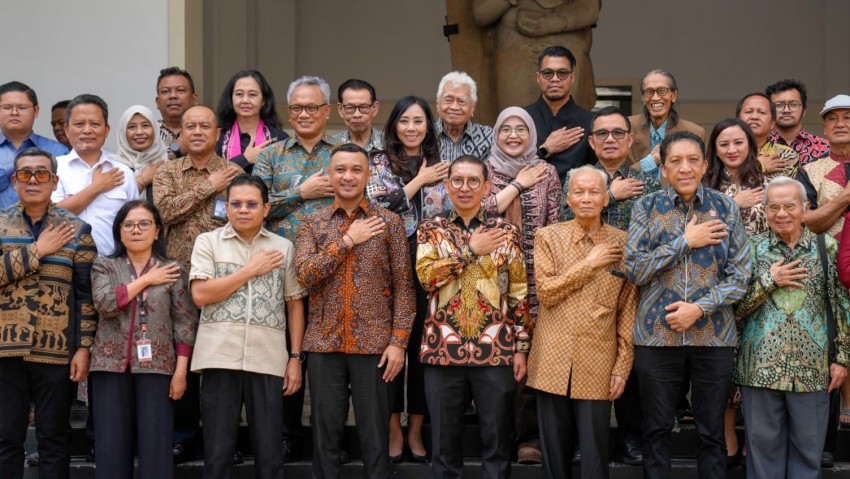
The Ministry of Culture held a Cultural Oration to commemorate International Museum Day 2026 at the National Museum of Indonesia on Monday (18/5). Carrying the theme "Museums Unite a Fragmented World", this event emphasizes the role of museums as public spaces capable of bringing together diversity amid the challenges of global social fragmentation.
The Minister of Culture, Fadli Zon, in his cultural oration stated that the world today faces a significant paradox. On one hand, society is increasingly connected by technology, but on the other hand, it is also becoming more divided due to conflict, inequality, and social polarization. "In a world that is becoming more connected, yet at the same time fragmented due to conflict, inequality, and polarization, it is important to ask what kind of public space can rebuild trust and bring together differences," said Fadli.
According to him, museums have a strategic position as a shared space that preserves the collective memory of society, especially when technological developments are happening very rapidly and influencing how younger generations understand history and cultural identity. Fadli Zon also emphasized that Indonesia, as a mega-diverse country, has a vast cultural wealth. Therefore, museums are required to translate this diversity into a vibrant, inclusive, and relevant public experience for the wider community. "Museums are no longer just places for storing historical artifacts, but must also evolve into cultural infrastructure as well as drivers of the national cultural economy," he said.
On the same occasion, the Head of the Museum and Cultural Heritage, Indira Estiyanti Nurjadin, stated that museums serve as spaces that connect the past and the future, tradition and innovation, knowledge and empathy. Museums also act as a bridge between generations in building honest and dignified conversations. "Museums remind us that diverse perspectives are not reasons to separate, but invitations to understand and complement each other," said Esti.
During this moment, the Museum and Cultural Heritage through the Indonesian Heritage Agency (IHA) collaborated with Paperina to launch a new innovation in the form of Museum Passport. This program invites the public to explore museums, collect cultural journey stamps, and document their experiences as part of the movement to preserve Indonesia's cultural heritage, connecting the community with museums and cultural heritage sites in Indonesia.
Each museum will have a different stamp design, making it a collection for visitors. The Museum Passport will officially be available starting June 2026 at museums and cultural heritage sites managed by the Museum and Cultural Heritage (MCB). This program is also open to private museums that wish to join the collective movement for national cultural preservation. According to Esti, the concept of collecting stamps was chosen because it resonates with the character of Generation Z and Alpha, who enjoy analog experiences that can be kept as personal collections.
"Visiting museums should be made a cultured lifestyle," added Fadli. The Ministry of Culture hopes this innovation can increase public interest in visiting museums while also strengthening public awareness of the importance of preserving Indonesia's cultural heritage. This initiative also represents a tangible manifestation of cross-sector collaboration in building public services in the cultural field, as cultural preservation is not only the government's duty but a shared responsibility of all elements of society.
According to data from the Ministry of Culture as of April 2026, Indonesia has 516 museums, with 373 museums or 72.3 percent registered and 234 museums having been standardized as type A, B, or C. The government continues to encourage the strengthening of museums through registration, digitization, conservation, and the development of museums down to the village level.
Through the commemoration of International Museum Day 2026, the Ministry of Culture reaffirms its commitment to making museums vibrant, inclusive, and relevant public spaces for society across generations. The presence of the Museum Passport is expected not only to encourage increased museum visits but also to foster active community involvement in caring for Indonesia's cultural heritage. With a spirit of collaboration and collective participation, museums are expected to continue to be spaces that unite diversity, strengthen cultural identity, and build collective awareness of the importance of cultural preservation for the future of the nation.